Engaging Easter activities for kids: fun and safe memories
May 7, 2026
Every Easter, parents face the same quiet pressure: how do you pull off a holiday that feels genuinely magical, keeps little ones safe, and doesn't leave you exhausted by noon? The egg aisle at the grocery store is full of colorful options, but choosing activities that actually match your child's age, spark real joy, and create memories worth keeping is a different challenge entirely. This article walks you through a practical, evidence-backed guide to the best Easter activities for young kids, from sensory play and egg hunts to personalized animated videos that put the Easter Bunny right inside your living room.
Table of Contents
- How to choose the best Easter activities for young kids
- Top engaging Easter activities your kids will love
- Side-by-side comparison: Easter activity strengths and age fit
- Making Easter magical with animation and interactive play
- Rethinking what makes Easter truly memorable for kids
- Bring these Easter activities to life with WonderLens
- Frequently asked questions
Key Takeaways
| Point | Details |
|---|---|
| Prioritize safety | Choose activities and toys that are large enough and supervise all play, especially for toddlers. |
| Mix classic and creative ideas | Combine traditional Easter fun with new interactive or animated twists for more engagement. |
| Support child development | Select activities that build fine motor, cognitive, and social skills at every age. |
| Keep experiences simple | Children remember genuine interactions and magical moments, not just a long activity list. |
How to choose the best Easter activities for young kids
Before you stock up on plastic eggs and pastel baskets, it helps to have a simple checklist. Not every Easter activity suits every age, and the difference between a delightful morning and a tearful meltdown often comes down to a few key decisions made beforehand.
Here are the core criteria to evaluate any Easter activity for young children:
- Safety first: Check that all small pieces, candy, and toy fillers meet age-appropriate size guidelines. Common Easter treats can pose choking hazards for children under age 4, so round candies, small figurines, and sticker sets with tiny parts all need a second look.
- Developmental fit: A two-year-old and a five-year-old experience Easter very differently. Match activities to your child's current motor skills, attention span, and cognitive stage.
- Variety of activity styles: The best Easter morning mixes creative activities (coloring, decorating), physical movement (egg hunts, basket toss), and sensory play (texture bins, scented dough). This keeps energy balanced and attention engaged.
- Supervision requirements: Some activities need hands-on adult guidance. Others can run more independently. Plan accordingly so you're not stretched too thin.
- Reusability and low mess: Especially for under-threes, simpler materials mean easier cleanup and less frustration for everyone.
BBC Tiny Happy People recommends an Easter egg treasure hunt alongside simple creative activities like drawing, coloring eggs, and egg pair-matching using everyday household items, with specific attention to age-appropriate toy sizes to reduce choking risk. These ideas work because they're low-cost, low-mess, and adaptable to any space.
Pro Tip: Before filling Easter eggs for toddlers, do a quick size test. If a toy or treat fits through a toilet paper roll, it's too small for children under four. When in doubt, fill eggs with small soft toys, hair clips, or stickers with large backings.
Check our ultimate Easter celebration checklist for a printable guide covering everything from basket prep to activity timing.
With criteria in mind, let's explore the standout Easter activities ideal for your family.
Top engaging Easter activities your kids will love
Once you know what you're looking for, picking activities becomes much easier. Here's a curated list of options that hit all the right notes: safe, engaging, developmentally appropriate, and genuinely fun.
-
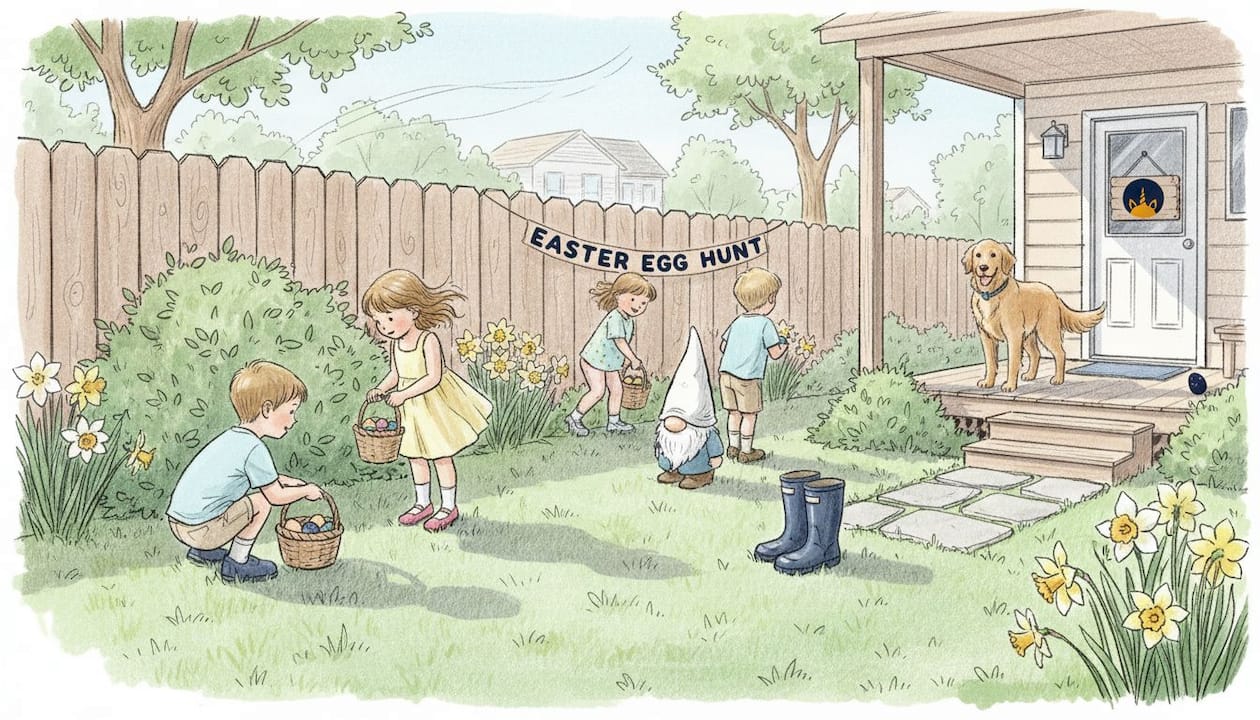
Classic egg hunt with a twist. A backyard or living room egg hunt is an Easter staple for good reason. It builds gross motor skills, problem-solving, and counting practice. For toddlers, keep eggs large, visible, and limited to 10 to 12 total. For preschoolers, add color-coded clues or a simple treasure map to ramp up the excitement. You can turn this into a magical Easter memory at home by hiding a special "golden egg" that reveals a video message from the Easter Bunny.
-
Egg decorating and art projects. Decorating hard-boiled eggs or wooden egg blanks is a wonderful fine motor activity. Young kids practice grip, color mixing, and creative decision-making. Stick to washable paints, chunky markers, or stickers for little hands. Skip dye kits with vinegar for children under three since the smell and liquid can overwhelm sensory-sensitive kids.
-
Personalized animated Easter video. This is where the magic really lands. Imagine your child watching a short clip of a fluffy Easter Bunny hopping through your actual living room, twitching its nose near the Easter basket, and spreading spring magic across your family's space. Animated Easter videos boost family engagement in a way that traditional activities simply can't replicate, because the child sees their own home transformed into a storybook scene.
-
Sensory exploration bins. Fill a shallow container with shredded paper grass, plastic eggs, small rubber chicks, and smooth river stones in pastel colors. Let toddlers dig, sort, and discover. This activity supports sensory processing, hand strength, and early sorting skills. It's calm, contained, and surprisingly absorbing for kids aged one to three.
-
Basket toss game. Set up a row of baskets at different distances and let kids toss plastic eggs into them. Simple, physical, and wildly entertaining for ages three and up. You can keep score for older kids or just celebrate every toss for younger ones. This builds hand-eye coordination and turn-taking skills, two developmental wins in one game.
"A creative family Easter approach that includes egg decorating, scavenger hunts, and family-friendly Easter stories gives children multiple ways to engage with the holiday while building lasting traditions." — Parents magazine, A Creative Family Easter guide
DIY Easter activity guides highlight how age-appropriate Easter play patterns like matching games, basket toss variations, and sensory bins each target specific developmental goals including fine motor control, gross motor movement, sensory processing, and early cognitive matching. Structuring your Easter morning with at least two or three different activity types means every child, regardless of energy level or mood, finds something that clicks.
Pro Tip: Rotate activities in 15 to 20 minute blocks rather than letting one activity stretch too long. Young children stay most engaged when there's a natural rhythm of movement, creativity, and calm throughout the morning.
Side-by-side comparison: Easter activity strengths and age fit
Choosing the right mix of activities is easier when you can see the options laid out clearly. Use this table as a quick reference to match activities to your child's age and your family's priorities.
| Activity | Best age range | Developmental value | Supervision needed | Animation upgrade possible |
|---|---|---|---|---|
| Egg hunt | 2 to 6 years | Gross motor, counting, problem-solving | Moderate | Yes: video clue from Easter Bunny |
| Egg decorating | 2 to 5 years | Fine motor, creativity, color recognition | High (for toddlers) | Yes: video reveal of finished art |
| Animated video | 1 to 7 years | Language, imagination, emotional connection | Low | Core feature |
| Sensory bin | 1 to 3 years | Sensory processing, sorting, hand strength | High (mouthing risk) | No |
| Basket toss | 3 to 6 years | Gross motor, coordination, turn-taking | Moderate | No |
| Story activity (Resurrection Eggs) | 3 to 7 years | Storytelling, sequencing, listening | High | Yes: animated story companion |
For story-based Easter activities, Resurrection Eggs guides recommend an ordered egg-opening flow that typically runs 15 to 30 minutes, with age-specific adjustments for the number and size of eggs used and close supervision for children who are still in a mouthing stage. This structure works well as a quiet, focused activity after the high energy of an egg hunt.
The key takeaway from comparing these options is that no single activity covers every developmental goal. A well-rounded Easter morning includes at least one physical activity, one creative project, and one imaginative or story-driven experience. That combination keeps the whole morning feeling balanced and memorable rather than one-note.
Check our guide on Easter animations for family memories for more ideas on weaving animated moments into traditional holiday plans.
Having compared the options, some parents want extra magic and interactivity. Here's how to amplify family fun with technology.
Making Easter magical with animation and interactive play
Traditional Easter activities are wonderful. But when you layer in animation and interactive digital elements, the holiday jumps from fun to unforgettable. Kids who watch a fluffy Easter Bunny hop through their own kitchen, pause by their basket, and leave a glowing trail of spring light respond with a level of awe that no plastic egg can match.
Here are a few concrete ways to bring animation and interactive play into Easter morning:
- Catch the Easter Bunny on video. Set up a short personalized animated clip showing the Easter Bunny visiting your home overnight. The AI-rendered character catches your home's actual lighting and casts realistic shadows, making it look genuinely real. Show your child the video right before the egg hunt to build anticipation and set the scene.
- Animated Easter story experience. Pair a short animated video with a physical story activity. Interactive Easter egg hunts that use AR posters and QR codes can connect a digital animated story to a real-world trail of eggs, creating a seamless blend of screen-based wonder and hands-on exploration.
- AR egg trail for older kids. For children aged four and up, create a simple scavenger trail where each found egg contains a QR code linking to a short animated clue. This gamifies the hunt and adds a layer of discovery that keeps older siblings engaged alongside younger ones.
- Video keepsake of the morning. Record your child's reaction to finding the golden egg or watching the Easter Bunny video for the first time. These reaction moments, especially when paired with a high-quality animated clip, become the shareable memories families pull out year after year.
Here's a simple way to think about upgrading traditional activities:
| Traditional activity | Animated or interactive upgrade |
|---|---|
| Paper clue for egg hunt | Video message clue from the Easter Bunny |
| Sticker in an Easter egg | QR code linking to an animated scene |
| Store-bought Easter basket | Basket "delivered" in an animated overnight video |
| Reading an Easter story | Watching an animated story tied to physical eggs |
The best part? These upgrades don't require hours of planning. A personalized animated video takes minutes to generate, and it can anchor the entire morning's magic in a way that even the most elaborate decorations cannot. Learn more about making Easter fantasy videos for your family.
Our evidence-based list can spark new traditions, but there's more to consider than just activities. Here's a perspective families rarely hear.
Rethinking what makes Easter truly memorable for kids
Here's something worth saying out loud: kids don't actually remember the Pinterest-perfect tablescape or the 47-egg hunt with color-coded clues. What they remember is how they felt. They remember the sound of your laughter when they found the wrong egg. They remember watching something that felt impossible, like a cartoon rabbit standing next to their couch, and turning to look at your face to see if it was real.
The pressure to create a "big" Easter can actually work against the magic. When parents focus on doing more, they often end up more stressed and less present. And presence is exactly what makes childhood memories stick. Studies in child development consistently show that parental engagement during play matters far more than the complexity or cost of the activity itself.
Personalization is the real multiplier here. A generic Easter basket feels like a basket. An animated video of the Easter Bunny hopping through your specific home, past your child's toy shelf, near their favorite chair, feels like a miracle. That specificity signals to a child: this was made for you. That's the emotional note that echoes for years.
Simple traditions, repeated consistently and warmly, build a child's sense of safety and delight far more effectively than any single elaborate event. Choose two or three activities you genuinely enjoy doing together. Add one magical touch, like an animated video surprise. Then put the phone down and be there for the reaction. That's the formula that actually works.
Bring these Easter activities to life with WonderLens
Ready to add a touch of real magic to your Easter morning? WonderLens makes it easy to place a realistic, beautifully animated Easter Bunny right inside your home through AI-powered video that captures your actual lighting, shadows, and space.

You can catch the Easter Bunny on video with just a photo of your living room, and the result is a cinematic 10-second clip your kids will want to watch over and over. Credits start at just $1.99, making it one of the most affordable ways to create a lasting Easter keepsake. And if you want to keep the magic going through the year, you can also film magical Santa moments for the holiday season ahead. WonderLens is safe, family-friendly, and takes just minutes to use.
Frequently asked questions
What are the safest Easter egg fillers for toddlers?
Choose fillers larger than 1¼ inches wide and avoid sticky or round foods for children under four, prioritizing soft toys or socks. BabyCenter's guidance on size and food hazards is a helpful reference when shopping for fillers.
How can animated Easter activities be made age-appropriate?
Match the animation length and interactive features to your child's natural attention span, and stay close to guide younger children through the experience. Resurrection Eggs activity guides recommend age-matched storytelling structures and active supervision for the best results.
What skills can Easter activities help develop?
Creative Easter play supports fine motor control, sensory development, and early cognitive skills like sorting and matching, alongside family bonding. Pocket Full of Parenting's activity guide highlights how different Easter play patterns each target specific developmental goals.
How long should a young child's Easter activity last?
For young children, most structured Easter activities work best when kept to 15 to 30 minutes to align with their attention spans. The Resurrection Eggs guide provides sample timing recommendations for different age groups as a useful starting point.
Recommended
- How to make magical Easter memories at home with kids — WonderLens | WonderLens
- The ultimate Easter celebration checklist for families — WonderLens | WonderLens
- How Easter animations create magical memories for families — WonderLens | WonderLens
- Why animated Easter videos boost family engagement — WonderLens | WonderLens