How Santa animations enhance Christmas magic for kids
April 24, 2026
Most parents assume that childhood belief in Santa Claus is the secret ingredient behind Christmas magic. The more a child believes, the more magical the season feels, right? Actually, the science tells a different story. Research suggests that it's not belief alone that creates wonder and positive behavior during the holidays. It's the rituals, stories, and animations that surround Santa that do the heavy lifting. If you've ever wondered why some Christmas seasons feel truly unforgettable while others just pass by, the answer likely lives in the traditions you build, and the animated moments you share together.
Table of Contents
- The origins and tradition-building power of Santa animations
- How Santa animations influence children's behavior
- Personalized Santa animations for modern families: Options and best practices
- Integrating Santa animations into your family's Christmas rituals
- Why tradition and ritual matter more than belief: An expert perspective
- Bring personalized Santa magic to your home
- Frequently asked questions
Key Takeaways
| Point | Details |
|---|---|
| Tradition drives holiday magic | Studies show rituals and Santa animations—not mere belief—produce lasting memories and positive behaviors. |
| Personalized animations amplify joy | Custom Santa videos make Christmas feel unique for each child while reinforcing family traditions. |
| Safety and supervision matter | Parents should guide digital animation use for privacy and age-appropriateness, especially with AI-generated content. |
| Application creates impact | Integrating Santa animations into existing family rituals brings out their full potential during the holidays. |
The origins and tradition-building power of Santa animations
Santa animations have been shaping holiday traditions for generations. From the beloved stop-motion classics) that play a key role in establishing Christmas rituals for children, to today's AI-powered personalized videos, these animated stories do something remarkable: they make Santa feel real, present, and personal.
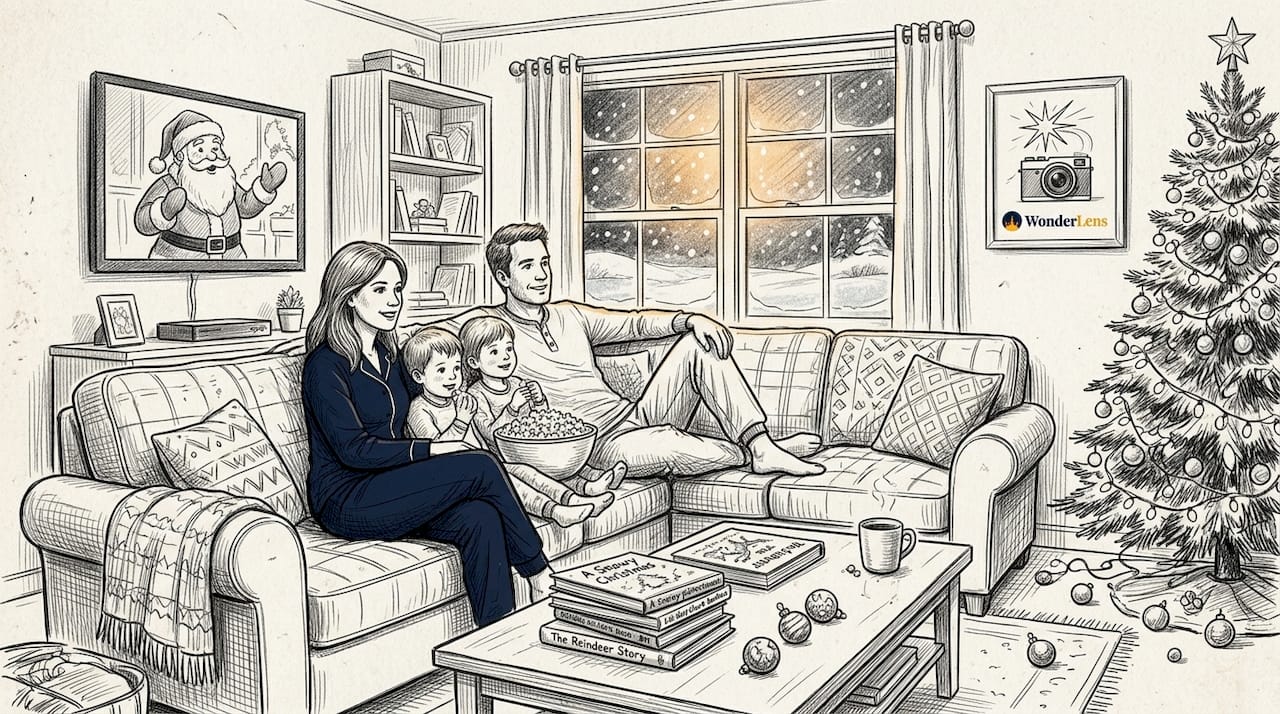
Classic animations like Rudolph the Red-Nosed Reindeer and Santa Claus Is Comin' to Town gave families a shared viewing ritual. Every year, children and parents would gather around the television, and that repeated act became a memory in itself. The story wasn't just entertainment. It was an anchor point for the whole season.
Modern personalized animations take that idea further. Instead of watching Santa visit someone else's world, your child can watch Santa walk through your living room, past your Christmas tree, with the same warm lighting and realistic shadows that match your home. That shift from passive viewing to personal experience changes everything.
Here's a quick look at how classic and modern animations compare when it comes to building family traditions:
| Feature | Stop-motion classics | Personalized digital animations |
|---|---|---|
| Setting | Generic fictional world | Your actual home |
| Repeat viewing value | High (annual tradition) | Very high (deeply personal) |
| Child engagement | Moderate to high | Extremely high |
| Shareable | Limited | Easy to share digitally |
| Emotional personalization | Low | Very high |
The tradition-building power of family animated traditions comes from four key things:
- Repetition. Watching the same animation year after year creates a sense of continuity and ritual.
- Emotional anchoring. The feelings children experience during animation viewing get tied to the season itself.
- Storytelling. A narrative gives children something to think about, talk about, and look forward to.
- Personalization. When the magic feels directed at your child specifically, belief and excitement multiply.
"Shared storytelling experiences, especially ones that repeat annually, form the emotional backbone of family holiday identity. They're not just entertainment. They're rituals in disguise." — Family psychologist insight on holiday tradition-building
If you want to go even deeper with your child before screen time, pairing animations with Santa-themed picture books creates a rich, multi-sensory tradition that sticks with kids for years. Reading together first, then watching something animated, layers the magic beautifully.
How Santa animations influence children's behavior
Once traditions are established, parents naturally wonder: do these rituals actually do anything beyond creating warm memories? The answer, according to researchers, is yes. And it's more nuanced than you might expect.
A longitudinal Christmas study found that exposure to Christmas rituals and animations improves unprompted positive behaviors in children as the holiday season approaches. Children who regularly engaged with holiday traditions showed more spontaneous kindness, generosity, and cooperative behavior without being prompted by parents. That's a meaningful finding for any family.
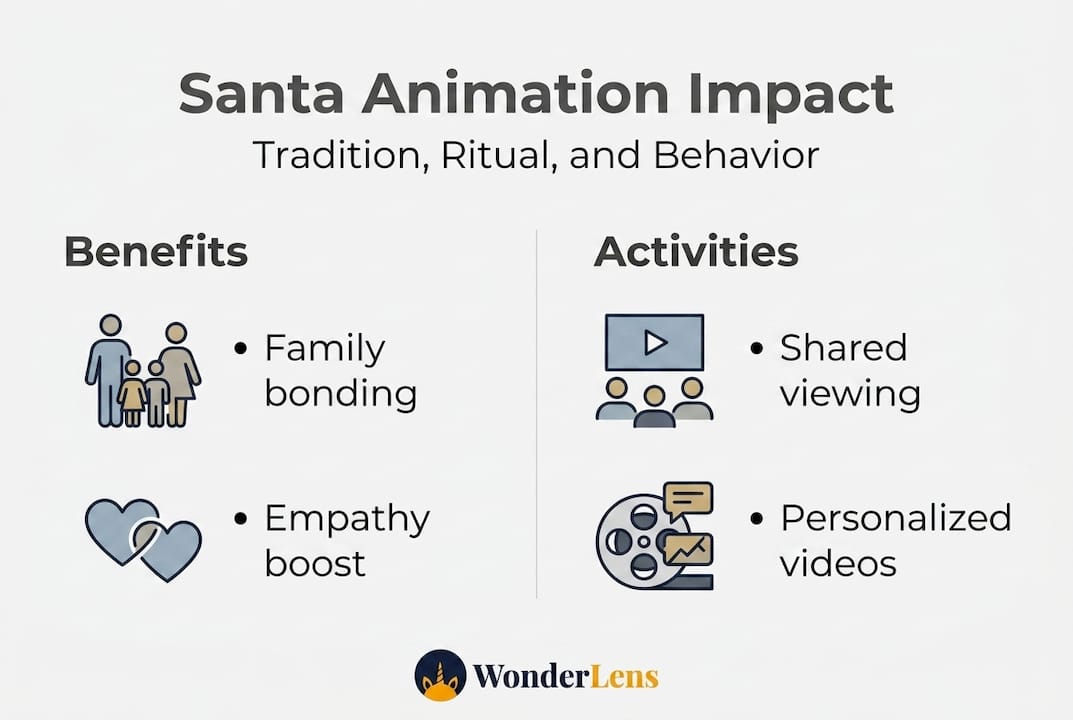
Here's how ritual and animation exposure compares to simple Santa belief when it comes to behavioral outcomes:
| Factor | Santa belief alone | Animation and ritual exposure |
|---|---|---|
| Prosocial behavior improvement | Minimal | Measurable and consistent |
| Emotional regulation | Slight | Moderate to strong |
| Family bonding | Occasional | Frequent and reinforced |
| Sustained engagement through December | Inconsistent | High |
| Behavior change duration | Short-term | Longer-lasting through season |
The numbers make a compelling case. Belief in Santa sets a fun backdrop, but it's the rituals built around animations and storytelling that produce real, observable changes in how children treat others.
Understanding holiday magic best practices can help you design your family's holiday season with intention, not just hope. Here's a simple four-step approach for pairing Santa animations with your family rituals to get the best results:
- Schedule a dedicated viewing night. Pick a specific evening early in December for your first Santa animation viewing. Make it an event with popcorn, cozy blankets, and no phones.
- Talk about what you watched. After the video, ask your child what Santa was doing and why. Open conversation deepens the emotional impact.
- Connect the story to behavior. Gently tie what Santa values in the animation (kindness, sharing, helping) to your family's daily expectations.
- Repeat with a personalized video. Follow up the classic viewing with a personalized animation featuring your child's name or home. The combination of universal story and personal detail is powerful.
According to insights on storytelling family benefits, shared narrative experiences build empathy and emotional intelligence in young children. Santa animations are a natural, joyful way to deliver those benefits.
Pro Tip: After watching a Santa animation together, ask your child to draw or describe one kind thing Santa did in the video. Then ask them to do one kind thing themselves before bedtime. This simple ritual links the story to real behavior in a way kids genuinely enjoy.
Research on lasting magical memories also shows that the emotional charge of holiday experiences influences how children remember the season for decades. Getting this right isn't just about December. It's about the stories your child carries into adulthood.
Personalized Santa animations for modern families: Options and best practices
With evidence supporting the importance of ritual and animation, today's families have more personalized options than ever before. The range of what's available now is genuinely exciting, and a little overwhelming if you're new to it.
Here are the main types of Santa animations families are using right now:
- Traditional TV specials. Timeless classics that offer shared cultural touchstones and consistent annual viewing rituals.
- Digital video greetings. Pre-recorded Santa messages that include a child's name and personal details, often created through simple online services.
- AI-personalized videos. Advanced platforms that generate short, cinematic-quality animations where Santa appears inside your actual home, with realistic lighting, movement, and shadows.
- "Santa in your living room" experiences. The most immersive option, placing an animated Santa directly into a photo of your home environment so it looks genuinely real.
Each option has its place depending on your child's age, your family's comfort with technology, and what kind of experience you want to create. The Springer research on myth discovery confirms that personalized Santa experiences work best for children between ages 3 and 10, and they function well for groups of siblings at different developmental stages. Interestingly, when children eventually discover the Santa myth, most handle it with curiosity and resilience. It's often the parents who feel more emotional about it.
There are some important practical considerations to keep in mind:
- Data privacy. Any platform that processes photos of your home or children should have a clear privacy policy. Always read it before uploading images.
- Content appropriateness. AI-generated animations can vary in quality. Choose platforms that specialize in family-friendly, child-safe content.
- Supervision for younger kids. Children under 7 may need a parent nearby when watching personalized videos to help contextualize the experience and answer questions.
- Avoiding overstimulation. The magic is strongest when personalized animations are used as special moments, not everyday content.
Looking at AI Christmas videos and comparing elfstudio AI alternatives can help you find the right fit for your family's needs and comfort level.
Pro Tip: Before showing your child a personalized Santa video, build a little anticipation. Tell them you received a special message that arrived just for your home. That setup primes their imagination and makes the reveal feel genuinely magical rather than just another screen moment.
Integrating Santa animations into your family's Christmas rituals
Knowing the options and precautions, you can now actively weave Santa animations into your holiday routine for maximum impact. The key is pairing the animation experience with a surrounding ritual, not just hitting play and walking away.
Here is a simple step-by-step approach to integrating animations meaningfully:
- Start early in December. Introduce your first Santa animation during the first week of December. This sets the tone for the entire month and gives you time to build on the experience.
- Create a viewing environment. Dim the lights, light a candle (safely), and sit together as a family. The atmosphere you create around the video matters as much as the video itself.
- Layer in a personalized video mid-season. Around December 15th, reveal a personalized animation featuring your home or your child's name. The timing builds toward Christmas and keeps excitement high.
- Revisit it on Christmas Eve. Watching a Santa animation on Christmas Eve is a powerful tradition. It connects the whole month's magic to the most anticipated night of the year.
- Archive the memory. Save the personalized video and watch it again next year before creating a new one. Seeing how much your child has grown adds a beautiful layer of meaning.
Some of the most popular ways families use Santa animations as part of holiday magic creation tips include:
- Movie nights. Dedicate one December Friday evening to a full Santa animation marathon, mixing classics with a personalized video at the end as the "special feature."
- Bedtime story replacement. Swap the usual bedtime book once or twice a week in December for a short Santa animation followed by a related story or conversation.
- Personalized video reveals. Turn the first viewing of your AI-generated Santa video into a ceremony. Gather the family, count down together, and press play as a group.
- Grandparent sharing. Send the personalized video to grandparents, aunts, and uncles so they can share in the magic even from a distance.
The Santa Claus Is Comin' to Town tradition) reminds us that animation builds magic and community simultaneously. Personalized versions amplify that through customization, making the story feel like it belongs entirely to your family. When you catch Santa in your living room, you're not just watching a video. You're creating a memory your child will describe to their own kids someday.
The research is consistent: pairing animations with intentional rituals produces the best behavioral and emotional outcomes. The animation is the spark. The ritual is what keeps the fire going all season long.
Why tradition and ritual matter more than belief: An expert perspective
Here's something worth sitting with. Most parenting conversations around Santa focus heavily on whether children believe, and how long to maintain that belief. But the science points in a different direction entirely.
The Christmas rituals research is clear: there is no strong evidence that belief in Santa directly boosts moral behavior or emotional wellbeing on its own. What does produce measurable outcomes is the ritual structure around the holidays. The watching together, the talking about what you saw, the anticipation, the repetition year after year.
"It is not whether a child believes in Santa that shapes their holiday experience. It is whether their family creates consistent, emotionally rich rituals around that belief."
Some parents worry that encouraging the Santa myth is a form of deception. Experts note that children actually hold a more nuanced understanding of fantasy and reality than adults give them credit for. Most kids instinctively know, on some level, that Santa is a story, and they choose to embrace the magic anyway. That choice is healthy and imaginative.
The real gift you give isn't the belief itself. It's the lasting magical memories built through shared experience, and the unforgettable holiday magic that comes from doing Christmas together with intention and joy. Rituals are what children remember. Make them count.
Bring personalized Santa magic to your home
Everything you've read today points toward one simple truth: the magic of Christmas lives in the moments you create, not just the beliefs you encourage.
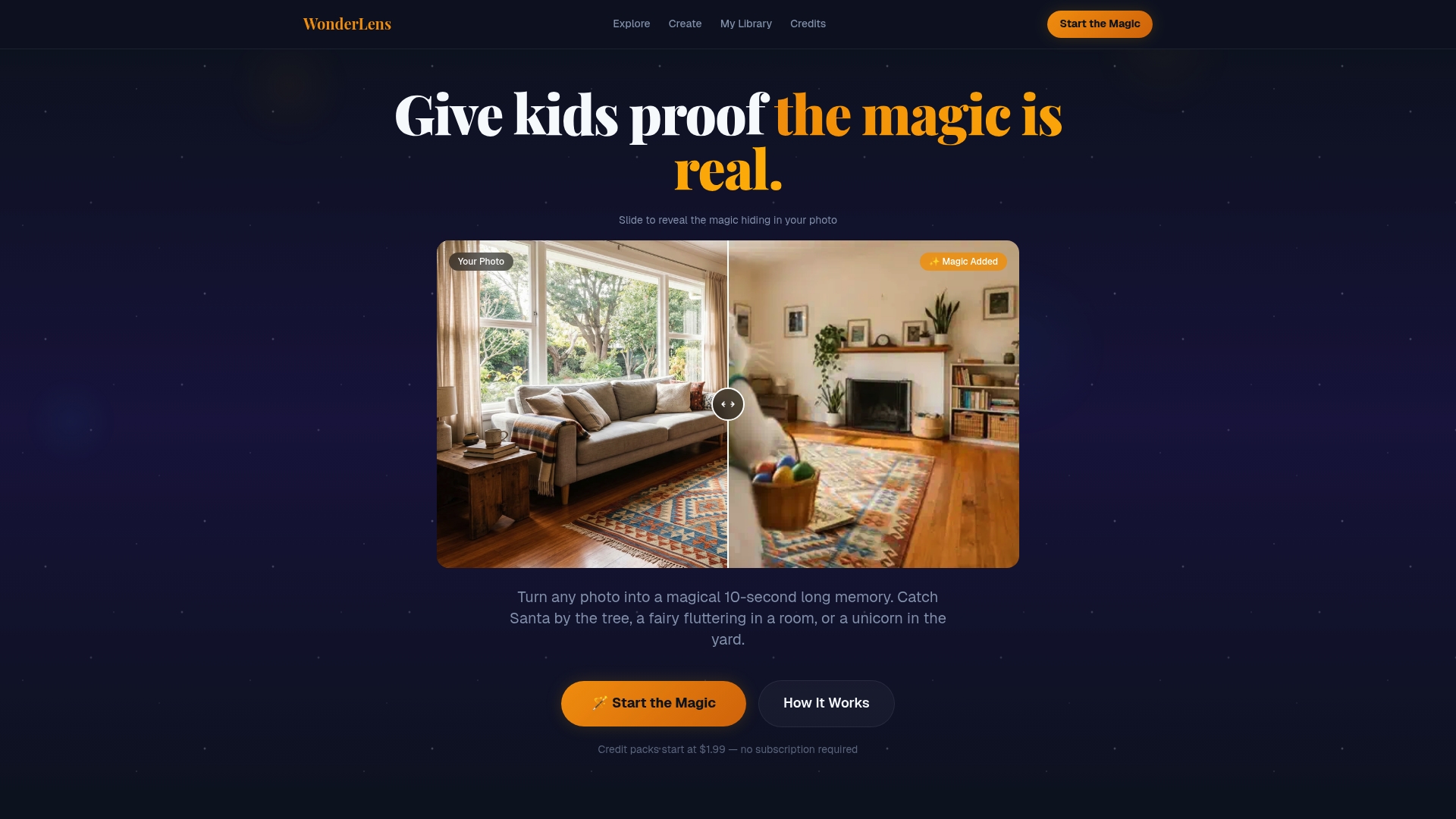
If you want to give your child a genuinely awe-inspiring holiday moment this year, WonderLens makes it beautifully simple. You can create a Santa Claus video that places a realistic, cinematic Santa directly inside your home, complete with matching shadows and warm lighting that makes it look absolutely real. Starting at just $1.99 per video, it's one of the most magical and affordable gifts you can give your family this Christmas. Visit WonderLens today and turn your living room into the most enchanted place your child has ever seen.
Frequently asked questions
What ages are Santa animations best suited for?
Santa animations are most impactful for children ages 3 to 10, and they work beautifully for siblings at different developmental stages experiencing them together.
Do personalized Santa animations improve children's behavior?
Research confirms that it's the combination of animations and consistent holiday rituals, not belief alone, that strengthens positive behaviors like kindness and generosity as Christmas approaches.
Are AI-generated Santa videos safe for young kids?
Most AI Santa videos are family-friendly, but parents should always check privacy policies and content standards before uploading photos, and supervise children under 7 during viewing.
How do families use Santa animations in holiday rituals?
Families typically weave Santa animations into annual holiday traditions) through dedicated movie nights, Christmas Eve viewings, bedtime story replacements, and personalized video reveal moments shared with extended family.
Recommended
- Catch Santa Claus in Your Living Room — Realistic Video Proof | WonderLens | WonderLens
- Catch Santa in Your Living Room — Cinematic Video Proof | WonderLens
- AI Christmas Videos: Create Magical Holiday Memories Fast — WonderLens | WonderLens
- How Easter animations create magical memories for families — WonderLens | WonderLens