Magical Family Traditions: 10 Ideas That Last
May 19, 2026

Some of the most powerful things you can give your children cost almost nothing and take only minutes. Examples of magical family traditions are everywhere once you start looking, from the way you say goodnight to how you welcome the first snow of winter. These rituals do more than fill a calendar. Family rituals build identity and confidence, answering the deep question every child carries: Who are we? This guide gives you a curated set of creative, emotionally rich traditions you can start this week, along with a clear framework for making them stick.
Table of Contents
- Key takeaways
- What makes examples of magical family traditions actually work
- 1. Morning breakfast rituals
- 2. Evening highs and lows
- 3. Friday movie or game night
- 4. Sunday walks with no screens
- 5. Greeting and goodbye rituals
- 6. Making reindeer food on Christmas Eve
- 7. Building fairy houses in nature
- 8. May Day nature rituals
- 9. Storytelling nights tied to seasons
- 10. Birthday breakfast in bed with a twist
- Comparing your options: a quick overview
- How to create and personalize your own magical family traditions
- My perspective on what traditions actually do for a family
- Add a little Wonderlens magic to your holiday traditions
- FAQ
Key takeaways
| Point | Details |
|---|---|
| Consistency beats complexity | A short daily ritual repeated reliably does more for emotional security than an elaborate event done once. |
| Traditions answer identity questions | Special family rituals give children a sense of belonging and confidence rooted in shared meaning. |
| Small habits qualify as traditions | Greeting rituals, bedtime check-ins, and weekly movie nights are all powerful bonding tools. |
| Flexibility keeps traditions alive | Let rituals evolve as your children grow so they stay joyful rather than becoming obligations. |
| Digital magic can anchor new rituals | Tools like Wonderlens can turn holiday moments into shareable memories your family revisits for years. |
What makes examples of magical family traditions actually work
Before you fill your calendar with new rituals, it helps to understand what separates a tradition that sticks from one that fades by February. The answer is almost never about how elaborate it is.
Here is what actually matters:
- Consistency over complexity. A 2 to 3 minute daily ritual repeated reliably builds more long-term emotional security than a grand event that happens once a year. Think of it as emotional glue, not a production.
- Full presence over perfect execution. A Friday movie night where phones are put away beats a themed party where parents are distracted and stressed.
- Traditions should answer "Who are we?" The magic is in the meaning, not the activity. When your family always watches the first snowfall together with hot cocoa, that is your family's story.
- Built-in flexibility. Traditions evolve as children grow, and that is a good thing. Clinging to a ritual your teenager has outgrown turns joy into pressure.
- Everyday rituals count. The most emotionally significant rituals are often the quietest ones: a specific goodbye at the door, a silly handshake, a two-minute check-in before lights out.
Pro Tip: Before inventing new traditions, look at what your family already does naturally and enjoys. Protecting those habits is often more sustainable than building something from scratch. Discovering traditions this way means they already fit your family's rhythm.
1. Morning breakfast rituals
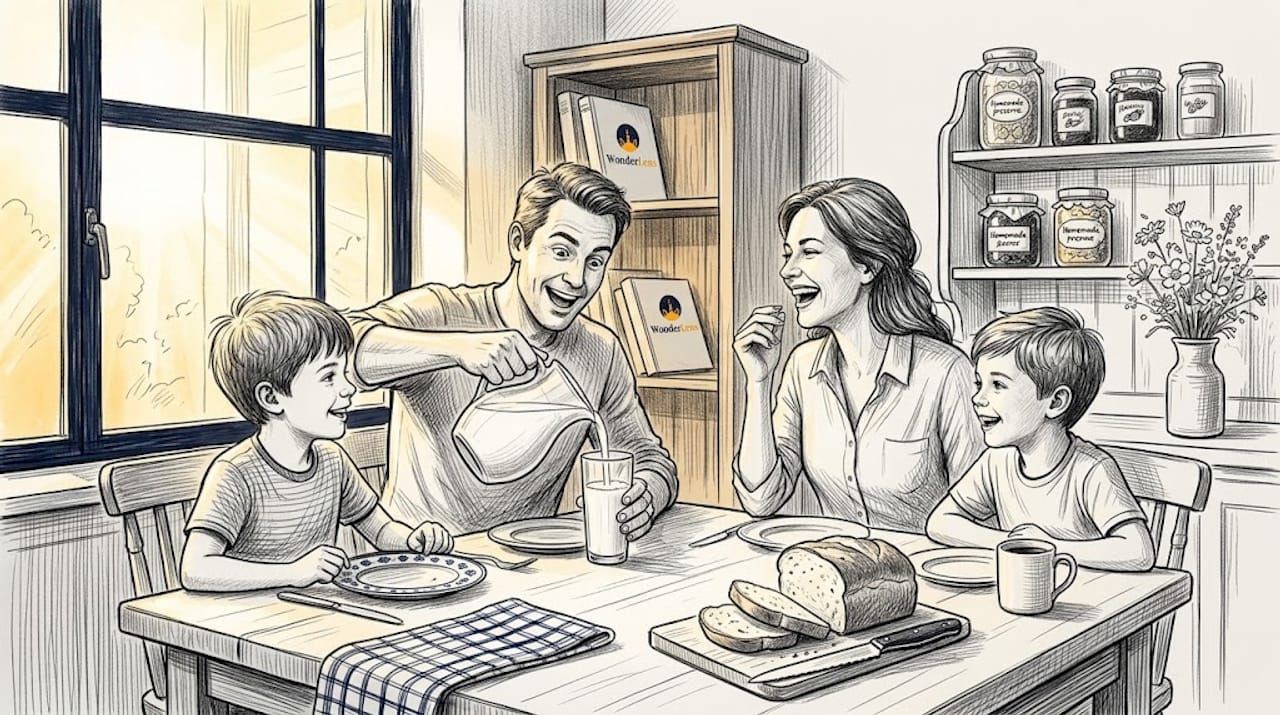
The first fifteen minutes of the day set the emotional tone for everything that follows. A simple morning ritual, even just making one special breakfast together on Saturdays, signals to kids that the day begins with connection. Some families keep a "question jar" on the table and pull one out every morning: What superpower would you want today? Others make heart-shaped pancakes every Sunday. The activity matters less than the fact that it happens reliably.
2. Evening highs and lows
Before bed, each family member shares one high and one low from their day. This takes three minutes and does extraordinary work. It normalizes that hard things happen and that the family is a safe place to name them. Children who grow up with this ritual tend to keep sharing, even as teenagers, because the habit is already wired in. You can adapt it to "roses and thorns" or "something funny and something hard" to keep it fresh.
3. Friday movie or game night
Choose a theme for the evening and rotate who picks. One Friday it is a space movie with star-shaped sandwiches; the next it is a board game tournament with homemade trophies. The theme does not need to be elaborate. What matters is that everyone knows Friday night is your night. Unique family traditions like this one are easy to start and nearly impossible to abandon once they take root.
4. Sunday walks with no screens
A weekly walk, same time, same general route, no phones allowed, becomes a quiet ritual that grows in meaning over years. Kids talk more when they are walking. Conversations that would never happen at a dinner table appear naturally on a trail. This is one of those creative family bonding ideas that costs nothing and requires almost no planning, yet parents consistently report it as one of their most treasured weekly rituals.
5. Greeting and goodbye rituals
These are the most underrated traditions in any household. A specific, silly goodbye at the door every morning ("Knock 'em dead, tiger" or a secret handshake) tells a child: You are loved, and we will see you soon. These transition rituals act as neural anchors that signal safety, especially during stressful seasons like the first week of school or a move to a new house.
6. Making reindeer food on Christmas Eve
This is one of the most beloved holiday magic activities for young children. Reindeer food costs under $5 and takes less than five minutes: mix raw oats with colored sugar or sprinkles, then scatter it on the lawn before bed. The act of doing something for Santa's reindeer, of believing the magic is real and participatory, is the kind of childhood memory that gets passed to the next generation. It is a perfect example of how a tiny gesture can carry enormous emotional weight.
7. Building fairy houses in nature
Whether you join a local Fairy House Festival or simply wander into your backyard with sticks, moss, and pebbles, building tiny homes for imaginary creatures is a magical ritual that blends creativity, nature, and storytelling. It works for ages two through twelve and costs nothing. Some families do it every spring as a way to welcome warmer weather. Others tie it to a specific walk in the woods. The tradition itself is less important than the shared belief and imagination it invokes.
8. May Day nature rituals
May 1st is one of the oldest seasonal celebrations in the world, and it translates beautifully into a modern family morning ritual. Inspired by ancient Bealtaine traditions, families can gather flowers from the yard, make simple wreaths, or leave small bouquets at a neighbor's door anonymously. Some even step outside at dawn to "wash their faces in the dew," which children find equal parts bizarre and delightful. These seasonal rituals connect your family to something larger than your household, which deepens their sense of meaning.
9. Storytelling nights tied to seasons
Pick one night a season, maybe the longest night of winter or the first warm evening of summer, and gather to tell stories. Each person contributes a chapter of a continuing family tale, or shares a true story from their own childhood. Folklore-based storytelling connects children to cultural roots while feeding their imagination. This is one of those special family rituals that feels genuinely unlike anything else in the calendar. Light candles, make it slightly mysterious, and it becomes an event kids look forward to for weeks.
10. Birthday breakfast in bed with a twist
Instead of just breakfast in bed, add one element of magic: a handwritten letter describing a proud moment from the past year, a small scavenger hunt to find their presents, or a tradition where every family member shares their favorite memory of the birthday person. This turns a standard morning into a ritual the birthday child will describe to their own children someday. The written letter, in particular, becomes a keepsake that costs nothing and lasts forever.
Comparing your options: a quick overview
| Tradition | Cost | Prep time | Best age range | Emotional impact |
|---|---|---|---|---|
| Morning question jar | $0 | None | 4 and up | Builds communication and curiosity |
| Reindeer food | Under $5 | 5 minutes | 2 to 8 | Creates Christmas wonder and participation |
| Friday movie night | $0 to $15 | Minimal | All ages | Consistent bonding and belonging |
| Fairy house building | $0 | 30 minutes | 2 to 12 | Creativity and imagination |
| Storytelling nights | $0 | Light planning | 5 and up | Cultural roots and narrative identity |
| May Day flower ritual | $0 | 10 minutes | 3 and up | Seasonal magic and community connection |
| Birthday letter tradition | $0 | 20 minutes | All ages | Deep emotional resonance, lasting keepsake |
Pro Tip: When evaluating which traditions to adopt, ask yourself: "Could we still do this in ten years?" If the answer is yes with minor adjustments, it is worth starting. If it requires children to be a specific age to work at all, treat it as a seasonal chapter rather than a lasting ritual.
How to create and personalize your own magical family traditions
You do not need to copy anyone else's traditions. The best ones are invented or discovered within your own household. Here is how to do that intentionally:
- Observe what already brings your family together. Maybe you always end up dancing in the kitchen while dinner cooks, or your kids always want to look at the moon before bed. These are raw materials for real traditions.
- Scale to your energy level. A tradition you can sustain on a tired Tuesday is more valuable than one you can only pull off when everything is perfect.
- Layer in sensory details. The smell of cinnamon, a specific song, a particular blanket. Sensory anchors make memories more vivid and help children feel the ritual before it even begins.
- Blend cultural heritage with new ideas. If your family has roots in a specific culture, pull one seasonal custom forward and make it your own. Children love knowing that their tradition connects to something older and wider than themselves.
- Let children co-create. Ask your kids what they want to do every year. Their suggestions are often simpler and more genuine than anything you would plan. When they own a tradition, they protect it.
My perspective on what traditions actually do for a family
I have seen families with elaborate holiday setups and zero emotional connection, and I have seen families with almost no budget create the most magical, meaningful rituals imaginable. What I have learned is that the magic is never in the activity itself. It is in the signal the activity sends: You matter. We show up for each other. This is who we are.
What I have also learned, often the hard way, is that overcomplicated traditions collapse under their own weight. I tried running a full themed holiday craft night every month for one family I know well. By month three, it felt like homework. The traditions that have actually lasted are the ones nobody had to work hard to remember. The Sunday walk. The birthday letter. The silly goodbye at the door every morning.
The other thing worth saying plainly: traditions are some of the most powerful tools you have when life gets hard. When a family moves, when a parent gets sick, when a child changes schools, those small repeated rituals become lifelines. They say: Even though everything is different, this one thing is still the same. That is not sentimental. It is genuinely stabilizing in ways that research on family rituals consistently confirms.
Start with one. Make it small. Do it again next week.
— Jeremiha
Add a little Wonderlens magic to your holiday traditions

Some traditions live in the body: the smell of reindeer food, the feel of cold grass on May Morning, the sound of a shared story by candlelight. Others live on screen, replayed every year and shared with grandparents across the country. Wonderlens creates the second kind. Using AI-driven video rendering, Wonderlens lets you place Santa in your living room with accurate lighting, realistic shadows, and cinematic movement. Your child watches a 10-second video of Santa actually walking through their home, past their couch, in their golden lamplight. It is the kind of personalized holiday magic that becomes a tradition in itself: watched every Christmas Eve, saved, and someday shown to their own kids. Credits start at $1.99, making it one of the most affordable and memorable holiday magic activities you can add to your family's year.
FAQ
What are the best examples of magical family traditions to start?
The best traditions are small, consistent, and emotionally meaningful. Great starting points include bedtime highs and lows sharing, a weekly movie or game night, reindeer food on Christmas Eve, and seasonal nature rituals like fairy house building.
How do you create family traditions that actually last?
Lasting traditions are usually discovered rather than invented. Look at what your family already enjoys, protect those habits, and repeat them consistently. Simplicity and low effort are what make a ritual sustainable year after year.
Do family traditions need to cost money to feel magical?
Not at all. Most of the most emotionally powerful traditions are free. A birthday letter, a Sunday walk, a question jar at breakfast, and storytelling nights by candlelight cost nothing and create memories children carry for life.
At what age should you start family traditions with children?
You can start from birth. Babies respond to rhythmic repetition, and toddlers thrive on predictable rituals. Starting early means the tradition is already woven into a child's sense of normal by the time they are old enough to articulate why they love it.
How do you keep holiday traditions feeling fresh over the years?
Let children take ownership. Rotate who chooses the movie, who leads the story, or who designs the reindeer food mix. Small variations keep the ritual alive without abandoning the core of what makes it meaningful.
Recommended
- Magical Holiday Moments: Top Rituals to Inspire Family Joy — WonderLens | WonderLens
- Best practices for creating unforgettable holiday magic — WonderLens | WonderLens
- Why create magical memories? Real value for your family — WonderLens | WonderLens
- Why Magical Videos Make Holiday Memories Last for Children — WonderLens | WonderLens