The Ultimate List of Festive Animation Characters Families Love
August 20, 2026
The most memorable festive animated characters include Rudolph, the Grinch, Frosty, Charlie Brown, Jack Skellington, Olaf, Buddy the Elf, Cindy Lou Who, and Santa Claus. Each one carries a specific origin story and a single trait that made it stick in the cultural memory: a glowing red nose, a heart that grows three sizes, a snowman who somehow keeps coming back to life.
This list of festive animation characters spans six decades of holiday storytelling, from the stop-motion classics of the 1960s to Disney's modern favorites. What ties them together is not the animation style. It's the shorthand each character gives families for talking about warmth, mischief, or redemption during the holidays.
Here's the shortlist this article expands on, with a quick provenance note for each:
- Rudolph the Red-Nosed Reindeer — Rudolph the Red-Nosed Reindeer (1964), known for his glowing red nose and outsider story.
- The Grinch — How the Grinch Stole Christmas! (1966), the grumpy villain whose heart famously grows.
- Frosty the Snowman — Frosty the Snowman (1969), the snowman brought to life by a magic hat.
- Charlie Brown — A Charlie Brown Christmas (1965), the anxious optimist searching for holiday meaning.
- Jack Skellington — The Nightmare Before Christmas (1993), the Pumpkin King who tries to steal Christmas.
- Olaf — Frozen (2013), the goofy snowman obsessed with summer.
- Buddy the Elf — Elf (2003), the human raised as a Santa's workshop elf.
- Cindy Lou Who — How the Grinch Stole Christmas! adaptations, the small-town child whose kindness disarms a villain.
- Santa Claus — a recurring figure across nearly every holiday special ever made.
Curated roundups of beloved holiday cartoon figures consistently return to this same core group, which says something about how durable these designs really are. The sections below break them into classics, villains, modern favorites, and ensembles, then walk through how to actually use them in your own family's holiday traditions.
Key Takeaways
Festive animated characters endure when they pair one striking visual trait with a clear emotional arc, and that same combination is what makes them easy to recreate as personalized family keepsakes.
| Point | Details |
|---|---|
| Classics anchor the genre | Rudolph (1964), Frosty (1969), and Charlie Brown (1965) set the visual and emotional template most later characters still follow. |
| Villains need redemption arcs | The Grinch's heart-growing scene works because the turn is sudden, earned, and tied to a single act of kindness. |
| Modern favorites lean on humor | Jack Skellington, Olaf, and Buddy the Elf succeed through comic vulnerability rather than pure heroism. |
| Ensembles widen the emotional range | The Peanuts gang and the Misfit Toys let one special land jokes and heartbreak in the same runtime. |
| Licensing matters for keepsakes | Studio-owned characters need care in commercial use; private family keepsakes or original characters avoid most issues. |
If you want to see one of these characters, or a character of your own child's imagination, standing in your actual living room this Christmas, Wonderlens turns that idea into a ten-second video in a few clicks.
Table of Contents
- List of Festive Animation Characters: The Classic Holiday Staples
- Villains and Antiheroes Who Redeem Themselves
- Modern Favorites Families Recognize Instantly
- Ensembles That Give Holiday Specials Their Texture
- Turning These Characters Into Your Own Holiday Keepsake
- Why This List Skips the Obvious Padding
- Frequently Asked Questions
- Sources
List of Festive Animation Characters: The Classic Holiday Staples
The oldest characters on this list of festive animation characters are also the most consistent. They were built for television specials several decades ago, and they have barely changed since.
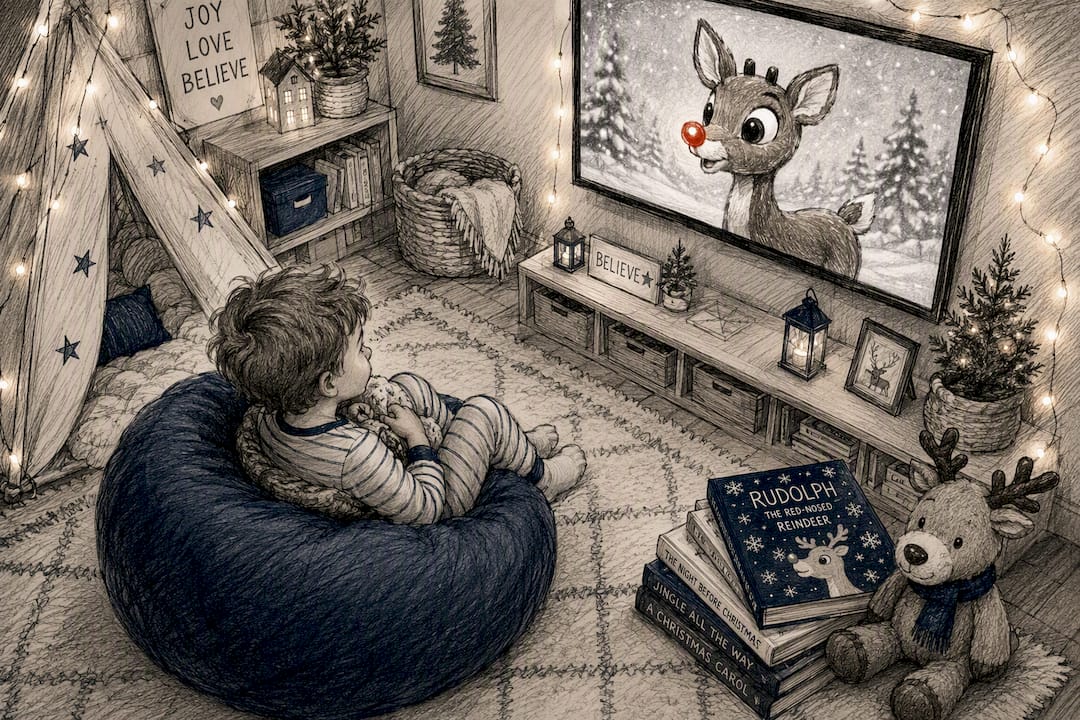
Rudolph the Red-Nosed Reindeer debuted in the 1964 Rankin/Bass stop-motion special Rudolph the Red-Nosed Reindeer, based on the earlier song and story. His glowing nose, mocked by the other reindeer, becomes the very thing that saves Christmas during a blinding storm. That arc, from ridiculed outsider to indispensable hero, is why Rudolph remains a fixture of holiday programming six decades later.
Frosty the Snowman followed in 1969, animated in a flatter, storybook style that contrasted with Rudolph's stop-motion puppetry. Frosty's magic top hat brings him to life, and his central conflict, a race against melting, gives the special genuine stakes for young viewers. Few characters make mortality this gentle or this fun.
Charlie Brown anchors A Charlie Brown Christmas (1965), a special built almost entirely around his discomfort with holiday commercialism. His scrawny, unwanted little tree becomes the special's emotional centerpiece once the Peanuts gang decorates it together. Charlie Brown works because he is not triumphant. He is anxious, a little sad, and relatable in a way most holiday heroes never bother to be.
Santa Claus shows up in nearly every special on this list in some form, but the Rankin/Bass version voiced by Mickey Rooney set a template: gruff, a little vain, eventually won over. That version, alongside side characters like Yukon Cornelius and Sam the Snowman, gave 1960s specials a sense of humor that kept adults watching too.
A few practical notes on introducing these classics to kids today:
- Watch Rudolph and Frosty back to back. Their stop-motion and hand-drawn styles make a good visual contrast for explaining animation history.
- Point out that Charlie Brown's tree is intentionally the worst one on the lot. Kids often miss that the joke is the point.
- Mention that Yukon Cornelius never actually finds treasure in the original special. It is a running gag, not an oversight.
Pro Tip: Stream the original specials before the newer remakes. The pacing is slower, but that's exactly what makes the emotional beats land, especially Charlie Brown's tree scene.
Villains and Antiheroes Who Redeem Themselves
Holiday specials rely on villains almost as much as they rely on heroes, and the pattern is nearly always the same: a character who resents the holiday gets transformed by an act of kindness they didn't expect.
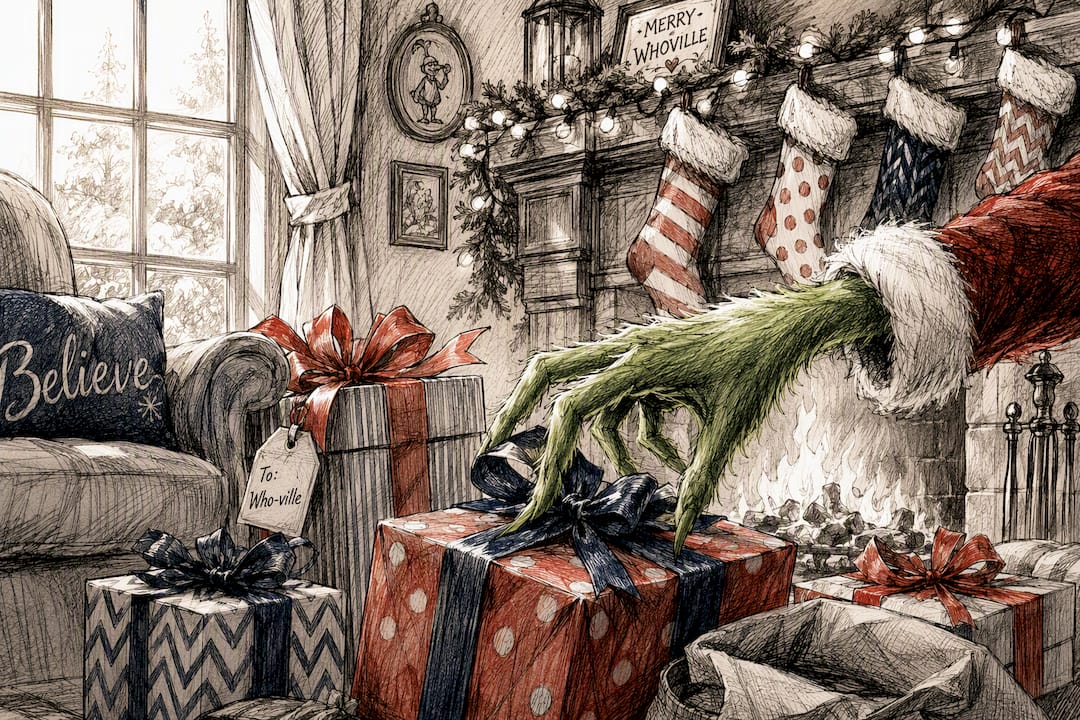
The Grinch, introduced in How the Grinch Stole Christmas! (1966), is the clearest example. He steals every gift in Whoville expecting to end Christmas, and instead discovers the town celebrates anyway. That single reversal, repeatedly adapted across specials and films, turns a grump into one of the most quoted characters in holiday animation.
The Abominable Snow Monster from the original Rudolph special plays a different role: pure menace, until Yukon Cornelius reveals it just needed a dentist. The joke softens a genuinely frightening character for younger viewers without losing the tension that made it scary in the first place.
Animated adaptations of Ebenezer Scrooge follow the same redemption blueprint, just stretched over a longer night of ghostly visits instead of a single act. Professor Hinkle, Frosty's frustrated magician antagonist, rounds out the group as a smaller-scale villain whose greed drives the plot without ever threatening real harm.
Why does this pattern work so well for the holidays specifically?
- Redemption arcs mirror the season's own themes of forgiveness and second chances.
- A single turning point (a kind gesture, a discovery, a moment of empathy) gives writers an efficient way to earn an emotional payoff in a 25-minute runtime.
- Villains who resist the holiday spirit give young viewers something to root against, which makes the eventual softening feel earned rather than sappy.
The Grinch's heart growing remains a gold standard scene for this pattern. It's abrupt, a little strange animated as literally as it is, and it works anyway.
Modern Favorites Families Recognize Instantly
Not every character on a festive animated movie characters list comes from the 1960s. A newer generation has built its own icons, and they tend to share three traits: humor, vulnerability, and a visible arc of growth.
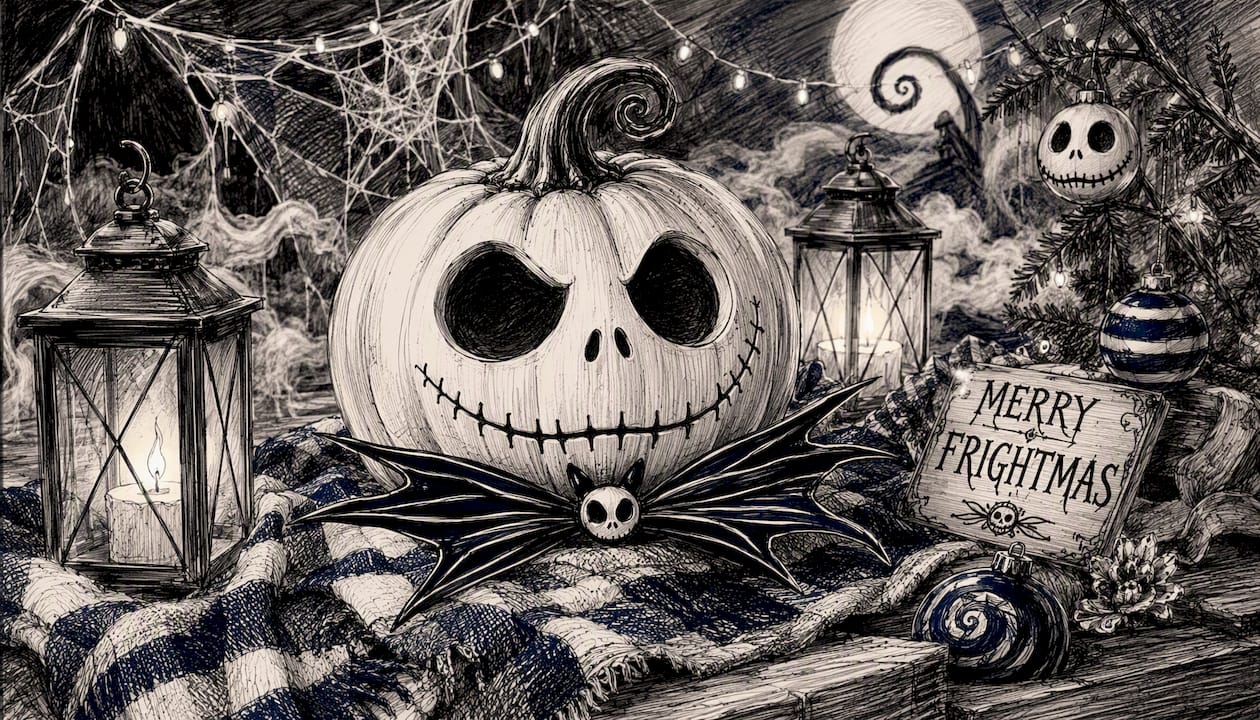
Jack Skellington, the Pumpkin King from The Nightmare Before Christmas (1993), blurs Halloween and Christmas together, growing bored with his own holiday and attempting to run Santa's instead. He fails, learns something about identity along the way, and remains one of the most cross-merchandised holiday characters in animation, showing up in theme parks and product lines nearly every winter.
Olaf, who first appeared in Disney's Frozen in 2013 and later starred in the featurette Olaf's Frozen Adventure (2017), built his popularity on pure comic relief and an odd fixation on summer despite being made of snow. Franchise reach through parks, shorts, and merchandise has made him instantly recognizable to a generation of kids who have never seen the original 1960s specials.
Buddy the Elf, from the live-action film Elf (2003), earns his spot on this list less through animation technique and more through cultural saturation. Raised among Santa's workshop elves, his oversized enthusiasm for candy canes and syrup-covered spaghetti has made him a modern archetype even outside strictly animated media.
Arthur, the awkward younger son in Arthur Christmas, and Cindy Lou Who, the small child whose innocence disarms the Grinch across multiple adaptations, round out the group.
Critics point to humor, sincerity, and clear character growth as the traits that drive this newer wave of popularity. That combination gives modern characters an emotional flexibility older, simpler designs sometimes lack, and it's exactly what makes them so easy to translate into new formats, animated shorts, theme park appearances, and now personalized family videos.
Ensembles That Give Holiday Specials Their Texture
A single hero can carry a plot, but ensembles are what make a holiday special feel full. Supporting casts let writers hit multiple emotional notes in the same twenty-five minutes, humor here, sentiment there, without asking one character to do all the work.
The Peanuts gang in A Charlie Brown Christmas spreads the emotional load across an entire classroom of kids, from Linus's earnest recitation of the nativity story to Lucy's bossy stage direction. The Misfit Toys in the Rudolph special serve a similar purpose, giving the story a chorus of rejected characters whose own longing to be loved echoes Rudolph's arc without repeating it beat for beat. Reindeer and workshop side characters round out most specials with comic relief that keeps things from getting too heavy for younger viewers.
Ensemble casts are frequently cited as essential to a special's emotional range, largely because they widen the audience. Consider one clear example of how this plays out on screen:
- In the Misfit Toys sequence, Rudolph and Hermey discover an island of rejected toys, a jack-in-the-box named Charlie, a train with square wheels. The scene lands as comedy for kids and quiet melancholy for adults watching the same rejection theme Rudolph experiences firsthand.
That double meaning, funny on the surface, sadder underneath, is exactly what a strong ensemble delivers that a solo lead cannot.
Turning These Characters Into Your Own Holiday Keepsake
Once you know which festive character your kids love most, the next question is how to actually put that character into your own holiday. Here's a simple path families use:
- Choose the character. Pick someone your child already loves, whether that's a classic like Rudolph or a modern favorite like Olaf.
- Pick the setting. A living room with a decorated tree, a snowy front porch, or a bedroom on Christmas Eve all work well as backdrops.
- Decide the action or line. A wave, a wink, a single spoken greeting. Simple beats work better than complicated scenes.
- Create or commission the clip. This is where a browser-based tool can save you the headache of manual editing.
- Share it safely. Save it privately for family, or share it in a group chat rather than posting publicly if the video features your child's face or home.
One thing worth knowing before you dive in: characters like Rudolph, the Grinch, and Olaf are owned by specific studios, which means using their exact likeness in a commercial product usually requires licensing. Families creating private keepsakes for personal use face far fewer restrictions than businesses do, but if licensing ever feels like a gray area, a generic snowman, an original elf character, or a Santa figure (a character too old and too widely used to be owned by any single studio) sidesteps the issue entirely.
This is exactly the gap Wonderlens was built to fill. The platform turns a photo of your own home into a short, cinematic-quality animated video, complete with realistic lighting and shadow work that makes a character look like it's actually standing in your living room rather than pasted on top of it. Families exploring this option can look at examples of animated holiday keepsakes or browse the different types of holiday animations available before choosing a scene.
Pro Tip: Time the reveal for Christmas Eve night, right before bed. A short animated surprise lands harder when it feels like something that happened while everyone was asleep.
A ten-second video of Santa walking past the tree, shadows falling exactly where the real furniture sits, tends to get replayed a dozen times before the kids even open a single gift.
Why This List Skips the Obvious Padding
Most roundups of holiday characters pad their count to hit a round number, tossing in forgettable one-off sidekicks just to reach fifteen or twenty entries. That approach misses the actual pattern worth noticing: a small number of design principles, a strong visual hook, one clear emotional turn, keep resurfacing across sixty years of holiday media, from stop-motion puppets to CGI snowmen.
The conventional advice treats "classic" and "modern" as opposing categories, as if newer characters like Olaf somehow compete with Rudolph for the same cultural space. They don't. They solve the same storytelling problem for different generations of kids, which is exactly why both belong on the same list.
If you take one thing from this rundown, prioritize the arc over the character design. A snowman with no story is forgettable. A snowman who melts, sacrifices something, or comes back to life sticks. That's the detail worth chasing if you're building your own holiday tradition around one of these figures, digitally or otherwise.
Frequently Asked Questions
What are the most iconic festive animated characters? Rudolph, the Grinch, Frosty, Charlie Brown, Jack Skellington, Olaf, Buddy the Elf, Cindy Lou Who, and Santa Claus consistently top curated lists of animated holiday figures, spanning both classic 1960s specials and modern films.
Are there festive animated characters from cultures beyond Western holiday traditions? Yes. Many countries have their own animated winter and festival figures, such as Ded Moroz (Grandfather Frost) in Russian and Slavic animation, and various Lunar New Year characters in East Asian family media, though they appear less often in English-language holiday roundups.
Can I legally use characters like the Grinch or Olaf in my own family keepsake video? Private, non-commercial use for personal family memories generally carries far less legal risk than commercial use, but studio-owned characters remain protected by copyright. If licensing feels uncertain, an original or generic character (a snowman, an elf, a Santa figure) avoids the issue entirely.
What makes a festive character memorable to kids? A simple visual hook, like a red nose or a magic hat, combined with a clear emotional arc such as redemption or growth, tends to stick with young viewers far longer than complex designs without a strong story beat.
How can I turn a favorite character into a personalized holiday video? Choose a character your child loves, pick a home setting like the living room or front porch, decide on a simple action or line, and use a browser-based tool like Wonderlens to generate a realistic short animation without any manual editing.
Sources
- Animated Christmas Characters – 10 Beloved Holiday Figures from Cartoons
- 10 Best Cartoon Characters In Holiday Specials: Festive Favorites - Toons Mag
- Jack Skellington — Wikipedia
Recommended
- Types of Holiday Animations: A Family Guide for 2026. WonderLens | WonderLens
- Examples of Animated Holiday Keepsakes for Families — WonderLens | WonderLens
- Holiday Animation for Parents: a Creative Family Guide — WonderLens | WonderLens
- Magical home animation types to enchant your holidays — WonderLens | WonderLens