Holiday Animation for Parents: a Creative Family Guide
May 25, 2026
Most parents think of holiday cartoons for kids as something you put on when you need a quiet moment. That assumption is worth reconsidering. When you understand how to explain holiday animation for parents in its full context, you realize it is one of the most powerful, low-cost tools you have for building real family memories. Holiday animations teach empathy, reinforce traditions, and spark creativity in ways that a simple viewing session only hints at. This guide shows you exactly what holiday animation is, what it does for your family, and how to use it with real intention.
Table of Contents
- Key takeaways
- What holiday animation actually is
- The emotional and educational benefits
- Creative ways to use holiday animation
- Technical basics parents should know
- How to choose the right holiday animation
- My take on holiday animation as a family tool
- Bring the magic into your own home
- FAQ
Key takeaways
| Point | Details |
|---|---|
| More than entertainment | Holiday animation actively builds empathy, family bonds, and cultural understanding in children. |
| Low-stimulation content wins | Calm, gently paced animations help children wind down during busy holiday periods without overstimulation. |
| Parents benefit too | Engaging with holiday animation reconnects parents with childhood wonder and opens space for creative play. |
| DIY is possible | Simple tools like Google Slides let families create their own holiday animations at home. |
| Personalization matters | Choosing animations that match your family's values and your child's age makes the experience far more meaningful. |
What holiday animation actually is
When most people hear "holiday animation," they picture a classic Christmas special or an Easter cartoon. The reality is much broader. Understanding holiday animations means recognizing they span a wide range of formats, tones, and age targets, all united by festive themes and seasonal storytelling.
Here is what the category actually includes:
- Short holiday specials. These run anywhere from 10 to 30 minutes. A great recent example is the 15-minute SuperChatons special produced in 2025, which targets preschoolers with age-appropriate, curated storytelling centered on a Christmas tree theme.
- Holiday-themed series episodes. Long-running animated franchises often release festive episodes. A culturally themed Doraemon special episode drew massive viewership by weaving travel and cultural themes into an 11-minute story, showing how beloved characters bring extra resonance to festive content.
- Holiday animated movies. These are feature-length films centered on seasonal themes, ranging from sweet and gentle to funny and adventurous.
- Personalized animated experiences. A newer category where families can place holiday characters like Santa or a fairy directly into their own home environment through AI-driven tools.
The visual appeal matters enormously. Children respond to bold colors, expressive characters, and storytelling paced just for them. Younger children, roughly ages 2 to 5, do best with simple plots, repetition, and gentle characters. Older kids, ages 6 and up, can handle more complex emotional storylines and humor. Knowing that difference helps you pick the right content at the right time.
The emotional and educational benefits
Here is where the parent guide to holiday films gets genuinely interesting. Watching holiday animated movies with your kids is not passive. It is one of the most efficient ways to model values, build emotional vocabulary, and start conversations that would otherwise feel forced at the dinner table.
Zog producers Martin Pope and Michael Rose have spoken about their intentional approach: their stories center on empathy and caring through character relationships, even in whimsical fantasy settings. When your child watches a dragon navigate friendship and community challenges, they are practicing emotional reasoning. You are watching together. That shared experience is the seed of a real conversation.
"Holiday animations resonate best when they exhibit empathy and caring through character relationships, even in whimsical fantasy settings." — Zog producers Martin Pope and Michael Rose
Beyond emotional learning, the calm, low-stimulation viewing trend is worth your attention. Content creator Kathy Patalsky has identified a growing parent preference for gentle narration, slow pacing, and soft watercolor-style visuals during holiday evenings. These shows help children decompress rather than ramp up. That matters a lot during the holidays when schedules are disrupted and kids are already overstimulated by events and sugar.
The benefits for you as a parent are just as real. Research shows that parents who engage with holiday animations alongside their children report rediscovering a sense of childhood magic and creative play. You are not just supervising screen time. You are reconnecting with something joyful.
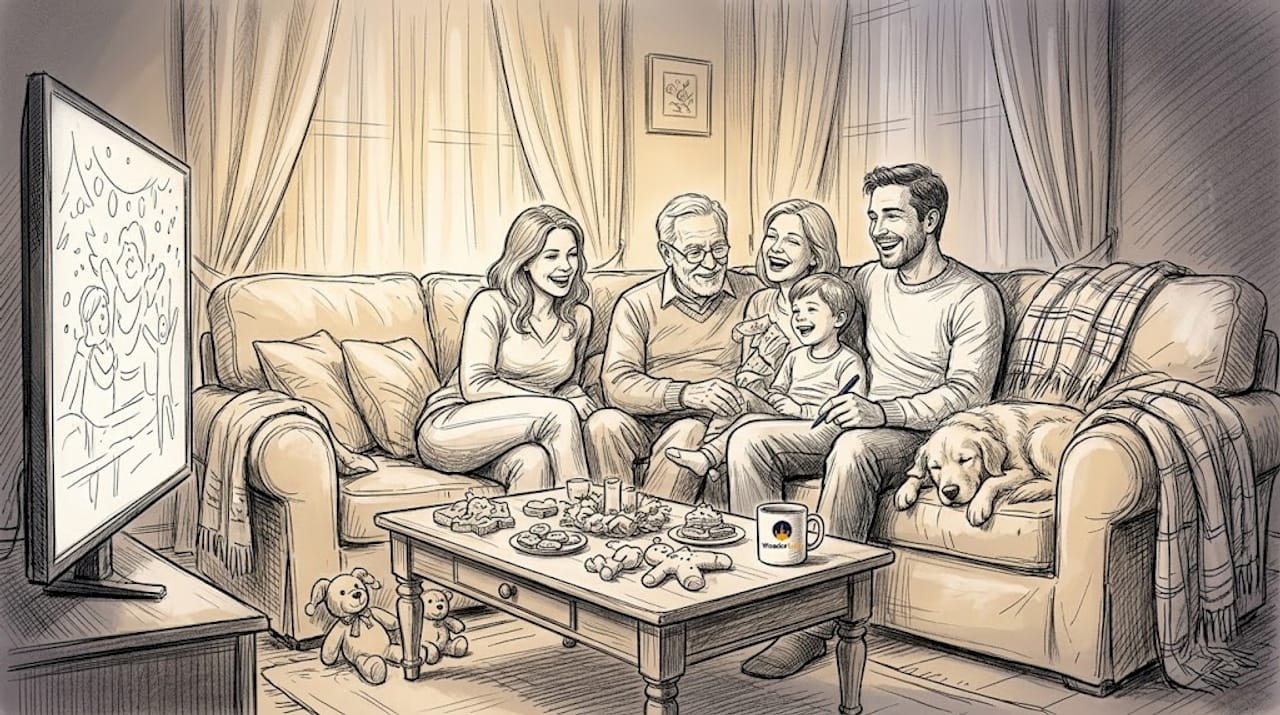
Pro Tip: Pick one holiday animated special each year and make it an annual ritual. Same show, same night, same snacks. Children anchor their emotional memories to repetition, and you will be amazed how much they look forward to it by year three.
Creative ways to use holiday animation
Watching holiday animations with kids is just the starting point. The most memorable family moments come from making animation part of something active and participatory.
- Use it as a storytelling prompt. After watching a holiday special together, ask your child to retell the story using toy characters or drawings. This builds narrative skills and extends the magic beyond the screen. Stories that resonate best use strong character dynamics that children naturally want to recreate.
- Create an animated family keepsake. Instead of a standard holiday photo, turn a photo of your living room into a short animated memory. Tools like Wonderlens let you place Santa, a unicorn, or a fairy into your actual home space with realistic lighting and shadows, producing a shareable 10-second video your kids will ask to watch on repeat. These animated holiday keepsakes are the kind of thing families treasure for years.
- Try DIY animation at home. Give your child a simple holiday animation project using free tools. Google Slides is genuinely effective. The key is duplicating frames with small, consistent movements of a character or object. Even a paper snowman sliding across a background becomes thrilling when your child realizes they made it move.
- Build a viewing ritual. Create an "animation night" during the holiday season with themed hot cocoa, blankets, and a curated short list of holiday cartoons for kids. The ritual itself becomes part of the holiday memory, separate from the content on screen.
Pro Tip: When doing DIY animation with younger kids, skip the perfection goal entirely. A wiggly, slightly chaotic animation your child made themselves is worth 10 polished ones they just watched. The pride on their face when it plays back is the whole point.
Technical basics parents should know
You do not need to be a filmmaker to appreciate or attempt holiday animation. But knowing a few fundamentals helps you recognize quality, choose better content, and guide your child's creative projects with confidence.
| Concept | What it means for parents | Why it matters |
|---|---|---|
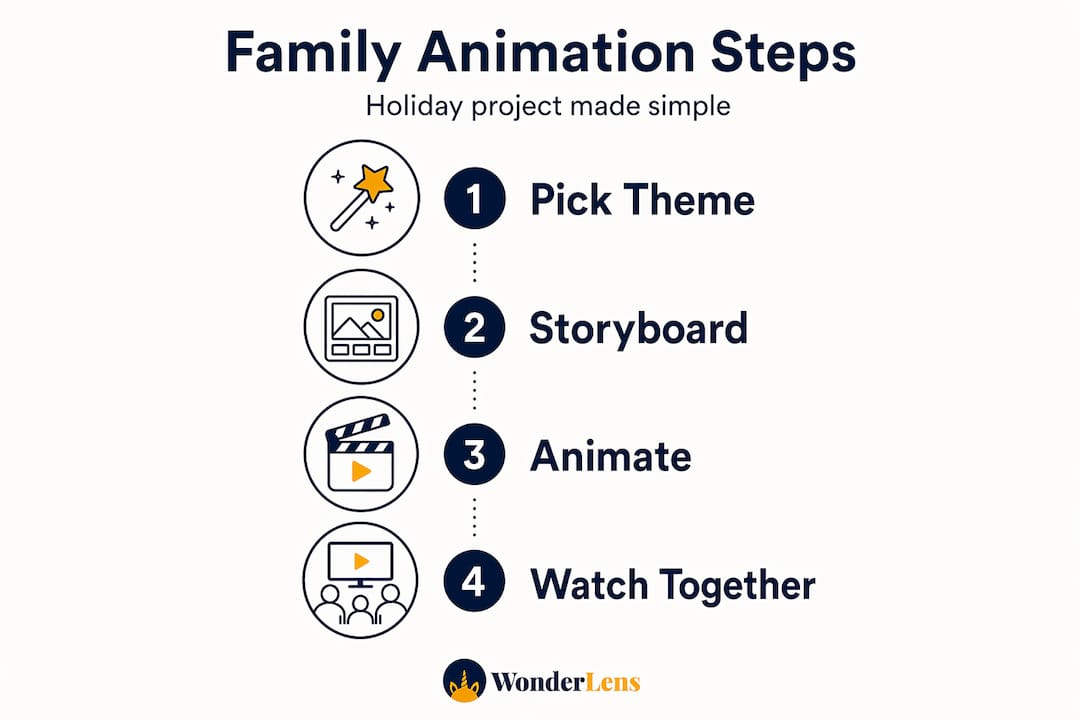
| Storyboarding | Sketching scenes in order before animating | Pixar's process shows this is the most critical phase; skipping it creates choppy, confusing stories |
| Timing and pacing | How long each movement or scene lasts | Dynamic pauses make characters feel alive; flat timing makes them look robotic |
| Frame duplication | Copying a frame and making small changes to simulate motion | The Google Slides method uses this approach for easy home animation projects |
| Lighting and shadows | How light hits characters to make them look part of a scene | Professional tools like Wonderlens use AI rendering to match character lighting to your actual room |
The storyboarding point is the one most parents overlook when helping kids make animations at home. Before your child starts moving anything, spend five minutes sketching three to five frames on paper. What happens first? What moves? Where does the character end up? That simple plan turns a frustrating project into a fun one.
Timing is equally important and easier to feel than to explain. Watch a high-quality holiday special and notice where the characters pause slightly before reacting. That small beat is intentional. It is what separates animation that feels alive from animation that feels mechanical.
How to choose the right holiday animation
Not all holiday animated movies are created equal, and not all of them are right for every family or every child. Here is how to filter wisely.
- Match pacing to your child's current state. After a long, exciting holiday event, choose a low-stimulation option with gentle narration and soft visuals. Save the action-packed specials for earlier in the day.
- Look for empathy-centered stories. The best holiday cartoons for kids put characters in situations that require them to understand someone else's feelings. That is the content your child will talk about after the credits roll.
- Check age targeting honestly. A special designed for preschoolers will bore a 9-year-old, and a complex emotional holiday film may confuse a 4-year-old. The pacing, vocabulary, and plot complexity are all calibrated for specific age ranges.
- Prioritize cultural alignment. If your family celebrates specific traditions, look for animations that reflect or respectfully explore those themes. Children absorb identity and belonging through the stories they see themselves in.
- Treat animation as expression, not just consumption. The best animated holiday specials overview you can give your child is one that ends with a question: "If you could add one more scene to that story, what would happen?" That single question shifts the experience from passive watching to active imagination.
My take on holiday animation as a family tool
I will be honest with you. When I first started paying close attention to what families were actually doing with holiday animation, I expected to find mostly screen time guilt and vague intentions to "watch something nice together."
What I found instead surprised me. The parents who got the most out of holiday animation were not the ones who curated the perfect watch list. They were the ones who stayed in the room. They watched alongside their kids, laughed at the same moments, and asked one genuine question afterward. That was it. No lesson plan. No structured debrief.
What I have learned is that the magic of holiday animation is not in the content itself. It is in the shared attention. When you sit down to watch a holiday special together and you are actually present, not scrolling, not half-watching, your child registers that. The animation becomes a backdrop for connection.
I have also seen parents massively underestimate the creative side. Making a 10-second animated video with your child, even a clumsy one, creates a memory the purchased content never will. The emotional payoff of rediscovering creative play through your child's eyes is something no streaming catalog can replicate.
My one caution: do not let the search for the "perfect" holiday animation become its own stress. A short, gentle special watched with full attention beats a feature film watched while everyone is on their phones.
— Jeremiha
Bring the magic into your own home
If this article has sparked an idea or two about how animation could make your holiday season feel more alive and memorable, Wonderlens is worth a look.

Wonderlens lets you take a photo of your living room and transform it into a short, cinematic-quality animated video featuring Santa, a fairy, a dragon, or other holiday characters moving through your actual space. The AI renders realistic shadows and lighting so the character genuinely looks like it belongs in your home. Your kids will not just watch a holiday animation. They will be part of one. Credits start at $1.99, and the whole experience takes just minutes. Explore Wonderlens holiday animations and see what your home looks like when the magic walks in.
FAQ
What does holiday animation mean for children?
Holiday animation refers to animated films, shorts, and specials themed around festive occasions like Christmas, Easter, or Hanukkah. These stories use visual storytelling, music, and character journeys to engage children emotionally during the holiday season.
What age is best for watching holiday animated specials?
Most holiday animated content is designed for children ages 2 and up, with age-specific pacing and complexity. Preschool-targeted specials like the SuperChatons Christmas episode use gentle storytelling and short runtimes, while longer holiday animated movies suit children ages 6 and up.
How do holiday cartoons benefit children emotionally?
Holiday cartoons built around empathy and caring help children practice emotional reasoning and perspective-taking. Research from the Zog production team shows that character-driven stories in whimsical settings resonate deeply with both children and parents.
Can parents create holiday animations at home?
Yes. Simple tools like Google Slides allow families to create basic animations by duplicating frames with small incremental movements. For more cinematic results, platforms like Wonderlens can place holiday characters directly into your home environment using AI rendering.
How should parents choose holiday animated content?
Look for age-appropriate pacing, empathy-centered storylines, and cultural relevance to your family. For evenings after busy holiday events, low-stimulation animated content with gentle visuals and slow pacing helps children wind down without adding more excitement to an already full day.
Recommended
- Why animated photos make holiday memories more magical — WonderLens | WonderLens
- Why animated holiday surprises matter: the parent's guide to magical moments — WonderLens | WonderLens
- Create memorable Easter animations: a step-by-step guide for parents — WonderLens | WonderLens
- Creative photo animation steps for magical family memories — WonderLens | WonderLens