Why animated photos make holiday memories more magical
May 12, 2026
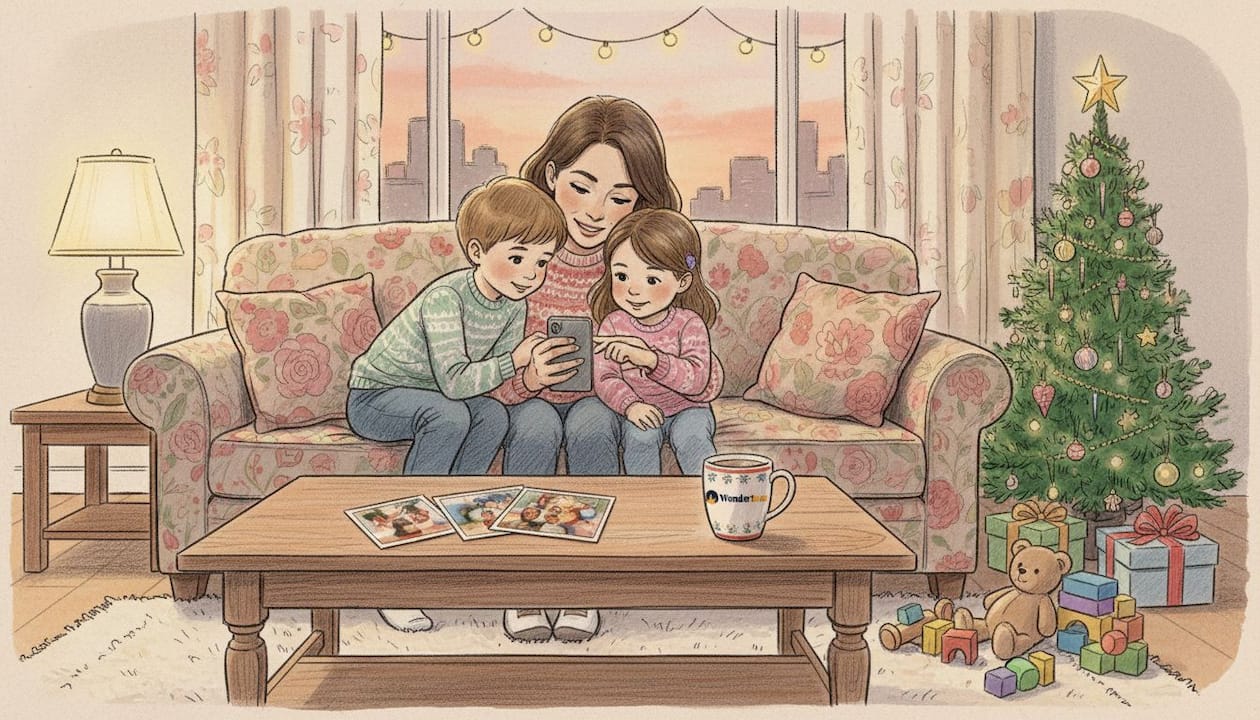
There is a moment every parent knows well: you pull up last year's holiday photo on your phone, your child glances at it, smiles politely, and moves on. Meanwhile, a short animated clip of Santa walking through your living room plays on the screen and your child screams with joy, grabs a sibling, and begs to watch it again. That gap between a quiet smile and pure, screaming delight is exactly what we want to talk about today. This guide breaks down the real differences between animated and static holiday photos, looks at what the evidence actually says, and helps you make the smartest choice for your family's most magical memories.
Table of Contents
- The emotional power of animation versus static photos
- Do animated experiences actually boost engagement?
- What parents must know: Animation's impact on young children
- Making holiday memories at home: Practical ways to use animation
- Our real lesson: Animation is a tool, not a silver bullet
- Bring your family's holiday memories to life
- Frequently asked questions
Key Takeaways
| Point | Details |
|---|---|
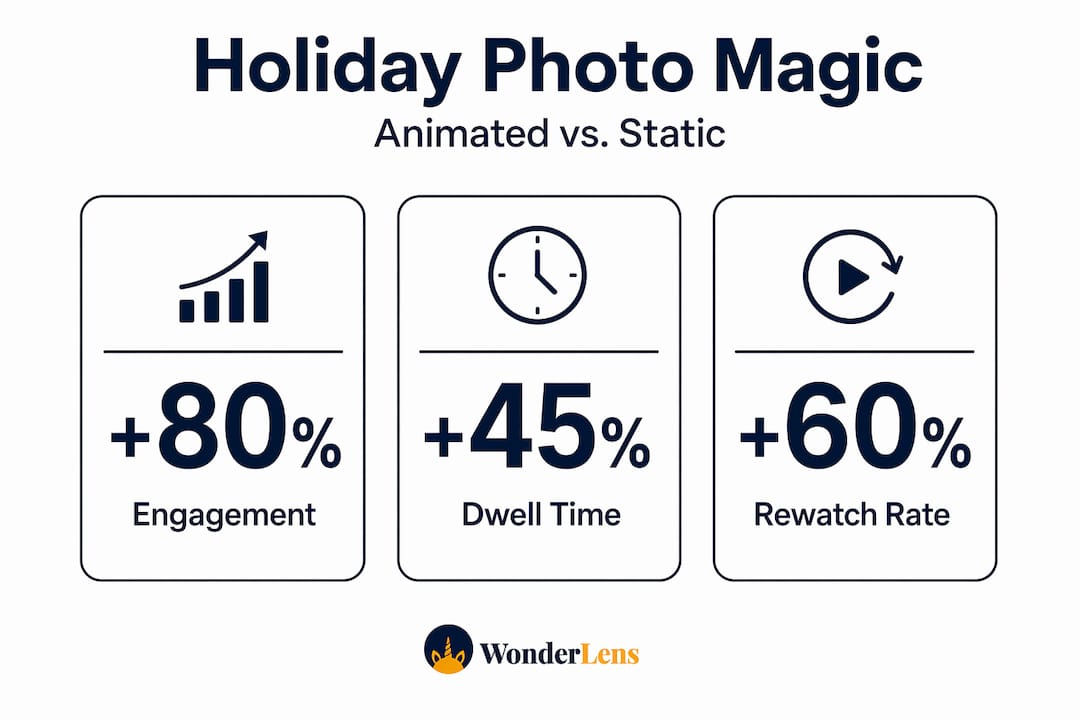
| Animation boosts engagement | Animated memories get up to 80 percent more engagement than static photos. |
| Choose gentle animation | For toddlers, opt for slow-paced, low-novelty animation to avoid overstimulation. |
| Shared moments matter | Involve your child in creating animations for stronger emotional bonds. |
| Balance is key | Use animation to enrich, not entirely replace, traditional holiday photos. |
The emotional power of animation versus static photos
Now that we've previewed what you'll learn, let's start with how each format impacts your family's emotional memories.
A static photo is a snapshot. It freezes a single perfect second: the tree lit up, the kids in matching pajamas, everyone smiling on cue. There is real beauty in that. But a photo is passive. It sits still and waits for you to feel something about it.
Animation is completely different. When a character moves through your actual living room, when the shadows shift realistically as a fairy flutters past your bookshelf, you are watching a story unfold. That story pulls your child in emotionally. It creates surprise, laughter, and a sense of wonder that a still image simply cannot replicate.
The data backs this up. Video and animated media consistently outperforms static formats in engagement and dwell time, with uplifts ranging significantly depending on pacing and context. That pattern holds true at home, too. When a child watches an animated memory, they stay with it longer, talk about it more, and recall it more vividly later on.
An animated photo transformation takes what you already love about a family photo and layers in movement, life, and story. That combination is what makes a memory feel truly unforgettable.
Here are the key ways animation deepens emotional connection for young children:
- Surprise and delight: A character suddenly appearing in a familiar room triggers genuine excitement, not just recognition.
- Storytelling: Even a 10-second clip tells a story with a beginning, middle, and end, which is how children naturally process and remember experiences.
- Nostalgia on repeat: Kids love rewatching magical moments, which reinforces the memory each time.
- Shared laughter: Animation creates natural "did you see that?" moments that the whole family talks about together.
- Personal connection: When the animated scene happens in your home, it feels real and personal, not generic.
| Feature | Animated photos | Static photos |
|---|---|---|
| Emotional engagement | Very high, movement triggers wonder | Moderate, relies on viewer's imagination |
| Recall and memory | Strong, storytelling aids retention | Good for single moments |
| Child interaction | Active, kids want to rewatch | Passive viewing |
| Shareability | High, feels fun to send and receive | Standard, familiar format |
| Creative possibilities | Broad, characters, lighting, movement | Limited to the captured moment |
"The difference isn't just visual. When a child sees a dragon landing on their back porch or a unicorn walking through the kitchen, it becomes a story they tell their friends. Static photos become albums. Animated memories become legends."
Using AI-powered photo animation makes this experience accessible to every family, without any professional editing skills or expensive equipment.
Do animated experiences actually boost engagement?
After understanding the emotional strengths, it helps to look at the evidence for engagement at home.
Animation holds attention. That is not a feeling or a guess; it is a measurable pattern. Animated content consistently boosts engagement by 20 to 80 percent compared to static formats, with the biggest lifts seen when the content feels personal and relevant to the viewer. For a child watching a magical character move through their own bedroom, the personal relevance could not be higher.
Here is a simple look at how dwell time and attention compare in home settings:
| Content type | Average attention span (young children) | Likelihood of rewatching |
|---|---|---|
| Animated family video (personalized) | 45 to 90 seconds | Very high |
| Static holiday photo | 5 to 15 seconds | Low |
| Generic animated cartoon | 20 to 60 seconds | Moderate |
| Printed holiday card | 5 to 10 seconds | Very low |
The personalization factor is huge. Children do not just watch an animated Easter video featuring a bunny hopping through their actual hallway. They point at the screen, they name the rooms, they connect the fantasy to their reality. That connection is what keeps them engaged and coming back.
Getting the whole family involved makes it even richer. Here are five tips for turning animated memories into a shared family activity:
- Watch together on a big screen. Project the video on your TV and gather everyone. The shared reaction is part of the magic.
- Let siblings guess what happens next. Pause a few seconds in and ask the kids what they think the character will do.
- Create a "premiere night" tradition. Treat the first viewing like a tiny family event with popcorn and dim lights.
- Share with grandparents and cousins remotely. Send the video to extended family so kids can experience their reaction live on a video call.
- Save it as a keepsake. Build a folder of animated holiday memories year by year so you can replay them as your children grow.
Easter animations for families are a wonderful place to start if you want to build this kind of tradition from the ground up.
What parents must know: Animation's impact on young children
Now that we've seen how animation can help, it is crucial to recognize that not all animation is created equal, especially for the youngest kids.
Fast-paced cartoons with rapid scene changes and high novelty are very different from gentle, slow-moving animated memories. Research shows that fast-paced, high-novelty animation can have short-term negative effects on toddlers' ability to focus and regulate their responses. That finding is important. It does not mean animation is bad. It means the type of animation matters enormously when your audience is under four years old.
Watch for these signs that an animation may be too stimulating for your toddler or young child:
- Restlessness or fidgeting during viewing, even though they want to keep watching
- Difficulty settling down or transitioning to another activity after the video ends
- Increased emotional reactivity or meltdowns shortly after screen time
- Reduced interest in quieter play immediately following the animation
- Blank or glazed expression during viewing rather than active curiosity
These are signals to slow things down, not to stop using animation entirely.
Pro Tip: For children under four, choose animation that moves at a calm, predictable pace with familiar characters. A gentle fairy floating through your living room is far more appropriate than a fast-moving, chaotic fantasy sequence.
A parent's guide to gentle animation can help you identify which styles of animated characters and movement are most appropriate for your child's age and temperament.
"Matching the pace and tone of animation to your child's developmental stage is not just a nice idea. It is the difference between a magical memory and a stressful afternoon."
The good news is that beautifully crafted, cinematic-quality animation does not need to be frantic to be magical. A Santa Claus who walks slowly and warmly through your living room, casting realistic shadows, is infinitely more enchanting to a young child than a cartoon that zips around the screen. Realism, gentle pacing, and familiar holiday characters are the perfect recipe for toddler-friendly animated memories.
Making holiday memories at home: Practical ways to use animation
With the right approach, animation becomes a powerful tool for holiday connection. Here's how to start simply at home.
You do not need to be a filmmaker to create something your child will remember for years. The key is starting with tools that do the technical work for you while you focus on the fun. For young children especially, animation style should be gentle and grounded in familiar, warm imagery rather than overwhelming novelty.
Here are five easy ways to bring animation into your holiday traditions at home:
- Create a personalized holiday greeting. Instead of sending a static photo card, send a short animated clip of a holiday character visiting your actual home. It will be the most-opened message in anyone's inbox.
- Build a "magical visitor" tradition. Each holiday season, have an animated character visit a specific room in your home. Over the years, your kids will look forward to seeing where Santa, the Easter Bunny, or a fairy will appear next.
- Pair animation with a bedtime story. Use a short animated clip as a visual opener to a holiday story. Seeing the character "arrive" before story time makes the tale feel immediate and real.
- Capture different rooms year over year. Pick a new room each year for your animated memory. Looking back at how your kitchen, living room, or bedroom has changed over the years adds a beautiful layer of nostalgia.
- Use animated memories to mark milestones. First Christmas, first Easter egg hunt, first time a child is old enough to understand the magic. Animation marks those milestones with something more vivid and specific than any single photo could.
When you are using animated memories with kids for the first time, keep it simple. One character, one room, one moment. Let your child's reaction guide how much you add in future seasons.
Here is a practical do's and don'ts list for parents just getting started:
Do:
- Let your child pick the character if they are old enough to choose
- Use your actual living space so the video feels personal and real
- Watch together as a family for the first viewing
- Save the video somewhere secure so you have it in five years
Don't:
- Show multiple animated videos back to back in one sitting for toddlers
- Choose fast-moving, high-novelty animations for children under three
- Prioritize perfection over participation; a slightly imperfect magical moment still creates joy
- Replace every static photo tradition with animation overnight; add to what you already do
Pro Tip: Let your child help you decide where the character should "visit" in your home. That tiny moment of involvement makes them feel like co-creators of the magic, not just an audience.
The most memorable holiday moments usually come from shared experiences, not polished productions. When you add animated characters to family photos, you are adding a layer of story and wonder to something you already treasure.
Our real lesson: Animation is a tool, not a silver bullet
Having worked with hundreds of families, here is what we have truly found about animation and childhood memories.
The families who get the most joy from animated holiday videos are not the ones who use it the most. They are the ones who use it intentionally. There is a real temptation to treat every new technology as a replacement for something older and supposedly less exciting. But the families with the richest holiday memories tend to mix formats. They have the old printed photo on the mantle and the animated clip saved on their phone. Both do something the other cannot.
What most parents misunderstand is that the magic in animation is not in the technology itself. It is in the moment of connection it creates. A child grabbing a parent's arm in delighted shock, a grandparent bursting out laughing on a video call, siblings reenacting what the character did because it was so funny: those are the memories. The animation is the spark, not the fire.
More is not always better. We see it clearly: the families who pile on animated effect after animated effect quickly find that their children become numb to the novelty. But the family that pulls out one beautifully crafted, realistic animated video on Christmas morning? That child will talk about it for weeks.
The WonderLens parenting blog explores this balance in depth, with real family stories and creative ideas for making animation feel special rather than routine.
Our honest advice: let animation be the highlight, not the habit. One magical animated memory per holiday, created thoughtfully and watched together, will outperform a dozen quickly made clips every single time. Intentionality is what transforms a digital tool into a family tradition.
Bring your family's holiday memories to life
Ready to enrich your family's holiday traditions with the magic of animation?
WonderLens makes it easy and genuinely beautiful. Upload a photo of your living space and watch as realistic, cinematic-quality animated characters come to life inside your actual home. Santa casting a warm glow across your fireplace, a unicorn catching the morning light in your hallway, a fairy drifting past your child's favorite corner. Every shadow, every lighting detail is crafted to make the moment feel real.
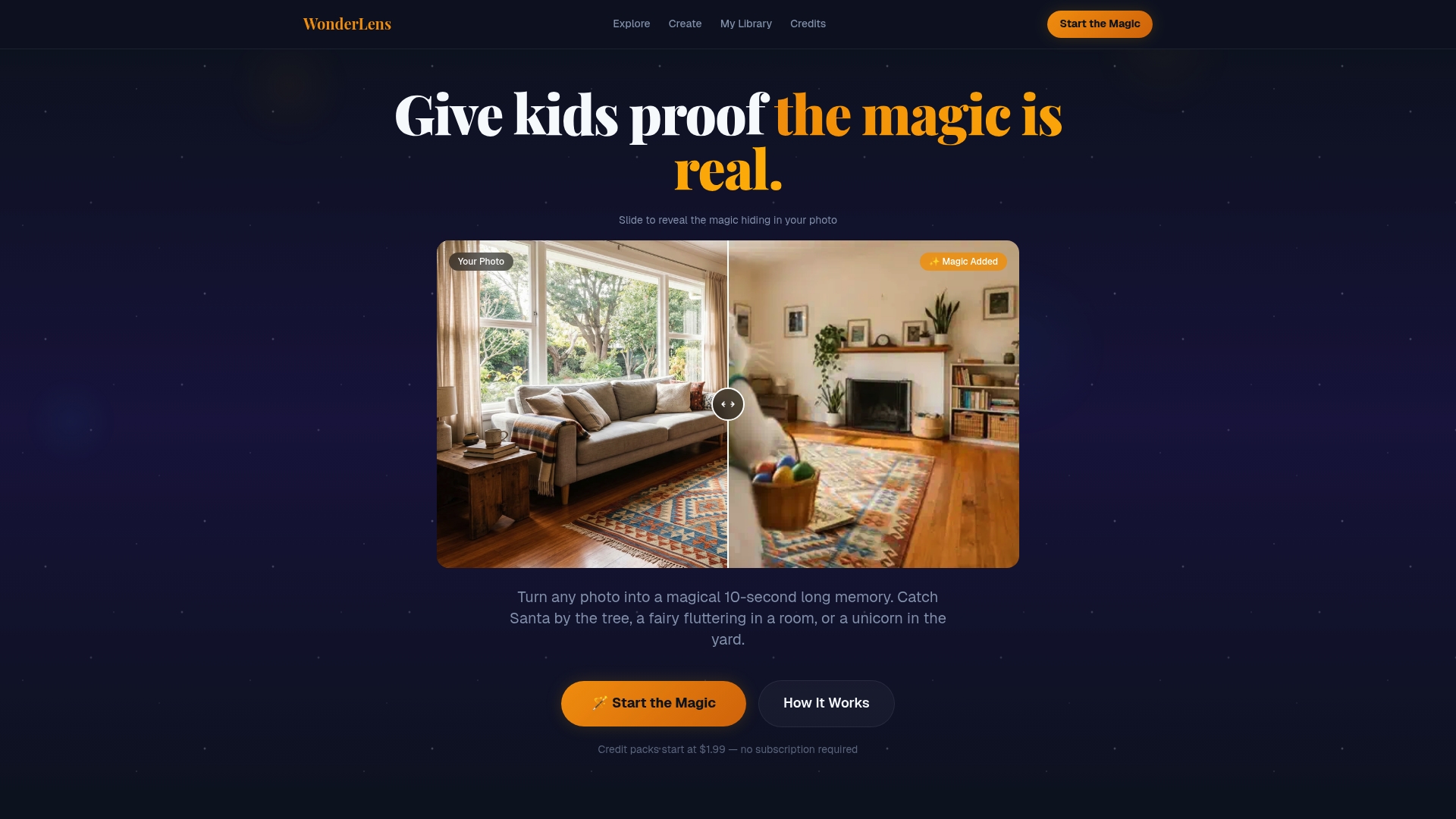
Getting started takes just a few minutes, and credits begin at $1.99 per video. The platform is family-friendly, safe, and designed so any parent can create something truly magical without any editing experience. Whether you want a gentle Easter Bunny hopping through your kitchen for your toddler or a dramatic dragon landing in your backyard for older kids, WonderLens brings the right character to the right moment. Visit WonderLens today and create a holiday memory your child will ask to watch again and again.
Frequently asked questions
Is animation always better than static photos for young children?
Animation can be far more engaging, but gentle, slow-paced styles are best for toddlers to avoid overstimulation. Fast-paced, highly novel animation has been linked to short-term impacts on focus in very young children, so choosing calm, realistic animations is key.
How much more engaging are animated holiday memories compared to photos?
Research shows video and animated content can increase engagement by 20 to 80 percent over static images, depending on pacing and personal relevance. For personalized family videos, the effect is often even stronger because children recognize their own home.
Are there risks in using animated photos for toddlers?
Yes, fast and highly novel cartoons can temporarily affect self-control in young children, which is why gentle pacing and familiar characters are recommended for toddlers. Watching one short, calm animated memory at a time is the safest and most enjoyable approach.
What is an easy way to start making animated memories at home?
Begin with one character, one room, and one holiday moment, then watch it together as a family on a big screen. Involving your child in simple choices, like picking the character, makes the whole experience more meaningful and fun.
Should animated photos replace traditional holiday photos?
No, animated photos work best when they supplement your existing photo traditions rather than replace them. A beautiful static photo on the mantle paired with a magical animated clip on your phone gives your family the best of both worlds.