Six Parenting Tips for Memorable Holidays With Little Kids
August 19, 2026
Six moves make the biggest difference in a stress-free, memorable holiday with young kids: plan a loose itinerary instead of a packed one, pack a toddler kit before you pack anything else, pick one or two small rituals and repeat them yearly, build downtime into every day, keep a simple illness or meltdown backup plan, and let go of the picture-perfect version in your head. That last one matters most.
- Build a loose, not packed, schedule
- Pack the toddler kit first
- Choose one or two repeatable rituals
- Protect nap and snack windows
- Have a backup plan for sickness or meltdowns
- Drop the perfection standard
Research on holiday memory-making keeps landing on the same point: meaning comes from ritual and consistency, not spectacle. A repeated pancake breakfast beats a rented photo booth almost every time.
Key Takeaways
Memorable holidays come from repeated, low-effort rituals and reduced parental stress, not from elaborate décor or a packed schedule.
| Point | Details |
|---|---|
| Loose beats packed | Plan two or three anchor moments per day and leave the rest flexible. |
| Pack the kit first | A toddler bag with snacks, comfort items, and small toys prevents most meltdowns. |
| Repeat one ritual | Choose a sensory, low-setup tradition and keep it exactly the same each year. |
| Protect sleep and snacks | Missed naps are the most predictable cause of holiday meltdowns. |
| Add optional extra magic | Wonderlens can layer a short animated surprise onto the traditions you already keep. |
Table of Contents
- Practical Parenting Tips for Memorable Holidays That Actually Reduce Stress
- What Should Be in a Toddler Holiday Survival Kit?
- Why Do Simple, Repeatable Traditions Beat Big Displays?
- How Can Parents Stay Calm and Present During the Holidays?
- Basic Safety and Illness Planning for the Holidays
- A One-Page Holiday Checklist and 3-Hour Sample Plan
- A Simple Way to Add a Little Extra Wonder
- Frequently Asked Questions
- Sources
Practical Parenting Tips for Memorable Holidays That Actually Reduce Stress
You don't need more Pinterest boards. You need fewer moving parts and a plan that survives contact with a tired three-year-old. These tips for festive parenting focus on what actually holds up on the day.
- Write a one-page itinerary, not a schedule. List the two or three things that must happen (meal, gift moment, nap) and leave everything else open.
- Pack your toddler kit the night before. A tired parent at 7 a.m. forgets snacks; a kit already by the door doesn't.
- Cap events at 90 minutes for toddlers. If a gathering runs longer, plan an exit or a quiet corner.
- Feed kids before big meals, not during them. A hungry two-year-old at a formal table is a countdown timer.
- Pick one outfit battle to skip. Let them wear the comfortable pajamas under the holiday sweater if it keeps the peace.
- Build in a decompression hour after any outing. Screens, quiet play, whatever resets the household.
- Ask one relative to be your "helper" at gatherings. A designated adult who can scoop up a toddler mid-tantrum is worth more than any decoration.
- Say yes to boredom. Unstructured stretches let kids self-direct into creative play instead of needing constant entertainment.
- Keep one dietary staple on hand at every meal. A familiar side dish rescues a picky eater from a table full of unfamiliar food.
Here's how it plays out: a family heading to grandma's for four hours plans just two anchor moments, a photo by the tree and the cookie decorating, and leaves the rest loose. The toddler naps in the car on the way home instead of melting down at the table.
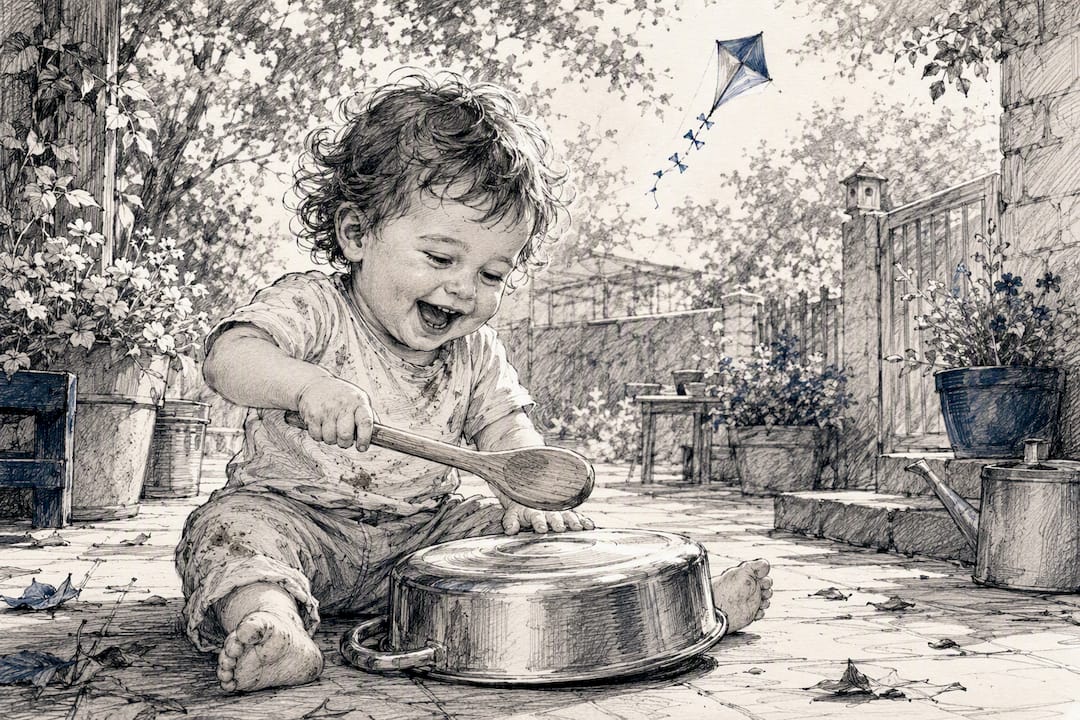
Pro Tip: Presence beats production every time. Put the phone in another room for one hour and just watch what your kid does with a wooden spoon and a pot lid.
What Should Be in a Toddler Holiday Survival Kit?
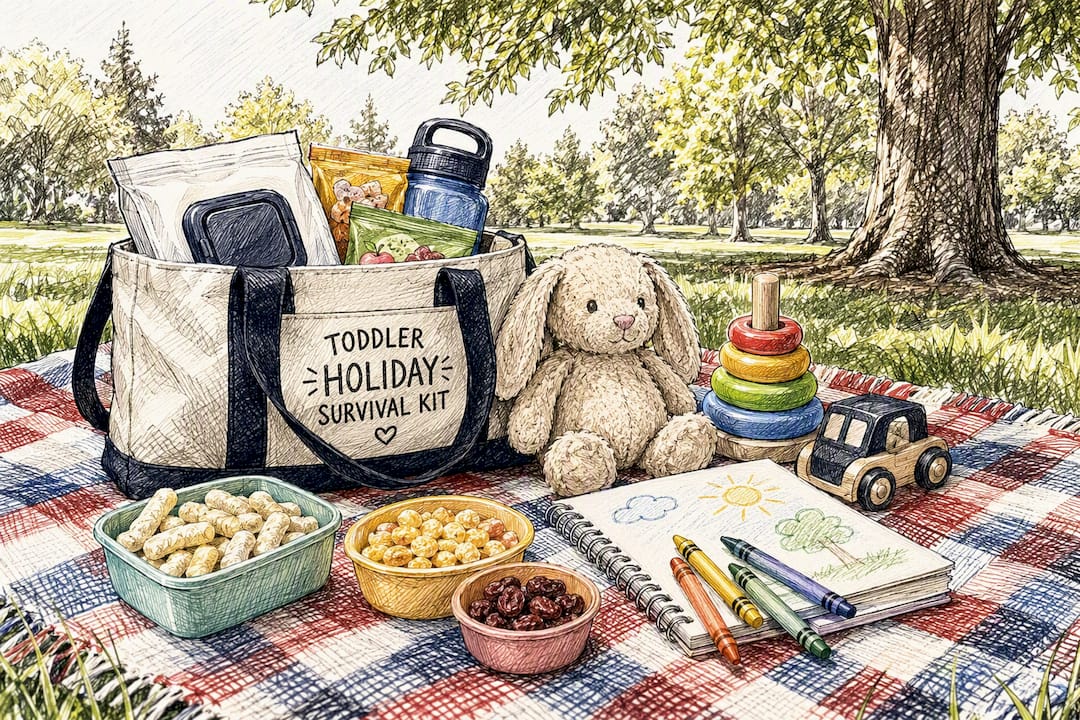
Pack this before anything else, and keep it stocked in a small bag near the door: snacks that don't need refrigeration, a favorite comfort item (blanket, stuffed animal), a travel pack of wipes, two or three small toys they haven't seen in a week, and a mini art kit (crayons, a small pad, stickers).
For quick engagement wins, rotate through these 20 ideas:
- Sticker book, five minutes
- Ice cube treasure hunt with a small toy frozen inside
- Pinecone bird feeders, a classic PBS-recommended activity
- Paper chain garland making
- "I Spy" using holiday decorations
- Sorting jingle bells by size
- Flashlight shadow puppets
- Wrapping paper tube drums
- Sock puppet show
- Sticker sorting by color
- Cookie decorating with pre-made dough
- Balloon batting (keep away from mouths)
- Musical statues to holiday songs
- Reading the same favorite book on repeat
- Dancing to two favorite songs
- Building a blanket fort
- Coloring holiday-themed pages
- Sensory bin with dry rice and small scoops
- Simple scavenger hunt with three items
- Bubble wrap stomping
Toddlers do better with sensory, repetitive activities; preschoolers can handle short games with rules. Keep small parts away from kids under three.
Why Do Simple, Repeatable Traditions Beat Big Displays?
Kids remember the ritual, not the production value. PBS Parents points to simple, repeatable activities, like a yearly movie night, reading the same holiday book, or making the same ornament, as what actually builds a child's sense of identity and lasting memory. None of it requires a budget.
Meaning gets created through consistency, not spectacle. A family's "essence," the smells, tastes, and songs that feel familiar, is what makes a holiday feel personal, according to author Gretchen Rubin.
To design a ritual that actually sticks:
- Choose something sensory. A specific smell (cinnamon rolls baking), taste (the same cookie recipe), or sound (one album on repeat) anchors memory harder than a visual alone.
- Make it require almost no setup. If it takes more than 15 minutes to prepare, it won't survive a busy year.
- Repeat it exactly. The magic is in the sameness, not novelty.
Pro Tip: Pick one or two rituals and protect them fiercely. Trying to run five new traditions in one season guarantees none of them stick.
How Can Parents Stay Calm and Present During the Holidays?
Reducing your own stress is what actually lets you show up for your kids. A few concrete moves:
- Start a small monthly sinking fund for holiday spending so costs never land as one lump shock.
- Delegate one task per gathering, cooking, cleanup, or entertaining kids, to someone else.
- Schedule a 20-minute buffer before any event so you're not rushing out the door.
- Say no to at least one invitation this season without guilt.
Two scripts worth memorizing: "We're keeping this year low-key, so we'll stop by for an hour" and "The kids do better with early bedtimes, so we'll head out before dessert." Both set expectations before anyone feels blindsided.
Pro Tip: Limit social media scrolling during the season. Comparing your chaotic living room to someone else's staged one is a guaranteed stress multiplier, and a "not perfect" afternoon is usually the one your kid remembers fondest.

Basic Safety and Illness Planning for the Holidays
A little prep prevents a lot of scrambling. Keep this on your phone:
- Emergency contacts for each host family and your pediatrician's after-hours line
- A list of current medications and dosages for each child
- Allergy information written out, not just remembered
- Backup plan for canceling: "We're not going to make it, someone's running a fever, we'll reschedule"
Protect sleep and snack windows even on busy days. A missed nap is the single most predictable cause of a holiday meltdown, and the HHS parents' priorities page offers useful background on keeping family well-being central during high-demand seasons.
A One-Page Holiday Checklist and 3-Hour Sample Plan
Copy this checklist:
- Toddler kit packed
- One ritual planned (food, craft, or song)
- Meal plan includes one familiar dish
- Downtime blocked on the calendar
- Emergency contacts saved
- Hour 1: Arrival, snack, and the planned ritual (cookie decorating, ornament-making)
- Hour 2: Meal, timed around the toddler's normal eating window
- Hour 3: Free play or a quiet activity, then an early exit if needed
Scale it down to 90 minutes by cutting the meal to a snack, or stretch it to a full day by adding a nap window between hours two and three.
A Note on Letting Go of the Perfect Holiday
Some of the best moments come from the ones nobody planned, a dropped ornament that becomes a joke for years. Choose connection over performance, every single time.
A Simple Way to Add a Little Extra Wonder
Once your rituals and checklist are set, some families like adding one small surprise on top, without more decorations or another trip to the store. Wonderlens turns a photo of your own living room into a 10-second animated video featuring characters like Santa or the Easter Bunny, with realistic lighting and shadows that make it look like they actually visited.

It's a nice complement to the rituals your family already keeps, not a replacement for them, and your first video is free. If you want to see what it looks like with your own space and your own kids, you can try it on the Wonderlens homepage in a few minutes.
Frequently Asked Questions
What are the best parenting tips for memorable holidays with a toddler? Keep events short, protect nap and snack windows, pack a toddler kit in advance, and repeat one simple ritual every year instead of introducing something new.
How do I make holidays special without spending a lot of money? Low-cost, repeatable activities like baking together, making paper decorations, or reading the same book each year create more lasting memories than expensive displays, according to PBS Parents.
How can I manage toddler tantrums during holiday gatherings? Feed kids before formal meals, cap events around 90 minutes, and designate one relative as a helper who can step in when a meltdown starts.
What should be in a toddler holiday survival kit? Pack shelf-stable snacks, a comfort item, wipes, a couple of small toys, and a mini art kit, and keep the bag by the door so it's grabbed automatically.
How do I plan for illness or last-minute changes during the holidays? Keep emergency contacts and medication lists on your phone, and have a simple script ready, like "someone's running a fever, we'll reschedule," so you can cancel guilt-free.
Sources
- PBS Parents: Holidays
- BBC: Five ways to make the most of the summer holidays with kids
- Gretchen Rubin: Plan to make this holiday memorable & special
- U.S. Department of Health & Human Services: Parents priorities
Recommended
- Holiday Memory-Making Tips for Families in 2026. WonderLens | WonderLens
- Best practices for creating unforgettable holiday magic — WonderLens | WonderLens
- Christmas Tradition Enhancement Tips for Families. WonderLens | WonderLens
- Why Magical Videos Make Holiday Memories Last for Children — WonderLens | WonderLens