Holiday Memory-Making Tips for Families in 2026
July 3, 2026

Holiday memory-making tips are proven methods that help families create joyful, lasting experiences during festive seasons by engaging all senses and emotions. The most powerful memories share three traits: child involvement, simple repeatable traditions, and mindful documentation. Research shows that simple family traditions carry a 90% higher chance of being continued annually. That number reflects something deeper than habit. Traditions give children a sense of identity and belonging that follows them into adulthood. Whether you are planning a Christmas morning ritual or a summer road trip, the strategies below work across every holiday and every family size.
1. The best holiday memory-making tips start with letting kids choose
Children who own at least one decision on a trip show significantly higher emotional engagement and spend less time on passive screen time. That single shift changes the entire energy of a holiday. When kids feel heard, they pay attention. They remember.
Give your child real choices, not fake ones. Offer two or three concrete options so the decision feels meaningful without becoming overwhelming for them.
- Choose one activity for the day (a hike, a museum, or a beach visit)
- Pick the dinner spot from two pre-approved restaurants
- Decide the morning schedule: sleep in or early start
- Select a souvenir within a set budget
Pro Tip: Use a simple "this or that" card game at breakfast to let younger kids make daily picks. It takes two minutes and sets a collaborative tone for the whole day.
Balancing adult-led and kid-led planning keeps the trip functional and fun. You handle logistics. Your child handles the spirit of the day. That division works.
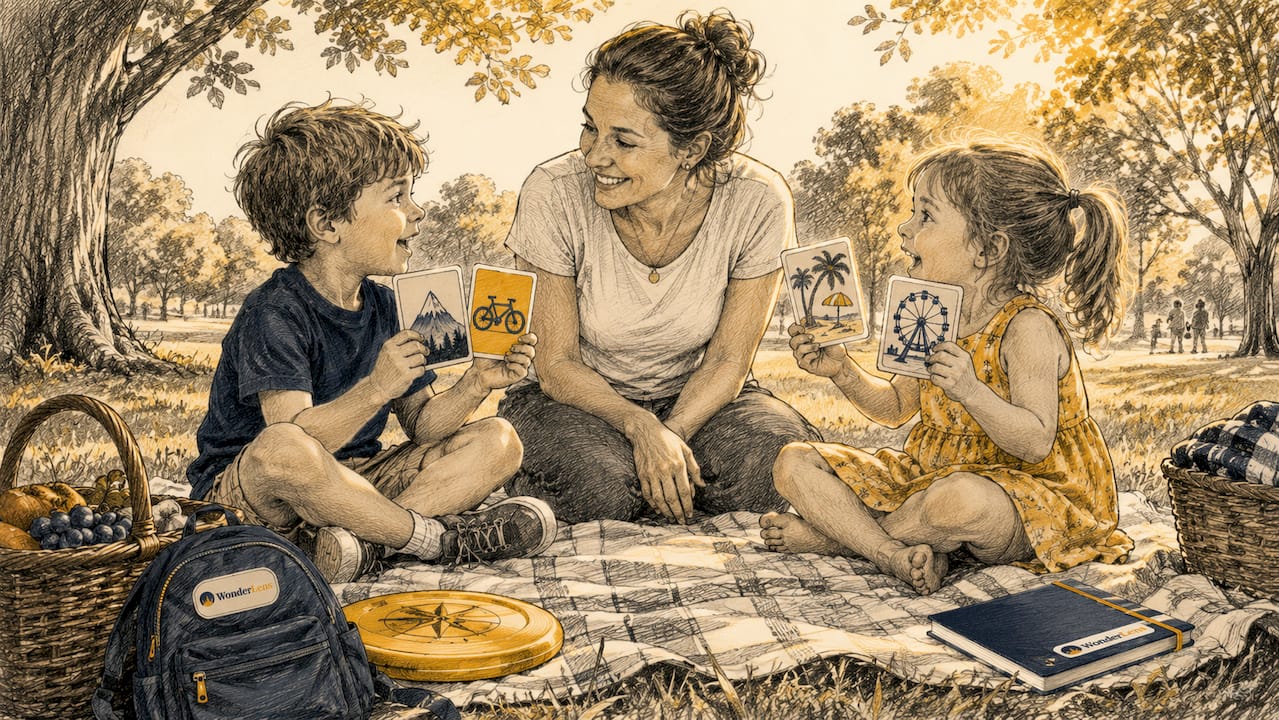
2. Build simple, repeatable traditions that stick
Traditions hold shared emotional significance in a way that routines never do. A routine is brushing teeth. A tradition is hanging the same handmade ornament every december and telling the story behind it. The difference is meaning.
The best family holiday traditions are low-pressure and easy to repeat. They do not require a big budget or perfect execution.
- A yearly ornament chosen by each child to mark their age and interests
- A gratitude jar filled with notes throughout december, read aloud on New Year's Eve
- Matching pajamas opened on Christmas Eve
- A "first day of summer" photo in the same spot each year
- A holiday movie marathon with the same snacks every time
Pro Tip: If a tradition causes stress, adapt it or drop it. A therapist-backed principle from family counseling research confirms that stressful traditions should be discarded to preserve the joy they were meant to create.
Traditions work because they are anticipated. Your child starts looking forward to the gratitude jar in october. That anticipation is itself a memory being built.
3. Leave room for the unplanned moments
Over-scheduled itineraries often produce irritability by the third day of a trip. That finding is not surprising to any parent who has pushed through one too many "must-see" attractions with a tired six-year-old. The magic drains fast when everyone is exhausted.
Core memories often arise from unplanned, chaotic moments that require families to cooperate and improvise. The afternoon the GPS failed and you found a roadside ice cream stand. The morning your kids built a fort out of hotel pillows instead of going to the pool. Those moments stick.
Build at least one unscheduled block into every day. A two-hour window with no plan gives your family room to follow curiosity. Slow travel amplifies this effect. Families who spend more time in one place often feel closer and more connected than when they left. Depth beats breadth every time.
Spontaneous activities that consistently trigger strong memories include stumbling into a local festival, cooking a meal together in a rental kitchen, or simply sitting outside and watching the neighborhood wake up. None of these cost anything. All of them feel like something.
4. Document memories without missing the moment
The "one-third rule" is the most practical framework for balancing documentation and presence. Spend one-third of your time documenting, one-third participating, and one-third simply observing. That structure keeps you in the experience while still capturing it.
Photography is the default for most families, but it is not always the most effective tool for memory recall. Handwriting notes during a trip cements memories better than digital documentation because the tactile act engages more senses. A three-sentence journal entry written at dinner captures mood, detail, and feeling in a way a photo cannot.
Here are four documentation methods ranked by depth of memory recall:
- Handwritten journal entries written the same evening, capturing sensory details and emotions
- Voice memos recorded in the moment, preserving tone, laughter, and ambient sound
- Curated photo sets of 15–25 images selected within seven days of the trip
- Sensory anchor notes describing smells, textures, and sounds specific to the place
Pro Tip: Cull your photos ruthlessly within one week of returning home. Delete duplicates and keep only the images that tell a coherent story. A tighter collection gets looked at. A bloated folder gets ignored.
Involve your children in memory keeping. Give a seven-year-old a disposable camera. Ask a ten-year-old to keep a trip journal. Their perspective will surprise you, and their ownership of the memory deepens it.
5. Engage all five senses to lock in memories
Novelty and sensory input trigger richer neural pathways in memory formation than visual experience alone. A photo captures light. A sensory anchor captures a whole moment. The smell of pine and cinnamon on Christmas morning. The specific crunch of snow underfoot. The sound of your child laughing at a parade float.
Capture sensory anchors in video or written notes for stronger memory triggers later. A short video clip of rain on a cabin roof, recorded while your family plays cards inside, will bring back that entire afternoon years from now. Visuals alone rarely do that.
Active, shared physical experiences also deepen memory formation. Moving together as a family builds bonds and creates the kind of shared reference points that families talk about for decades. A hike, a bike ride, or even an afternoon of backyard games qualifies. The activity matters less than the shared effort.
Teach your children to notice their senses in real time. Ask them at dinner: "What did today smell like? What sound do you want to remember?" That simple question trains them to be present, and it gives you a window into what they actually experienced.
6. Use magical digital moments to surprise and delight
Modern families have access to tools that earlier generations could not have imagined. AI-powered video creation lets you place realistic fantasy characters directly into your home environment, giving children a visceral, sensory memory that no photograph can replicate. Wonderlens does exactly this. It transforms a photo of your living room into a 10-second cinematic video featuring Santa, a unicorn, or a fairy moving through your actual space, with accurate lighting and shadow.
The novelty factor here is significant. Children remember experiences that feel genuinely surprising and magical. A video of Santa walking past your family's Christmas tree, casting a real shadow on your actual wall, creates the kind of unforgettable holiday magic that kids describe to their friends the next day. That is a memory being formed in real time.
Wonderlens videos start at $1.99 per credit, making this one of the most affordable ways to add genuine wonder to a holiday. The platform is web-based, family-friendly, and requires no editing skills. You upload a photo, select a character, and receive a shareable video.
7. Create a family holiday memory guide each year
A family holiday memory guide is a simple annual record your family builds together. It does not need to be elaborate. A dedicated notebook, a shared digital folder, or a printed photo book all work. The format matters less than the consistency.
Include a mix of documentation types: a few curated photos, a handwritten note from each family member, a ticket stub or pressed leaf, and a short answer to the same question asked every year ("What was your favorite moment?"). That question, answered annually, becomes a living record of how your children grow and change.
Reviewing last year's guide before the next holiday season is itself a tradition. It builds anticipation, reinforces identity, and reminds your family of what actually mattered. Not the expensive dinner. The afternoon you got caught in the rain and laughed about it for an hour.
For Easter-specific activity ideas and Christmas tradition enhancements, Wonderlens publishes practical guides tailored to each holiday season.
Key Takeaways
The most effective approach to holiday memory-making combines child involvement, sensory-rich traditions, and disciplined documentation to create lasting emotional connections across every festive season.
| Point | Details |
|---|---|
| Let kids decide | Giving children one real choice per day significantly boosts their emotional engagement and recall. |
| Repeat simple traditions | Low-pressure rituals repeated annually carry a 90% higher chance of continuation and build family identity. |
| Schedule unplanned time | At least one unscheduled daily block creates space for spontaneous moments that become core memories. |
| Document with balance | The one-third rule keeps parents present while still capturing enough to preserve the experience. |
| Engage all senses | Sensory anchors like sounds, smells, and textures create stronger memory triggers than photos alone. |
Why I think parents are missing the best moments
I have watched families at holiday events spend more time filming than watching. The parent behind the camera misses the exact expression on their child's face when the parade float passes. The child looks for their parent and finds a phone screen instead. That is the moment that gets lost.
The research backs this up, but you do not need research to feel it. The memories that stay with children are not the ones that were perfectly documented. They are the ones where a parent was fully present, laughing, surprised, or a little bit lost alongside them.
What I have found actually works is radical simplicity. One tradition done with full attention beats five traditions done while distracted. A ten-minute gratitude jar ritual where everyone is genuinely listening creates more warmth than an elaborate holiday party where everyone is performing.
Let your kids lead more than feels comfortable. Their instincts about what is fun are usually right. The afternoon your eight-year-old insists on building a snowman instead of going to the museum will be the afternoon everyone remembers. Trust that.
— Jeremiha
How Wonderlens adds magic to your family's holiday memories
Every family deserves at least one moment per holiday that feels genuinely extraordinary. Wonderlens creates that moment by placing realistic, AI-rendered fantasy characters directly into your home, moving through your actual space with accurate lighting and shadow.

Parents use Wonderlens to surprise children with a video of Santa stepping past the Christmas tree or a fairy hovering near the Easter basket. The reaction is immediate and real. That reaction becomes the memory. Videos start at $1.99 and take minutes to create. Visit Wonderlens to generate your family's next magical holiday moment, no editing experience required.
FAQ
What makes a holiday memory last for children?
Memories last when they combine novelty, sensory input, and emotional engagement. Children recall experiences where they felt involved, surprised, or genuinely delighted.
How many photos should I keep from a family holiday?
Select 15–25 high-quality images for short trips and cull duplicates within one week of returning. A tighter, curated set gets revisited far more often than a bloated photo library.
How do I start a family holiday tradition that actually sticks?
Choose one low-pressure ritual that can be repeated exactly the same way each year. Simple traditions with clear sensory anchors, like a specific food, song, or activity, have the highest continuation rates.
Can digital tools like Wonderlens really help create lasting memories?
Yes. AI-generated videos that place fantasy characters in your actual home environment create a novelty-rich, sensory experience that children recall vividly. Wonderlens videos start at $1.99 and require no editing skills.
How do I balance planning and spontaneity on a family holiday?
Build at least one unscheduled two-hour block into each day. Research shows that over-scheduled itineraries produce fatigue and reduce enjoyment, while relaxed schedules create room for the unplanned moments families remember most.
Recommended
- Memory-Making Workflow for Families: 2026 Guide. WonderLens | WonderLens
- Christmas Tradition Enhancement Tips for Families. WonderLens | WonderLens
- Tips for Personalized Holiday Videos Families Will Love. WonderLens | WonderLens
- Why create magical memories? Real value for your family — WonderLens | WonderLens