The Role of Fantasy Characters in Family Traditions
June 16, 2026
Fantasy characters in family traditions are defined as imaginative figures, from Santa Claus and fairies to dragons and mythical creatures, that families use as symbolic anchors to build shared stories, reinforce values, and create lasting emotional memories. These figures do far more than entertain children. They give families a shared language for expressing love, courage, and belonging across generations. The role of fantasy characters in family traditions is well supported by psychology research, collaborative mythology studies, and even the personal practices of J.R.R. Tolkien, who wrote elaborate Father Christmas letters to his children for decades. When you understand how these characters work, you can use them with real intention.
How do fantasy characters create memorable family traditions?
Fantasy characters create memorable family traditions by serving as dynamic storytelling tools that go far beyond simple escapism. They give families a symbolic framework for exploring values like justice, courage, and kindness without lecturing. A dragon guarding a treasure chest can teach a child about greed. A fairy who rewards honesty can reinforce a family's core beliefs in a way that a direct conversation rarely does.
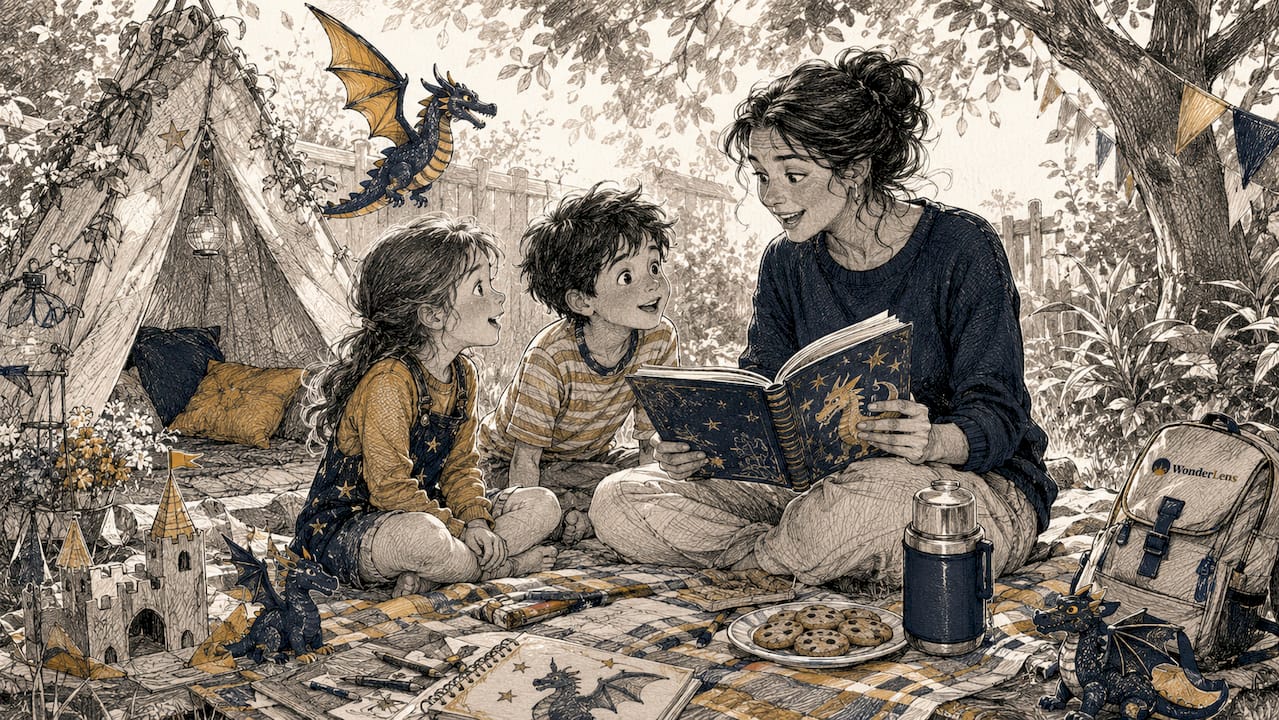
Storytelling is one of the most powerful bonding tools available to families. When a fantasy character becomes part of your holiday ritual, the story around that character becomes part of your family's identity. Children remember the year the Star Fairy left glittering footprints near the window. Parents remember the look on their child's face. Those shared memories become the emotional glue that holds families together over time.
Research on narrative and memory from Oxford psychology shows that human engagement with stories is strongest when social networks stay around 150 characters, matching the Dunbar Number. This means family storytelling works best when it stays focused on a small, familiar cast of characters. A tradition built around one or two beloved fantasy figures is more memorable than a sprawling cast of unrelated creatures.
The benefits of fantasy figures in family customs include:
- Emotional expression: Fantasy characters give children a safe way to process big feelings through story.
- Value transmission: Characters embody traits families want to pass down, like bravery, generosity, and honesty.
- Shared anticipation: The buildup to a character's "visit" creates excitement that bonds the whole family.
- Memory anchoring: Repeated rituals tied to a character create strong, retrievable memories.
Pro Tip: Pick one or two fantasy characters to anchor your family's traditions rather than introducing a new figure every year. Consistency deepens the emotional connection and makes the tradition feel more real to children.
What practical methods can families use to integrate fantasy figures into their customs?
Integrating fantasy figures into family customs works best when children are active participants, not just passive audiences. The most effective approach is what researchers call collaborative mythology, where parents create a framework and children contribute characters, stories, and rules. This transforms kids from recipients of magic into co-creators of it.
Here are four practical methods to get started:
-
Build a mythology framework. Give your fantasy character a name, a home, a purpose, and a set of values. Does your family's fairy live in the garden and reward kindness? Does your dragon protect the house during winter? A simple backstory makes the character feel real and gives children something to build on.
-
Create physical anchors. Physical objects like handcrafted dolls, illustrated letters, or small drawings ground fantasy characters in the physical world. J.R.R. Tolkien did exactly this. His Father Christmas letters to his children included invented languages, detailed illustrations, and evolving storylines that spanned decades. Those letters became irreplaceable family treasures.
-
Invite children to co-create. Ask your child to draw the character, name a new friend for them, or decide what gift the fairy might leave this year. When children contribute to the story, they invest emotionally in it. That investment makes the tradition feel meaningful rather than manufactured.
-
Tie the character to a recurring ritual. Connect your fantasy figure to a specific moment, like the first night of December, Easter morning, or a birthday. Repetition is what turns a fun idea into a real tradition. The ritual signals to children that something magical and predictable is coming, and that predictability is deeply comforting.
Pro Tip: Keep a small journal or scrapbook of your fantasy character's "visits." Include drawings, letters, and photos. Years from now, that scrapbook will be one of your family's most treasured possessions.
You can find more inspiration for lasting family traditions that center on fantasy and wonder on the Wonderlens blog.
How do fantasy characters shape children's emotional and cognitive growth?
The influence of fantasy in holiday rituals and everyday family life extends well into children's emotional and cognitive development. Fantasy characters are not just fun. They are tools for identity rehearsal. When a child pretends to be brave like a knight or generous like a gift-giving fairy, they are practicing real-world agency and building emotional resilience through imaginative play.
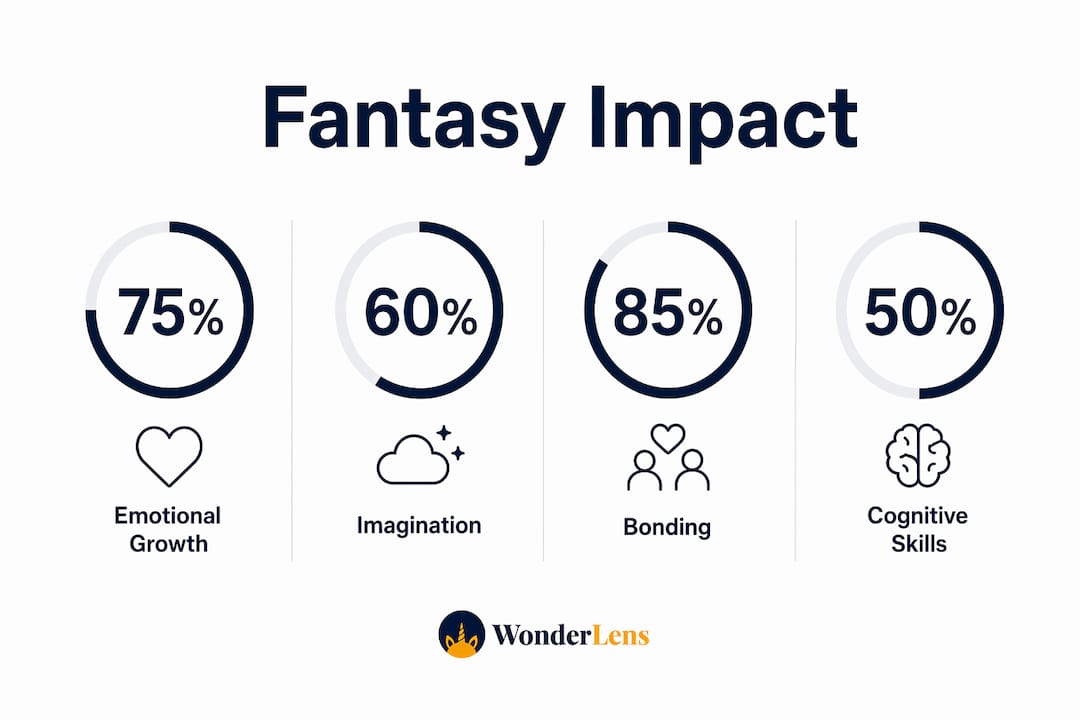
A May 2026 study published in Scientific Reports examined executive function in children aged 5–7 after high-fantasy media exposure. The study found no significant disruption to inhibitory control or visual attention in 65 children tested. This directly counters the concern that fantasy content overwhelms young minds. Fantasy, when used thoughtfully, is psychologically safe and developmentally supportive.
| Developmental area | How fantasy characters help |
|---|---|
| Emotional regulation | Characters model how to handle fear, loss, and joy in a safe, symbolic context |
| Cognitive flexibility | Imagining a character's world builds creative and abstract thinking skills |
| Moral reasoning | Characters who face ethical choices give children frameworks for right and wrong |
| Memory formation | Repeated rituals tied to characters create strong, emotionally encoded memories |
Mythical characters in parenting also serve a social function. They give parents and children a shared topic that feels exciting and neutral, making it easier to talk about values without triggering resistance. A conversation about what the Star Fairy would think of a selfish choice lands very differently than a direct correction.
The emotional rewards flow both ways. Parents who sustain fantasy traditions report a deep sense of meaning in the role they play. That said, emotional labor is real. Planning, coordinating, and managing expectations around a tradition takes effort that often goes unrecognized.
What challenges do families face with fantasy-based traditions?
Sustaining fantasy-based traditions is genuinely hard work. The emotional labor involved in planning, coordinating, and keeping the magic alive is significant, and it is often invisible to everyone except the parent doing it. That labor includes managing children's expectations, keeping the story consistent, and finding the energy to show up enthusiastically year after year.
Some common challenges families face include:
- Consistency pressure: Children remember every detail. If the fairy left a letter last year, she needs to leave one this year too.
- Scaling complexity: As children get older, they ask harder questions. The mythology needs to grow with them.
- Emotional burnout: The parent who carries the tradition can start to feel more obligated than joyful.
- Fear of ending it: Research shows that maintaining traditions can sometimes stem from fear of losing one's place in the family. Identity becomes tied to the ritual in ways that feel hard to let go.
The solution is not to do less. It is to do it differently.
"The goal of a family tradition is not perfection. It is presence. A slightly imperfect letter from the Star Fairy, written in your own handwriting, means more than a flawless one that cost you your joy."
Let your traditions evolve. When a child grows out of believing in a character literally, invite them behind the curtain. Make them a co-conspirator who helps create the magic for younger siblings. This shift keeps the tradition alive and gives older children a new, meaningful role. Authenticity matters more than spectacle. A relatable, authentic portrayal of a character resonates far more deeply than an elaborate but hollow performance. Keep the character grounded in your family's actual values, and the tradition will stay meaningful for years.
For families who want to add a new layer of wonder without adding to the planning burden, pairing your storytelling with a fantasy-themed family activity can give everyone a shared experience to talk about and remember.
Key takeaways
Fantasy characters in family traditions work best when they are consistent, co-created with children, and grounded in the family's real values rather than borrowed wholesale from commercial culture.
| Point | Details |
|---|---|
| Characters as value anchors | Fantasy figures teach courage, honesty, and generosity more effectively than direct instruction. |
| Collaborative mythology | Inviting children to co-create the story transforms them from passive recipients into active tradition-builders. |
| Physical anchors matter | Letters, drawings, and handcrafted objects make fantasy characters feel real and create lasting keepsakes. |
| Emotional labor is real | The parent sustaining the tradition carries significant invisible effort that deserves acknowledgment and support. |
| Fantasy is developmentally safe | Research confirms that high-fantasy exposure does not disrupt executive function in children aged 5–7. |
Why I think most families underestimate the power of their own mythology
Most parents I talk to think of fantasy characters as something borrowed from a store shelf or a streaming service. Santa comes from Coca-Cola ads. The Easter Bunny comes from greeting cards. That framing sells families short. The most powerful fantasy traditions are the ones you build yourself, the ones where the character has a name your child helped choose and a backstory only your family knows.
Tolkien did not buy his children a Santa Claus kit. He invented a whole world, complete with invented languages and hand-drawn maps, because he understood that the specificity of a story is what makes it feel true. Your family does not need that level of craft. But the principle holds. A fairy who lives specifically in your backyard, who knows your child's name and leaves notes in your child's favorite color, is infinitely more magical than a generic figure from a holiday catalog.
What I have also noticed is that the traditions children remember most vividly are the ones where they had a hand in making. When you ask a six-year-old to draw a picture for the Star Fairy and then the fairy "responds" with a note, that child is not just receiving magic. They are making it. That shift from audience to author is where the real developmental and emotional value lives.
The emotional rewards of magical memories are not just for children. Parents who invest in these traditions consistently report that the ritual becomes one of their most cherished parts of the year too.
— Jeremiha
Bring your family's fantasy traditions to life with Wonderlens
You have the story. Wonderlens gives it a visual moment your child will never forget.

Wonderlens is a web-based platform that places realistic, cinematic-quality fantasy characters directly inside your home environment. Using AI-driven rendering that matches your room's actual lighting and shadows, Wonderlens creates a short 10-second video your whole family can watch together and share. The Star Fairy character is one of the most popular options for families building holiday traditions around wonder and magic. She moves through your actual living space, glowing with warmth, as if she has always been part of your story. Videos start at $1.99, and no editing experience is needed. Just upload a photo of your space and let Wonderlens do the rest.
FAQ
What is the role of fantasy characters in family traditions?
Fantasy characters serve as symbolic anchors in family traditions, helping families tell shared stories, transmit values like courage and generosity, and create emotionally memorable rituals. They give children a safe imaginative space to explore identity and belonging.
Are fantasy characters psychologically safe for young children?
Yes. A 2026 study in Scientific Reports found no significant disruption to executive function in children aged 5–7 after high-fantasy media exposure. Fantasy, used thoughtfully, supports rather than hinders cognitive and emotional development.
How can parents involve children in creating fantasy traditions?
Parents can invite children to name characters, draw illustrations, write letters, or decide what a character might do next. This collaborative approach, sometimes called collaborative mythology, transforms children from passive recipients into active co-creators of family lore.
How do you keep a fantasy tradition going as children get older?
Let the tradition evolve with the child. When children outgrow literal belief, invite them to become co-conspirators who help create the magic for younger siblings. This keeps the tradition alive and gives older children a meaningful new role within it.
What makes a fantasy character tradition feel authentic?
Authenticity comes from grounding the character in your family's specific values, home, and stories. Research shows that relatable, specific portrayals resonate far more deeply than generic or commercial ones. The more personal the character, the more powerful the tradition.
Recommended
- Transform holidays: fantasy characters create magical family memories — WonderLens | WonderLens
- Magical Family Traditions: 10 Ideas That Last — WonderLens | WonderLens
- Magical Holiday Moments: Top Rituals to Inspire Family Joy — WonderLens | WonderLens
- Why integrating fantasy into home photos creates magic — WonderLens | WonderLens