Transform holidays: fantasy characters create magical family memories
April 15, 2026
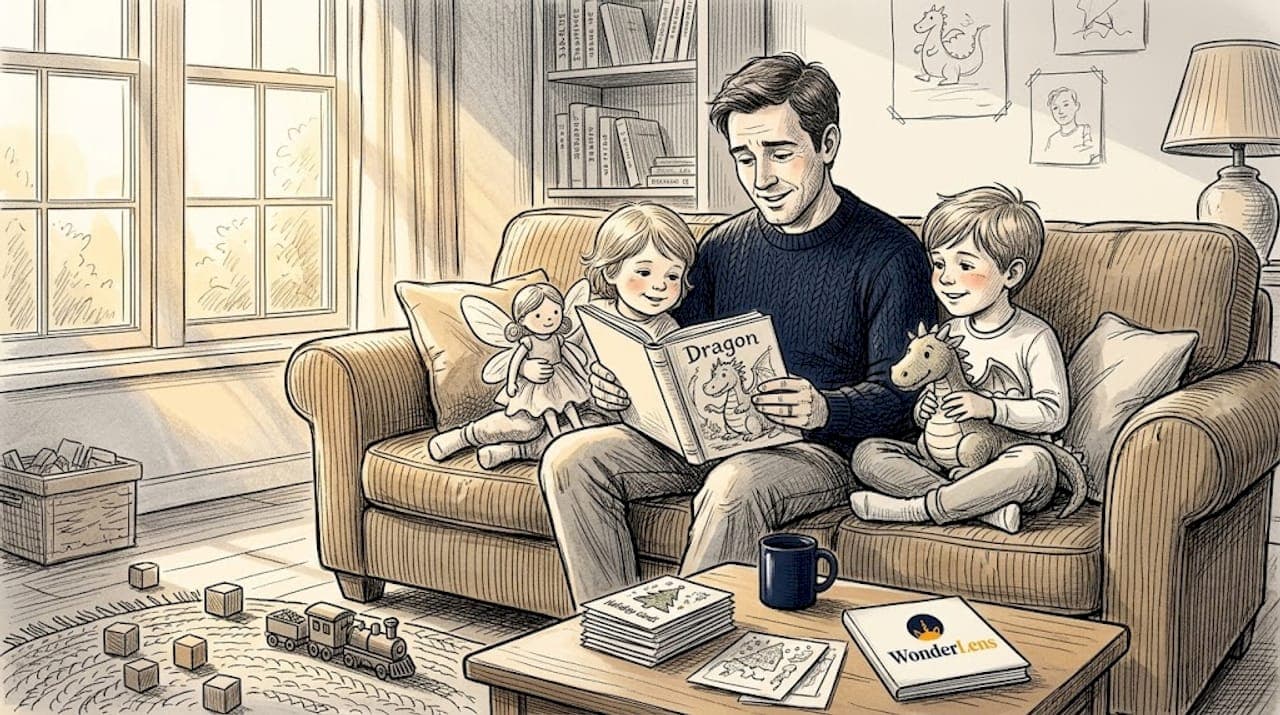
Most parents assume holiday magic is about the decorations, the gifts, or the big reveal moment. But there's something far more powerful at work when fantasy characters enter the picture. Interactive fairy tale stories boost healthy food choices in young children, with effects lasting up to two weeks. That's not just wonder at work. That's measurable change. This guide walks you through the science behind fantasy characters, how to build rituals that stick, how to make your celebrations inclusive, and how personalized animated videos can bring it all to life in your own living room.
Table of Contents
- Why fantasy characters matter: Scientific impact on children
- Turning tradition into magic: Rituals and family engagement
- Inclusive magic: Navigating culture, age, and fears
- Personalized fantasy: Bringing magic to life with animated videos
- Beyond tradition: The real secret to magical holidays
- Bring the magic home: Easy next steps for your family
- Frequently asked questions
Key Takeaways
| Point | Details |
|---|---|
| Fantasy figures shape rituals | Using fantasy characters in holiday rituals creates powerful, lasting family bonds. |
| Science supports magic | Evidence shows fantasy-driven rituals boost healthy habits and prosocial behavior in children. |
| Inclusivity matters | Customizing fantasy characters and rituals for culture and age maximizes positive outcomes. |
| Animated videos deepen engagement | Personalized videos bring holiday magic to life and strengthen family memories. |
| Rituals outweigh belief | Active participation in holiday rituals with fantasy figures drives positive change, more than mere belief does. |
Why fantasy characters matter: Scientific impact on children
Fantasy characters do more than make kids smile. They shape how children think, behave, and connect with the world around them. That's a bold claim, but the research backs it up.
A study on interactive fantasy stories found that young children who engaged with fairy tale characters made healthier food choices, and those changes lasted well beyond the story itself. The characters weren't just entertaining. They were modeling behavior, and kids were following along.
The same principle applies to holiday figures. When children participate in Christmas rituals, those rituals actively drive prosocial behaviors like sharing, kindness, and cooperation. It's not simply believing in Santa that makes a difference. It's the ritual of leaving cookies, writing letters, and gathering as a family that shapes how children act.
Here's a quick look at what the research tells us about why parents bring fantasy figures into their family life:
| Reason parents encourage fantasy figures | Percentage of parents |
|---|---|
| To spark excitement and wonder | 91% |
| To preserve cultural tradition | 87% |
| To support emotional wellbeing | 82% |
| To encourage positive behavior | 76% |
"82% of parents encourage fantasy figures specifically because they believe it supports their child's wellbeing, not just for fun."
Parents are already instinctively doing the right thing. Science is just confirming it.
The characters that resonate most with families tend to be ones children can connect with emotionally. A friendly dragon character that appears in your home feels personal. A fairy interactive video that seems to flutter through your living room feels real. These aren't just novelties. They're tools for connection.
When you think about animated characters for memories, you're not just thinking about a cute video. You're thinking about a moment your child will carry with them for years.
Here are the core reasons fantasy characters have such a strong developmental impact:
- They model positive behaviors children want to imitate
- They give abstract values like kindness a concrete, lovable face
- They anchor memories to specific emotions and moments
- They create shared family language and inside references
- They make children feel like the world holds genuine wonder
Understanding this foundation changes how you approach the holidays entirely.
Turning tradition into magic: Rituals and family engagement
With science showing fantasy rituals are key, let's break down ways you can turn tradition into lasting family magic.
Here's something most holiday guides miss: it's not belief in a fantasy figure that drives positive behavior. It's the ritual itself. A child who doesn't fully believe in Santa but still participates in leaving out cookies, hanging stockings, and reading holiday stories will still benefit from the ritual. Parental modeling through rituals is what mediates the prosocial effects, not the child's level of belief.
That means you have more power here than you think. You can build rituals that work regardless of age or skepticism.
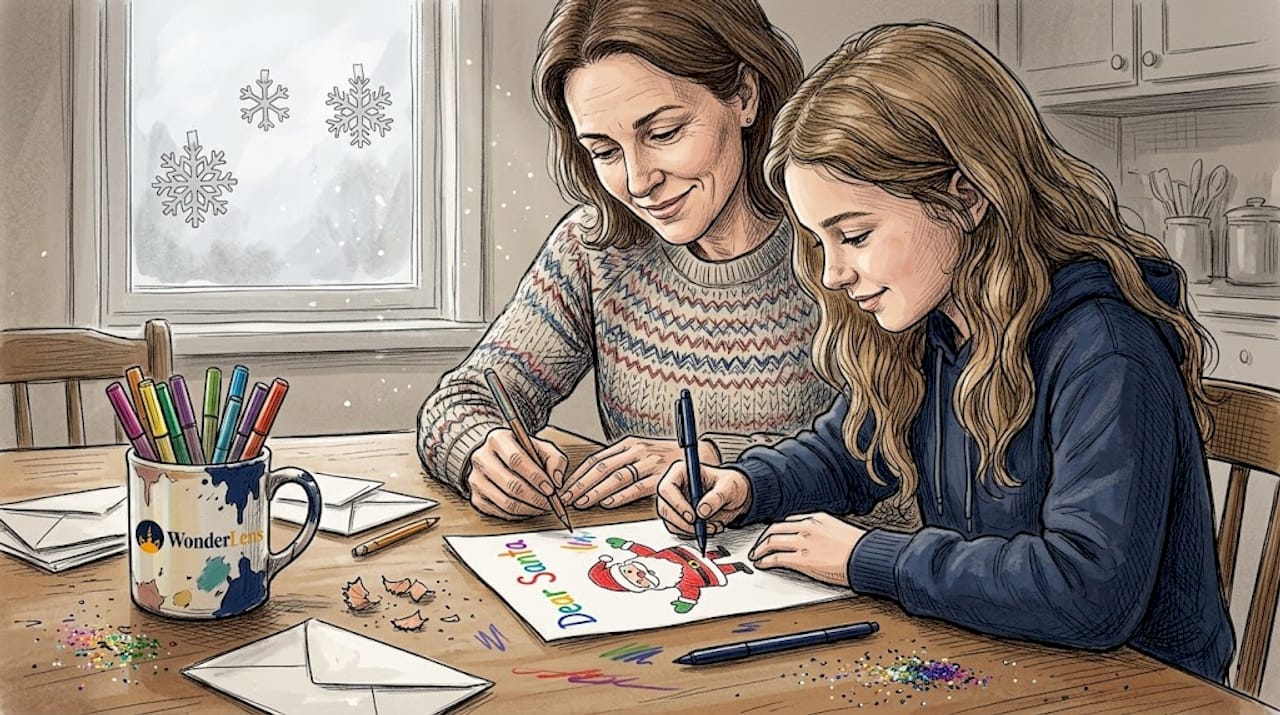
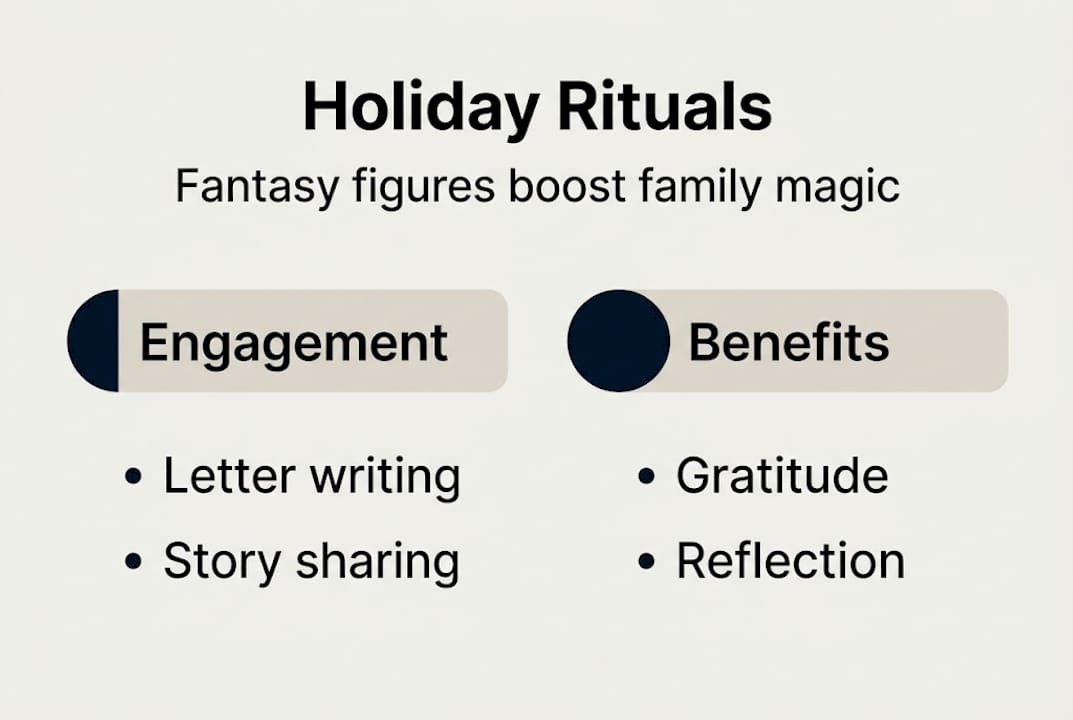
Here's a comparison of common fantasy rituals and their engagement effects:
| Ritual type | Engagement level | Prosocial benefit |
|---|---|---|
| Letter writing to Santa | High | Gratitude, reflection |
| Leaving treats for characters | Very high | Generosity, anticipation |
| Watching a personalized video | Very high | Wonder, emotional bonding |
| Storytelling before bed | High | Empathy, imagination |
| Creating decorations together | Medium | Teamwork, creativity |
Personalized video rituals score especially high because they feel real and surprising. A Santa cinematic video that shows Santa actually stepping into your living room, with your family's furniture and lighting, creates a moment unlike anything a generic TV special can offer.
Here's how to build a fantasy ritual your family will love:
- Choose your character. Pick one that fits your family's values and your child's current favorites. A real Santa video works beautifully for Christmas, but you can build rituals around any character.
- Set a consistent time. Rituals work because they're repeatable. Christmas Eve, the first day of spring, or even a monthly story night all work.
- Add a physical element. Pair the video with something tangible, like a note, a treat, or a small keepsake. This anchors the memory.
- Involve your child in the setup. Let them help choose the space, set out the treats, or pick the character. Ownership deepens the experience.
- Capture the reaction. Their face in that moment is the real magic. Record it.
For more Santa family engagement ideas, you'll find creative ways to extend the ritual beyond a single moment.
Pro Tip: Start a ritual when your child is young and let it evolve as they grow. A five-year-old believes completely. A ten-year-old plays along joyfully. A teenager helps set it up for younger siblings. The ritual outlasts the belief.
Inclusive magic: Navigating culture, age, and fears
While tradition's magic is powerful, families must consider cultural and emotional nuances.
Not every child responds to the same fantasy figures. And not every family shares the same cultural touchstones. Getting this right matters more than most holiday guides acknowledge.
Research on parent encouragement of fantasy figures shows that parents actively promote culturally endorsed characters like Santa Claus and the Tooth Fairy, while deliberately discouraging scary or threatening fantasy figures. The reasoning is straightforward: positive figures build excitement and warmth, while frightening ones create anxiety that can linger long after the holiday ends.
Age matters too. Toddlers need gentle, familiar characters. School-age children love the thrill of almost-real magic. Tweens often enjoy being in on the secret and helping create the experience for younger kids.
"Inclusive holiday magic means meeting each child where they are, not where tradition says they should be."
For multi-cultural families, the key is to celebrate the figures that feel authentic to your background while staying open to new ones. You can transform family memories using characters that reflect your own traditions, not just the mainstream holiday catalog.
Here's a practical list of dos and don'ts when using fantasy figures:
Do:
- Choose characters your child already loves and trusts
- Introduce new characters gradually and with context
- Use storytelling to explain the character's role and values
- Let children opt out if a character makes them uncomfortable
- Celebrate a mix of cultural traditions when relevant
Don't:
- Use threatening characters to enforce good behavior
- Force participation in rituals that cause distress
- Assume all children share the same cultural references
- Introduce very realistic scary figures to children under six
Inclusive classrooms use storytelling circles to honor diverse holiday traditions, and you can do the same at home. Gather the family, share stories from different backgrounds, and let each child contribute their own piece of the magic.
Pro Tip: If you're unsure which character will land well, let your child lead. Ask them who they'd most want to visit your home. Their answer tells you everything you need to know. Then check out the magical memories options available to bring that character to life.
Personalized fantasy: Bringing magic to life with animated videos
To turn inclusive magic into unforgettable memories, let's look at what personalized animated fantasy can do.
There's a meaningful difference between watching a holiday movie and seeing a fantasy character appear in your own home. Personalized animated videos close that gap completely. When your child watches a fairy glide past your actual couch, or a dragon peek around your real doorframe, the magic feels undeniable.
Interactive fantasy figures in media enhance children's holiday experiences in ways that passive viewing simply cannot match. The personalization is what makes it stick.
Here's how to create a personalized animated video moment your child will never forget:
- Pick your character. Choose the figure that excites your child most. Santa, a fairy, a dragon, a unicorn. The more personal the choice, the stronger the reaction.
- Photograph your space. Take a clear photo of the room where the magic will happen. Good lighting makes the AI rendering more realistic.
- Upload and generate. Use the platform to place your chosen character into the photo. The AI handles shadows, lighting, and movement to make it feel cinematic.
- Watch together. Build anticipation before pressing play. Dim the lights, gather everyone close, and let the moment breathe.
- Save and share. These videos are shareable keepsakes. Send them to grandparents, save them to a family album, or rewatch them every year as a new ritual.
The holiday magic blog is full of creative ways families are using personalized videos to build new traditions. And if you want to see just how real these moments can feel, the proof is right here.
For families who love the broader world of character-driven experiences, Disney magic for families offers another lens on why these moments matter so deeply to children.
Pro Tip: Use your child's absolute favorite character, not just the most popular one. A child obsessed with dragons will have a far stronger reaction to a dragon video than to a generic Santa clip. Personalization is the whole point.
Beyond tradition: The real secret to magical holidays
Here's the honest truth that most holiday guides won't tell you: the magic doesn't live in the character. It lives in the ritual you build around it.
Families who create their own traditions, ones that feel specific to their home, their inside jokes, and their way of doing things, report deeper connections than families who simply follow the standard holiday script. A personalized video of Santa in your actual living room beats a generic holiday card every single time. Not because of the technology, but because it says: this was made for you.
The research confirms it. Rituals mediate the positive effects of fantasy figures, not belief alone. That means a family that invents a silly new tradition tonight is doing more for their children than one that perfectly replicates a childhood memory from thirty years ago.
Flexibility matters too. As children grow, rituals should evolve. The magic doesn't have to disappear when belief fades. It just changes shape. Let your kids help design the new version. That ownership creates magical memories with family photos and moments that belong entirely to your family.
Stop chasing someone else's version of a perfect holiday. Build your own.
Bring the magic home: Easy next steps for your family
You now know the science, the rituals, and the creative tools. The next step is the fun part.

WonderLens makes it easy to bring fantasy characters into your actual home with cinematic, AI-powered animated videos that feel genuinely real. Whether you want Santa stepping into your living room, a magical fairy fluttering past your child's bedroom door, or a friendly dragon peeking around the corner, the experience is personalized, shareable, and unforgettable. Starting at just $1.99 per video, it's one of the easiest ways to create a new family ritual. Visit WonderLens today and turn your home into the most magical place your child has ever seen.
Frequently asked questions
What are the best fantasy characters to use for holiday rituals?
Culturally endorsed figures like Santa Claus and the Tooth Fairy are your best starting point because parents recommend these figures for positive reasons including excitement, tradition, and wellbeing. Avoid scary or threatening characters, especially for children under six.
How can animated videos enhance holiday magic for my kids?
Animated videos place fantasy characters directly into your home environment, making the experience feel personal and real. Interactive fantasy storytelling boosts children's positive behaviors and deepens emotional engagement far beyond passive viewing.
How do I make holidays inclusive for children from diverse backgrounds?
Use storytelling circles and rituals that honor a variety of traditions so every child feels seen. Inclusive storytelling approaches in classrooms show that celebrating multiple traditions together creates stronger belonging than focusing on a single holiday narrative.
Do fantasy characters always lead to positive outcomes?
Fantasy figures support wellbeing when chosen thoughtfully and matched to your child's age and sensitivities. Parents actively discourage scary figures to prevent fear, so always prioritize characters your child already finds warm and exciting.
Why are rituals more important than belief alone?
Rituals mediate prosocial behavior in children far more effectively than belief alone, meaning the act of participating in a holiday tradition drives kindness and generosity regardless of whether a child fully believes in the fantasy figure.
Recommended
- Make Magical Memories | WonderLens
- Add animated characters to family photos: magical memories — WonderLens | WonderLens
- Blog — WonderLens | WonderLens
- Animated photo transformation: bring family memories to life — WonderLens | WonderLens
- Fantasyland – 2000-reisen
- Unique Fall Family Photo Ideas: Capturing Cherished Family Moments