The Role of Keepsakes in Family Bonding
June 17, 2026
Keepsakes are physical objects that embody family memories and serve as powerful tools for building emotional connections across generations. A grandmother's ring, a child's first drawing, a holiday photo tucked into a frame — these objects do far more than collect dust. The role of keepsakes in family bonding is backed by real psychological science: they trigger autobiographical memories, support identity during life changes, and give families a shared language for love. This article explains why keepsakes matter, how to preserve them well, and how to use them with intention.
How keepsakes strengthen family bonds
Keepsakes are defined in psychology as autobiographical memory triggers. They connect a person to a specific moment, relationship, or version of themselves. That connection is not passive. Keepsakes act as autobiographical memory triggers that actively boost self-esteem and reinforce social bonds between family members.
Modern psychology has moved away from the decluttering dogma that once labeled sentimental objects as clutter. Keepsakes serve as emotional infrastructure, not just sentimental excess. That shift matters for families trying to understand why holding onto a birthday card or a worn baby shoe feels so necessary.
Here is what the research shows keepsakes actually do for families:
- Regulate mood. Revisiting a meaningful object can shift emotional state quickly. Holding a parent's watch or rereading a handwritten note activates warm memories that reduce stress and increase feelings of safety.
- Preserve identity during transitions. Moving, divorce, the death of a loved one, or a child leaving for college all disrupt family identity. Objects sustain self-continuity during these transitions in ways that words alone cannot.
- Strengthen resilience in children. Children with a strong family narrative supported by tangible keepsakes show greater emotional resilience and a clearer sense of belonging.
- Open emotional conversations. A keepsake gives family members a concrete starting point for discussing feelings, history, and values that might otherwise stay unspoken.
Pro Tip: Place a small keepsake box in a shared family space rather than a storage closet. Visibility keeps the emotional connection alive and invites spontaneous storytelling.
Why the story behind a keepsake matters as much as the object
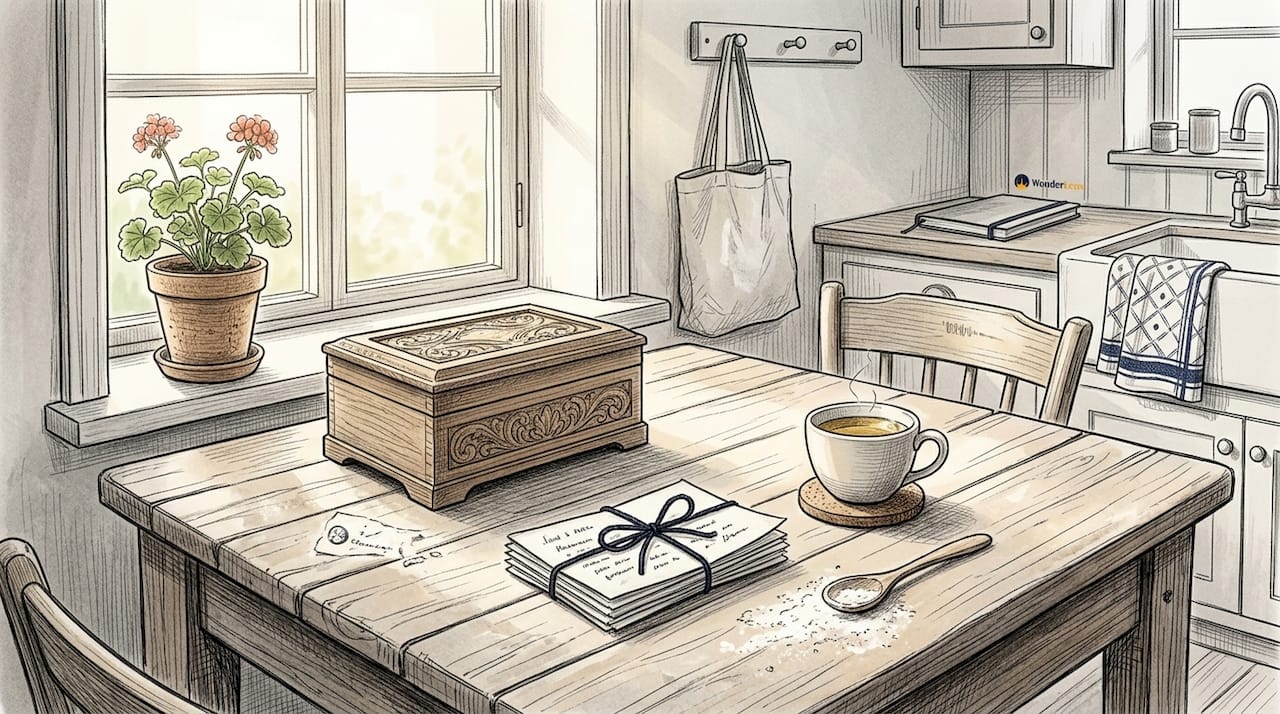
A keepsake without its story is just an object. Without preserving the story behind an object, its emotional power fades significantly over time. This is the hidden problem most families discover too late: the object survives, but the meaning does not.
Think about a quilt passed down through three generations. If no one recorded who made it, when, and why, the fourth generation holds a beautiful piece of fabric with no emotional weight. Objects provide a tangible home for family stories, but only when those stories travel with them.
Preserving the story is a practice, not a one-time task. Here is a simple system that works:
- Label every keepsake with a "who, when, and why." A sticky note inside a box works. A digital caption works better. The goal is to attach context before memory fades.
- Record stories while the source is alive. A short voice memo or video of a grandparent explaining an heirloom carries more emotional weight than any written description.
- Create a family archive document. A shared Google Doc or a printed memory book that pairs photos of keepsakes with their stories gives future generations direct access to the emotional history.
- Review and update the archive at milestones. Birthdays, anniversaries, and holidays are natural moments to add new entries and revisit old ones.
Pro Tip: Use your phone's voice memo app to record a 60-second story about a keepsake right now. You do not need a perfect setup. The raw, unscripted version is often the most moving.
Documenting the story behind each keepsake is the single most protective act a family can take for its emotional legacy.
What types of keepsakes do for family tradition
Not all keepsakes work the same way. Different categories carry different emotional functions, and understanding those differences helps families collect and preserve with more intention.
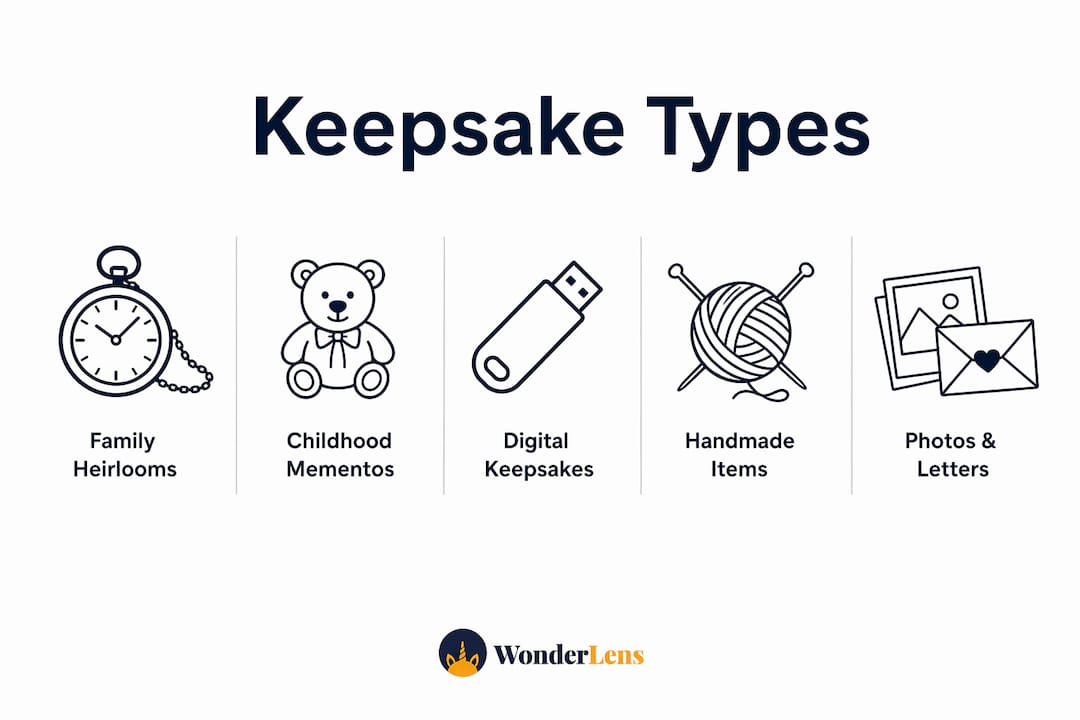
| Type of keepsake | Primary emotional function | Best practice |
|---|---|---|
| Family heirlooms | Connect generations across time | Pass down with a recorded story while the giver is alive |
| Childhood mementos | Affirm love and document growth | Store in milestone-linked archives, not random boxes |
| Holiday and event keepsakes | Anchor annual traditions and shared joy | Display seasonally to trigger shared memory |
| Digital keepsakes | Preserve moments with cinematic detail | Back up to multiple platforms and share with family |
Family heirlooms carry the deepest generational weight. A piece of jewelry, a tool, or a handwritten recipe connects a child to grandparents and great-grandparents they may never meet. These objects make abstract family history feel real and personal.
Childhood mementos serve a different but equally powerful function. Keeping childhood mementos creates physical evidence of love for future generations. An adult child discovering a box of their own drawings and report cards can feel seen and loved in a way that transcends time.
Digital keepsakes are the newest category and the fastest growing. Personalized videos, animated holiday memories, and photo books with narration now sit alongside physical objects as legitimate forms of family memory preservation. Platforms like Wonderlens make it possible to create memorable family traditions in digital form, with the same emotional resonance as a physical heirloom.
How to use keepsakes intentionally to strengthen your family
Knowing that keepsakes matter is one thing. Using them with intention is another. Families who build regular rituals around their keepsakes report deeper conversations, stronger bonds, and a clearer shared identity. Annual ceremonies or milestone sharing via keepsakes translate complex feelings into accessible family dialogue.
Here are the most effective ways to put keepsakes to work in your family:
- Create an annual keepsake ritual. Choose one day each year, perhaps a birthday or New Year's Eve, to open a memory box together. Let each family member hold an object and share one memory it brings up.
- Pass down heirlooms while the giver is alive. Passing down keepsakes while elders are alive creates a living memory experience. The recipient hears the story directly, which adds layers of meaning no written note can fully replicate.
- Use keepsakes to start hard conversations. A photo from a difficult year or a letter from a lost family member can open emotional doors that direct questions cannot. Keepsakes give people permission to feel and speak.
- Involve children in the selection process. Ask children which objects feel meaningful to them. This builds their sense of family identity and teaches them that memory preservation is an active, loving choice.
- Practice active archiving. Active archiving means selecting keepsakes linked to milestones rather than storing everything passively. This keeps collections meaningful and manageable.
The importance of happy shared moments in building family connection is well documented. Keepsakes extend those moments across time, making joy accessible long after the original experience ends.
Families who treat keepsake rituals as a regular practice rather than a one-time project build something rare: a living family archive that grows richer with every passing year. That archive becomes one of the most valuable things a family owns, not because of monetary worth, but because of the emotional weight it carries for every member.
Key takeaways
Keepsakes strengthen family bonds most powerfully when families preserve both the physical object and the story behind it, and when they use those objects in regular, intentional rituals.
| Point | Details |
|---|---|
| Keepsakes are emotional infrastructure | They regulate mood, preserve identity, and build resilience in children during life transitions. |
| Stories matter as much as objects | Without documented context, a keepsake loses its emotional power within one generation. |
| Active archiving beats passive storage | Select keepsakes linked to milestones and document the "who, when, and why" for each one. |
| Pass down heirlooms while elders are alive | Direct storytelling from the giver adds irreplaceable emotional depth to any keepsake. |
| Digital keepsakes are legitimate family memory tools | Personalized videos and animated memories carry the same bonding power as physical objects. |
Why I think we underestimate what keepsakes actually do
I have spent years watching families navigate memory preservation, and the pattern I see most often is this: families save the objects but lose the stories. A box of photographs with no names on the back. A piece of jewelry with no one left who remembers where it came from. The object survives. The connection does not.
What surprises most people is that the emotional value of a keepsake lives almost entirely in its context. The object is just the delivery mechanism. This is why I push back on the idea that keepsakes are about sentimentality. They are about identity. They tell a child, "You come from something. You belong to something." That message is not sentimental. It is foundational.
The other thing I have noticed is that families often wait too long. They plan to record Grandma's stories next summer. They mean to label the photos. Then the moment passes. The single most useful thing any family can do today is record one story about one object while the person who knows it is still here to tell it.
Keepsakes do not need to be precious or expensive to do their job. A child's handprint in plaster, a ticket stub from a first concert together, a video of Santa walking through your living room on Christmas morning. What makes them powerful is the love and intention behind them, not the price tag.
— Jeremiha
How Wonderlens helps families create magical digital keepsakes
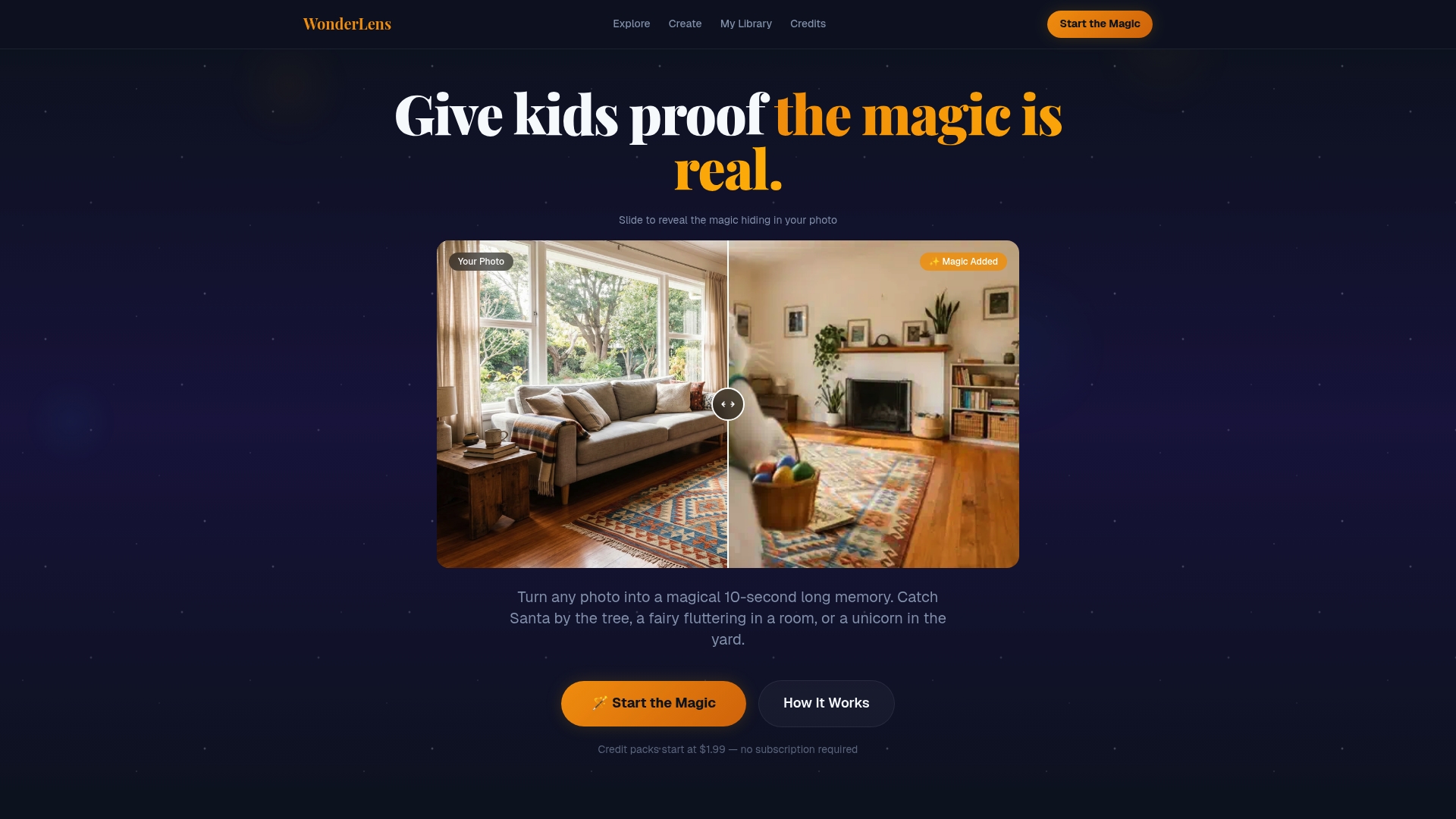
Wonderlens transforms your family photos into short, cinematic AI-animated videos that place magical characters like Santa, unicorns, and fairies directly inside your home. These 10-second personalized videos capture the wonder of childhood in a format your family can revisit for years. They are not filters or stickers. Wonderlens uses realistic lighting, shadow casting, and movement to create something that feels genuinely magical. Starting at just $1.99 per video, it is one of the most affordable ways to create digital keepsakes your family will treasure. Visit Wonderlens to start building your family's digital memory collection today.
FAQ
What is the role of keepsakes in family bonding?
Keepsakes serve as autobiographical memory triggers that strengthen emotional connections, support identity during life transitions, and give families a shared language for love and history. They are most powerful when paired with the stories behind them.
Why do childhood mementos matter so much?
Childhood mementos create physical evidence of love that can comfort adult children decades later. They document growth and affirm that a child's early years were witnessed and valued by the people who raised them.
How do you preserve the emotional power of a keepsake?
Document the "who, when, and why" behind every keepsake using written notes, voice memos, or digital captions. Without that context, the emotional power of the object fades within one or two generations.
When is the best time to pass down a family heirloom?
The best time is while the original owner is alive. Passing down a keepsake with a direct, personal story from the giver creates a living memory experience that written descriptions cannot replicate.
Are digital keepsakes as meaningful as physical ones?
Yes. Digital keepsakes like personalized videos and animated family memories carry the same emotional bonding power as physical objects, especially when they are tied to specific family moments and shared traditions.
Recommended
- Creating Personalized Family Memories That Truly Last — WonderLens | WonderLens
- Why create magical memories? Real value for your family — WonderLens | WonderLens
- Why Parents Embrace Animated Keepsakes for Kids. WonderLens | WonderLens
- Your Guide to Magical Family Memories That Last — WonderLens | WonderLens