Digital Holiday Keepsakes 2026: Key Industry Trends
July 5, 2026
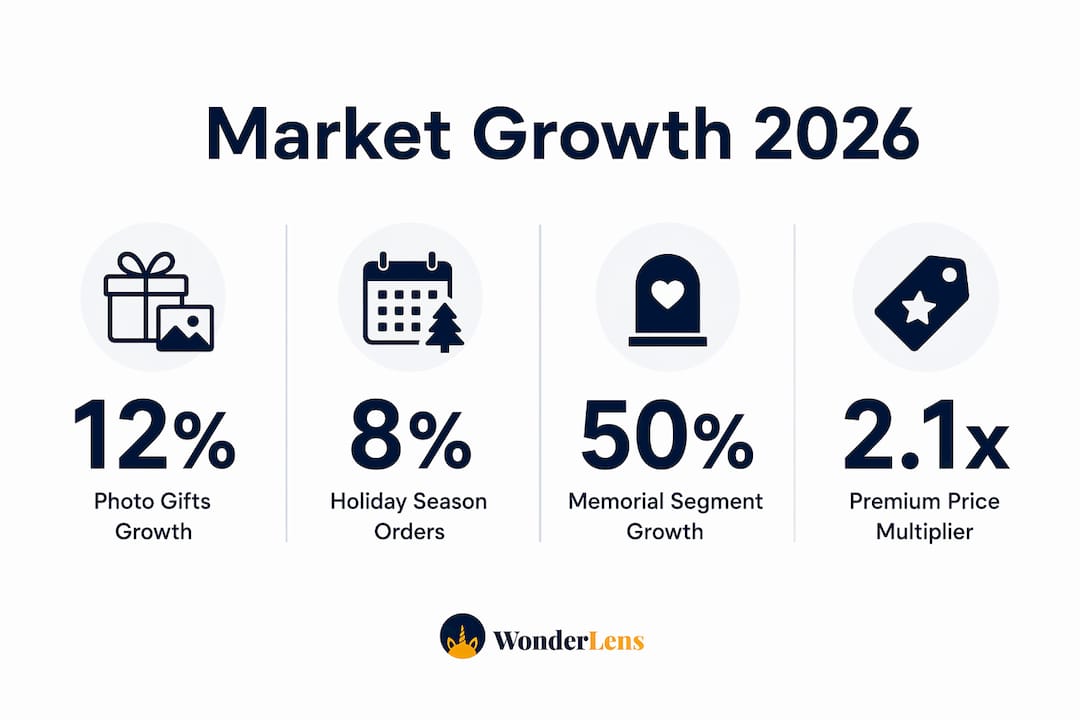
Digital holiday keepsakes are defined as personalized, technology-enhanced memory products that capture and share meaningful moments through digital formats, from animated videos to phygital gift experiences. The industry trends in digital holiday keepsakes 2026 show a market driven by AI personalization, emotional depth, and a shift away from purely seasonal gifting. Photo-based personalized gifts grew 12% year over year in Q2 2026, outpacing the broader personalized gifts category at 8.9% growth. That gap signals a clear consumer preference: people want gifts built from their own memories, not generic products. Wonderlens sits at the center of this shift, turning family photos into cinematic animated videos that feel magical and real.
What are the top industry trends in digital holiday keepsakes 2026?
The defining trend of 2026 is the rise of photo-based personalization as the fastest-growing segment in the gifting market. Photo-based personalization accounts for 29% of the total US personalized gifting market. That share reflects how deeply consumers connect their photo libraries to the gifts they want to give and receive.
Six trends are reshaping the digital keepsake space this year:
- Photo-based personalized gifting grew 12% year over year, driven by the average consumer's smartphone archive of 2,400+ photos that fuel on-demand customization.
- Phygital keepsakes combine physical objects with digital narratives. A printed photo book, for example, can trigger an AR video when scanned, creating a layered memory experience.
- AI-enhanced personalization now includes voice cloning, video recreation, and cinematic rendering. Platforms that add human curation to AI outputs produce higher quality results and earn stronger customer loyalty.
- Memorial and evergreen gifting outperform seasonal holiday spikes. The memorial segment grew 50% over three years and shows the highest repeat purchase rates of any gifting category.
- Privacy-aware, multi-user digital legacies are gaining traction. Families want shared memory spaces with controlled access, not public social media posts.
- Narrative layering replaces simple digital links. Consumers want gifts that unfold emotionally over time, not a one-time digital file.
Pro Tip: When choosing a digital keepsake platform, look for one that combines AI generation with human review. That combination produces the most realistic and emotionally resonant results.
The shift toward narrative layering is the most underreported trend in the space. Consumers no longer find value in a QR code that opens a photo album. They want a physical object that triggers an evolving digital story, one that can be updated, shared selectively, and revisited for years.

How are AI and immersive technologies redefining digital keepsake experiences?
AI is the engine behind the most memorable digital keepsakes available in 2026. The technology handles lighting simulation, shadow casting, motion rendering, and voice synthesis at a quality level that was not accessible to consumers three years ago. The result is keepsakes that feel personal and cinematic rather than novelty-grade.
The most meaningful AI applications in digital keepsakes follow this progression:
- Photo input and scene analysis. AI reads the lighting, depth, and spatial layout of a real room from a single photo.
- Character or memory integration. A holiday figure, animated memory, or recreated moment is rendered into the scene with matching light and shadow.
- Human curation review. A trained reviewer checks the output for realism, emotional tone, and quality before delivery.
- Final video or phygital output. The finished product is a shareable, cinematic memory that places the magical moment inside the family's actual home.
Human-in-the-loop quality control significantly improves AI-generated keepsake output and drives premium pricing and repeat business. That finding matters because fully automated platforms often produce outputs that feel generic or uncanny. The human review step is what separates a product that delights from one that disappoints.
AI-generated digital keepsakes carry the most meaning when they focus on authenticity and emotional needs rather than technical perfection. Families grieving a loss, for example, have used AI video recreations of deceased loved ones for comfort and connection. Ethical questions around this use case are real and ongoing, but the emotional power of the technology is undeniable.
Pro Tip: Prioritize platforms that render shadows and lighting from your actual room photo. Flat overlays break the illusion instantly. Realistic light matching is what makes a child genuinely believe Santa was in their living room.
Wearable-triggered memories represent the next frontier. Imagine a child's holiday ornament that, when held near a phone, plays a personalized animated video of a fairy visiting their bedroom. That kind of contextual, wearable-triggered experience is moving from concept to consumer product in 2026.
What do consumer behavior data and gifting patterns reveal about the market?
The timing of digital keepsake purchases surprises most analysts. Only 8% of personalized gift orders occur during the traditional holiday season. The remaining 92% happen throughout the year, tied to birthdays (36%), anniversaries (21%), and memorials (18%).
That data reshapes how you should think about the digital keepsake market. It is not a Christmas product category. It is a year-round emotional gifting category that happens to peak around personal milestones rather than calendar holidays.
| Gifting occasion | Share of orders | Key consumer behavior |
|---|---|---|
| Birthdays | 36% | High repeat purchase, strong personalization demand |
| Anniversaries | 21% | Premium willingness, couples and families |
| Memorials | 18% | Highest brand loyalty, fastest-growing segment |
| Traditional holidays | 8% | Seasonal spike, broad audience |
| Other occasions | 17% | Graduations, milestones, spontaneous gifting |
The memorial segment's 50% growth over three years is the most striking data point in the market. Memorial gift buyers show the highest brand loyalty of any segment. Once a family trusts a platform with a deeply personal memory, they return repeatedly and refer others.
Premiumization is the other major behavioral shift. Consumers pay a 2.1x premium for digital keepsakes that feel personal, high quality, and emotionally resonant over generic alternatives. Price competition is losing ground to quality competition. Platforms that invest in realism and human curation win on both retention and revenue.
How do privacy, narrative layering, and multi-user input add value to digital keepsakes?
Privacy is no longer a feature. It is a baseline expectation for digital keepsakes that involve intimate family memories. Privacy-first digital memory tools with controlled access are increasingly valued for family and couples gifting. Encryption and access controls are now part of the gift's emotional value proposition, not just its technical spec sheet.
Digital keepsakes complement physical heirlooms by enabling continuous updates, multi-user input, and richer multimedia legacies. A grandmother can add a voice note to a shared family memory album. A sibling in another state can contribute a photo. The keepsake grows over time rather than sitting static in a drawer.
Narrative layering is the design principle that makes this possible. Phygital gifts rely on narrative layering, where physical objects trigger evolving digital emotional experiences that must be fast-loading and seamless to hold a user's attention. The physical object anchors the memory. The digital layer adds depth, motion, and story.
The range of phygital keepsake formats available in 2026 reflects this principle:
- Printed photo books with AR triggers offer a familiar physical format with a digital surprise layer. Cost typically ranges from $30 to $150.
- Animated holiday videos like those created by Wonderlens place cinematic characters inside a real home environment. Starting at $1.99 per video, they are the most accessible entry point.
- Blockchain art portals and advanced AR wearables serve the premium segment, with interactive keepsake costs ranging from $30 to $500 and above.
The format you choose determines longevity, interactivity, and ease of sharing. Simple animated videos are easy to share and revisit. Advanced AR wearables require compatible hardware. For most families, the sweet spot is a cinematic animated video that lives on a phone and can be replayed and shared instantly.
Key Takeaways
Personalized, AI-enhanced digital keepsakes are the fastest-growing gifting segment in 2026, driven by year-round emotional occasions rather than seasonal holidays.
| Point | Details |
|---|---|
| Photo-based gifting leads growth | This segment grew 12% year over year, outpacing the broader personalized gifts market. |
| Most orders happen outside holidays | 92% of personalized gift purchases tie to birthdays, anniversaries, and memorials, not December. |
| Human curation improves AI output | Platforms combining AI generation with human review earn higher satisfaction and repeat purchases. |
| Privacy is a core value driver | Controlled access and encryption are now part of what makes a digital keepsake feel trustworthy. |
| Premiumization beats price competition | Consumers pay a 2.1x premium for keepsakes that feel personal, cinematic, and emotionally resonant. |
Why the emotional core of digital keepsakes matters more than the technology
I have tracked the digital gifting space for years, and the pattern I keep seeing is that the technology gets the headlines but the emotion drives the purchase. Families do not buy an animated Santa video because they are impressed by AI rendering pipelines. They buy it because they want to see their child's face light up on Christmas morning.
The most interesting tension in this market right now is between technical ambition and human warmth. Platforms racing to add voice cloning, blockchain provenance, and AR wearable triggers risk losing sight of what makes a keepsake valuable: it has to feel real and personal, not like a tech demo. The role of AI in digital keepsakes is to serve the emotion, not to showcase itself.
The ethical dimension around AI memorials deserves more honest conversation than it currently gets. Using AI to recreate a deceased loved one is a deeply personal choice with real psychological implications. The technology works. Whether it helps or hinders grief depends entirely on the individual and the context. Platforms entering that space carry a responsibility that goes beyond product quality.
My practical advice for consumers: start simple. A well-rendered, cinematic animated video of a holiday character in your living room creates more genuine wonder than a complex AR wearable that requires setup. The most memorable digital experiences for families are the ones that feel effortless and magical, not the ones that require a tutorial. As wearables and decentralized platforms mature, the complexity will become invisible. Until then, simplicity wins.
— Jeremiha
Wonderlens brings these trends to life for your family
The trends shaping the digital keepsake market in 2026 point toward one clear direction: personalized, cinematic, and emotionally real experiences that families can create and share without technical expertise. Wonderlens delivers exactly that.
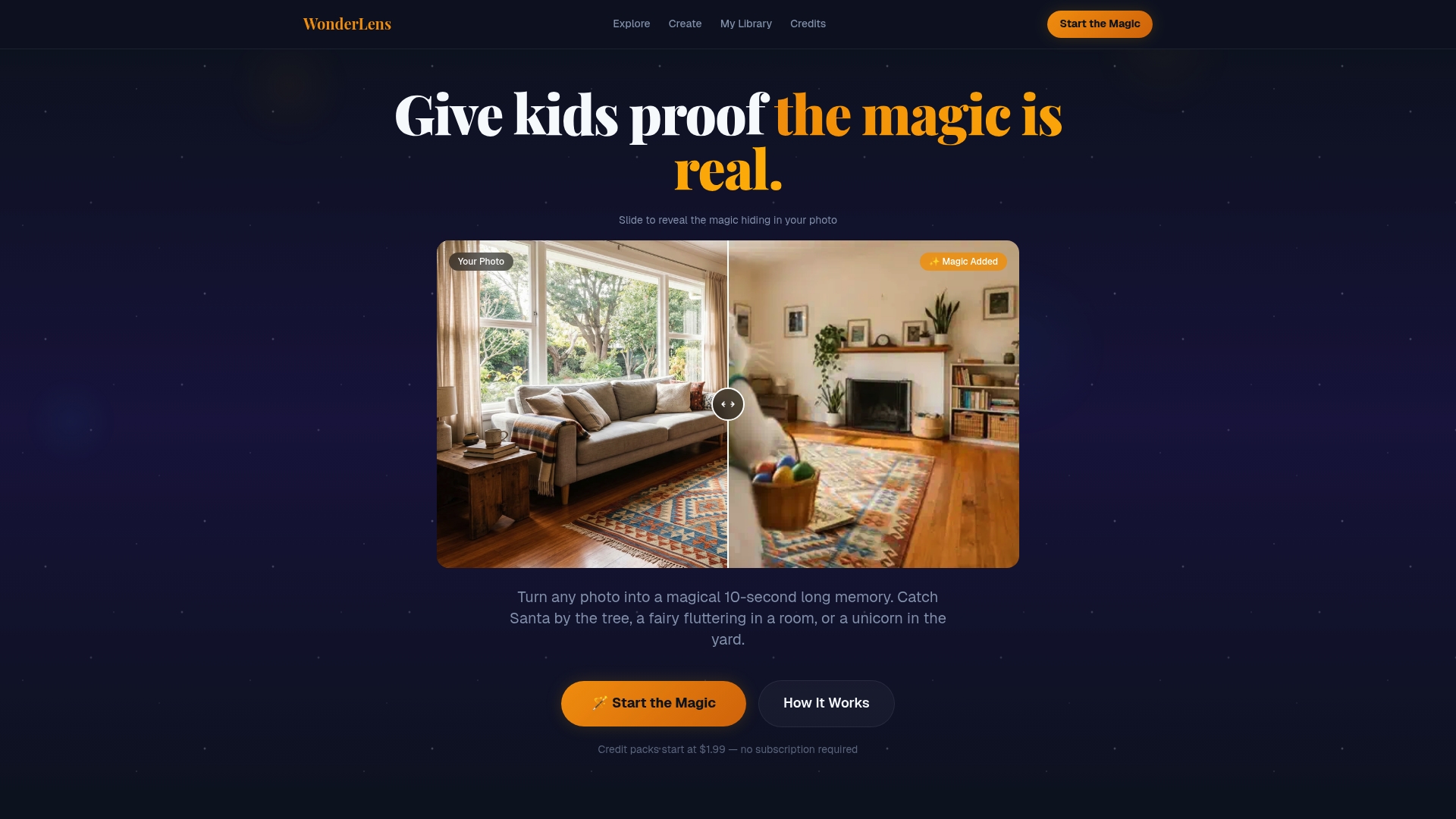
With Wonderlens, you upload a photo of your living room and receive a 10-second animated video of Santa, a unicorn, a dragon, or a fairy moving through your actual space, with matching light, shadow, and movement. The AI renders every detail to match your room's real environment. Credits start at $1.99, making it one of the most accessible animated holiday keepsakes available. For families ready to create a moment their children will remember for years, Wonderlens is the place to start.
FAQ
What are digital holiday keepsakes?
Digital holiday keepsakes are personalized memory products delivered in digital formats, including animated videos, phygital gifts, and AI-generated memory experiences. They combine personal photos or data with technology to create emotionally meaningful, shareable gifts.
How fast is the digital keepsake market growing in 2026?
Photo-based personalized gifts grew 12% year over year in Q2 2026, outpacing the overall personalized gifts category growth of 8.9%. The memorial gifting segment grew 50% over three years and shows the highest brand loyalty rates.
When do most people buy personalized digital keepsakes?
Only 8% of personalized gift orders occur during the traditional holiday season. The majority of purchases happen year-round, tied to birthdays (36%), anniversaries (21%), and memorials (18%).
What makes a digital keepsake feel high quality?
Platforms that combine AI generation with human curation produce the most realistic and emotionally resonant results. Realistic lighting, shadow matching, and a human review step are the key quality markers to look for, as explored in digital vs. traditional holiday decor analysis.
Are digital keepsakes safe for sharing family memories?
Privacy-first platforms with controlled access and encryption are the standard for reputable digital keepsake services. Look for platforms that offer selective sharing and do not post your family's memories to public feeds. For broader context on how digital memory culture is evolving, VEU's analysis of stories living online offers useful perspective.
Recommended
- Why Choose Digital Over Traditional Holiday Decor. WonderLens | WonderLens
- Why Parents Prefer Digital Holiday Experiences. WonderLens | WonderLens
- Best practices for creating unforgettable holiday magic — WonderLens | WonderLens
- What makes a digital experience truly memorable for families? — WonderLens | WonderLens