What Is a Virtual Holiday Surprise for Families?
June 3, 2026
A virtual holiday surprise is a specially designed remote or digital experience that delivers magical, joyful holiday moments to children and families without requiring anyone to be in the same room. Think of it as a digital holiday experience that uses video messages, virtual tours, live calls, and AI-generated animations to create wonder right inside your home. Unlike a simple phone call or a gift card, a well-executed virtual holiday surprise feels like an event. It has a reveal moment, a theme, and the kind of breathless anticipation that makes kids remember it for years. Whether you are separated by distance or simply want to create something extraordinary, this format gives you the tools to do it.
What is a virtual holiday surprise and why does it work?
A virtual holiday surprise is any planned digital experience that uses technology to deliver a surprise holiday moment to a child or family. The most common formats include surprise video messages, live-streamed group reveals, virtual vacation experiences, and AI-generated character animations placed directly inside your home environment. What makes these experiences work is the "sense of elsewhere." Even when kids never leave the living room, a well-crafted digital experience makes them feel like something extraordinary is happening around them.
The format gained real cultural traction as families spread across cities and countries looked for ways to share holiday magic across screens. Platforms like Wonderlens took this concept further by using AI to place cinematic-quality holiday characters, such as Santa, fairies, and dragons, directly into photos of your actual home. The result is not a sticker overlay. It is a 10-second animated video where Santa appears to stand in your specific living room, casting real shadows and catching the same light as your furniture. That level of realism is what separates a memorable surprise from a forgettable one.

The core psychology is simple. Children respond to surprise and spectacle. A virtual holiday surprise packages both into a format that parents can plan, control, and repeat every year.
What types of virtual holiday surprises create the most magic?
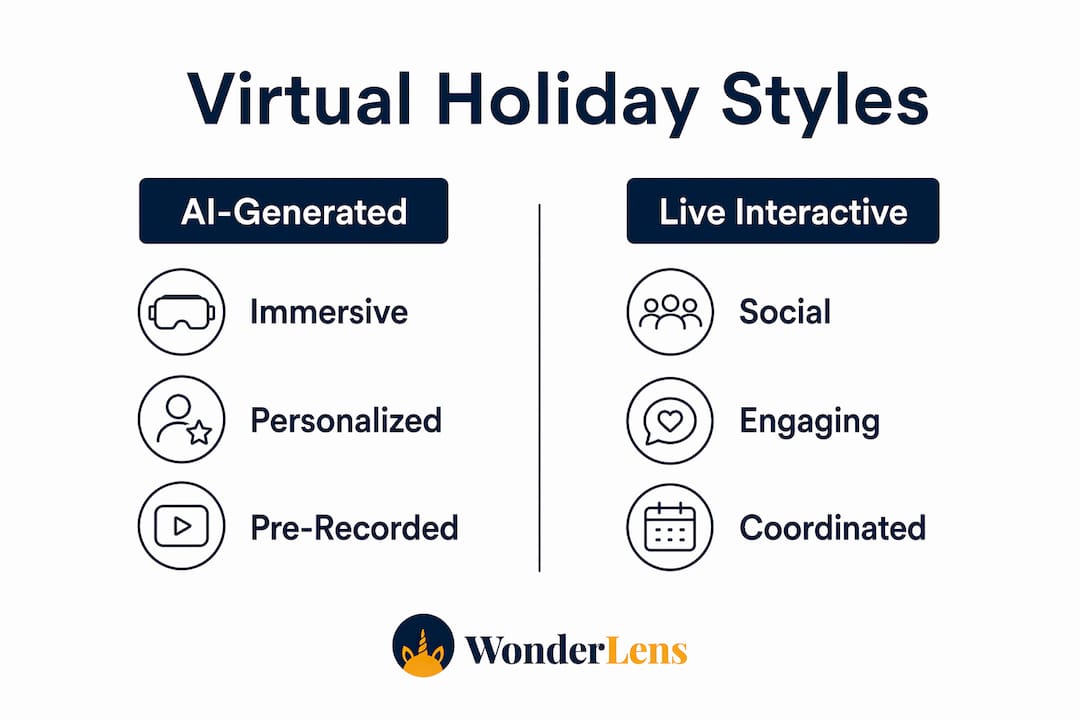
The variety of formats available gives every family a way to match their budget, tech comfort level, and the age of their kids. Here are the most effective types:
-
Virtual vacation experiences. These use VR and 360-degree videos to transport kids to a digital winter wonderland, the North Pole, or a fantasy destination. National Virtual Vacation Day, observed on March 30, highlights how VR and immersive video make iconic places accessible from home, including for families who cannot travel physically. The mental health and engagement benefits are real, especially for younger children who respond powerfully to visual immersion.
-
Surprise video messages and compilations. A personalized video from "Santa," a favorite character, or a beloved relative creates an emotional punch that generic gifts cannot match. When the message references the child by name, mentions something specific about their year, or appears inside their actual bedroom, the magic multiplies.
-
Live-streamed interactive events. These are online surprise parties with a holiday theme. Guests join a video call, the child is brought in by a co-conspirator, and the reveal happens live. Games, holiday trivia, and virtual scavenger hunts keep energy high after the initial reveal.
-
Destination reveal mechanics. Borrowed from travel surprise traditions, this format uses a structured clue sequence to withhold the "destination" until the child is ready. The destination might be a virtual trip to a digital Christmas village or a themed movie night. The clue sequence builds anticipation the same way a real trip reveal does.
-
AI-generated character animations. Tools like Wonderlens place animated holiday characters directly into your home environment using AI rendering. The characters move, cast shadows, and interact with the space in ways that feel cinematic rather than cartoonish.
Pro Tip: Combine two formats for maximum impact. Use a clue sequence to build anticipation, then end with an AI-generated video of Santa appearing in your living room as the final reveal.
How to plan a virtual holiday surprise that actually works
The magic of a virtual surprise depends more on choreography and timing than on the theme itself. A technically flawed reveal, where someone accidentally unmutes early or the wrong person joins the call first, collapses the entire experience in seconds. Treat the planning like a stage production.
-
Set a strict join protocol. All guests or participants must join 15 minutes early with cameras off and microphones muted. This is non-negotiable. One unmuted guest saying "Are we starting yet?" destroys the surprise instantly.
-
Assign a co-host. One trusted adult handles the technical side of the call while another brings the child into the room at exactly the right moment. Never rely on one person to do both.
-
Choose a trigger phrase or signal. Decide in advance what word or action starts the reveal. It might be a specific song playing, a knock on the door, or the co-host saying "Close your eyes." Everyone on the call knows the signal. No one acts until it happens.
-
Prepare contingencies. Treating the event like a production means planning for late arrivals, frozen screens, and misconfigured audio. Have a backup device ready. Know who to text if someone cannot connect.
-
Record the reveal moment. Capturing the reaction on video or photos creates a lasting memory and gives you something to share with family members who could not attend. Set up a second device to record the child's face before the call begins.
Pro Tip: Send written join instructions to every participant at least 48 hours before the event. Include the exact link, the mute and camera protocol, and the trigger signal. Assume nothing is obvious.
Virtual travel vs. live celebration: which format fits your family?
Families often wonder whether to invest in a pre-recorded virtual vacation experience or a live interactive celebration. Both deliver real joy, but they serve different emotional needs and require different levels of preparation.
| Format | Engagement level | Preparation needed | Tech requirements | Best for |
|---|---|---|---|---|
| AI-generated character video | Very high | Low (minutes) | Smartphone or computer | Kids under 10, solo reveals |
| Virtual vacation / 360-degree tour | High | Medium | VR headset or large screen | Adventure-loving kids, older children |
| Live video call surprise party | Very high | High | Stable internet, video platform | Multi-family celebrations |
| Pre-recorded video message | Medium | Low to medium | Any device | Long-distance relatives |
| Destination reveal with clue sequence | High | Medium to high | Any device plus printed clues | Kids who love puzzles and anticipation |
A virtual vacation experience creates a powerful sense of place. It works especially well for older children who can appreciate the idea of "visiting" somewhere magical. The limitation is that it is a solo or small-group experience. It does not replicate the social electricity of a live group reveal.
A live video call surprise, by contrast, delivers social connection and shared laughter. The challenge is coordination. With more participants, more things can go wrong. Immersive technology in tourism research shows that the emotional impact of virtual destination experiences comes from the sense of presence, not just the visuals. For younger children, an AI-generated video of Santa in their actual living room delivers that sense of presence more directly than a 360-degree tour of the North Pole.
The best choice depends on your child's age, your family's geographic spread, and how much coordination you can realistically manage. Many families combine both: a pre-recorded AI video as the reveal moment, followed by a live call with extended family to celebrate together.
Creative ideas for making virtual holiday surprises unforgettable
The difference between a good virtual surprise and a truly magical one comes down to personalization and sensory detail. Here are the ideas that consistently produce the biggest reactions:
-
Place a holiday character in your actual home. Wonderlens generates cinematic AI videos of Santa, unicorns, fairies, and dragons appearing inside photos of your real living space. The AI matches lighting, shadows, and movement to your specific room. Kids do not see a generic animation. They see Santa standing next to their Christmas tree.
-
Pair the video with a physical clue sequence. Hide three envelopes around the house. Each clue leads to the next, and the final envelope contains a QR code that plays the AI-generated holiday video. The hunt builds anticipation. The video delivers the payoff.
-
Sync sensory details with the digital experience. Play holiday music as the video loads. Have hot cocoa ready. Dim the lights. These physical details make the digital experience feel more real and more special. Children process magic through multiple senses at once.
-
Use a personalized video message from a character. A video where Santa mentions your child's name, their school, and one thing they did well this year lands completely differently than a generic holiday greeting. Personalization is the single biggest driver of emotional impact in holiday surprise reveals.
-
Create a themed scavenger hunt tied to a virtual destination. Each clue references a different "stop" on a virtual holiday journey. The North Pole, a candy cane forest, a reindeer stable. End the hunt with a live video call where the whole family is waiting on screen.
Pro Tip: Record your child's face during the reveal, not just the screen. The expression of pure wonder is the memory you will want to keep. Set up a second phone or tablet pointed at them before the experience begins.
Key takeaways
A virtual holiday surprise works best when choreography, personalization, and the right technology combine to create a moment that feels genuinely magical rather than merely digital.
| Point | Details |
|---|---|
| Define the format first | Choose between AI video, live call, virtual tour, or clue sequence based on your child's age and your family's setup. |
| Choreography beats theme | Strict join protocols, a co-host, and a trigger signal matter more than elaborate decorations or complex technology. |
| Personalization drives impact | Surprises that reference your child's name, home, or specific details create far stronger emotional reactions than generic content. |
| Combine formats for depth | Pair a pre-recorded AI character video with a live family call to deliver both spectacle and social connection. |
| Capture the reaction | Record your child's face during the reveal so the memory lives beyond the moment itself. |
Why virtual holiday surprises are worth every bit of effort
I have watched parents spend weeks planning elaborate in-person holiday events only to have the reveal fall flat because the timing was off or the child walked in too early. Virtual surprises, done right, actually give you more control over the reveal moment than most in-person setups do. You control when the child enters the room. You control when the video plays. You control the lighting, the music, and the sequence of events.
What I find most underrated about this format is the rewatch factor. A physical surprise happens once. An AI-generated video of Santa appearing in your living room can be watched again and again. I have seen kids ask to replay their Wonderlens video dozens of times over the holiday season. That replay value is something no wrapped gift can offer.
The one mistake I see families make repeatedly is underestimating the planning required for live call surprises. They assume everyone will figure out the mute protocol on their own. They do not. Send written instructions. Assign a co-host. Rehearse the trigger signal. The families who treat it like a production are the ones whose kids are still talking about it in February.
Virtual holiday surprises are not a replacement for physical presence. They are a different kind of magic entirely. One that lives on a screen, yes, but also in memory, in laughter, and in the look on a child's face when something impossible appears to happen right in their own living room.
— Jeremiha
Bring the magic home with Wonderlens
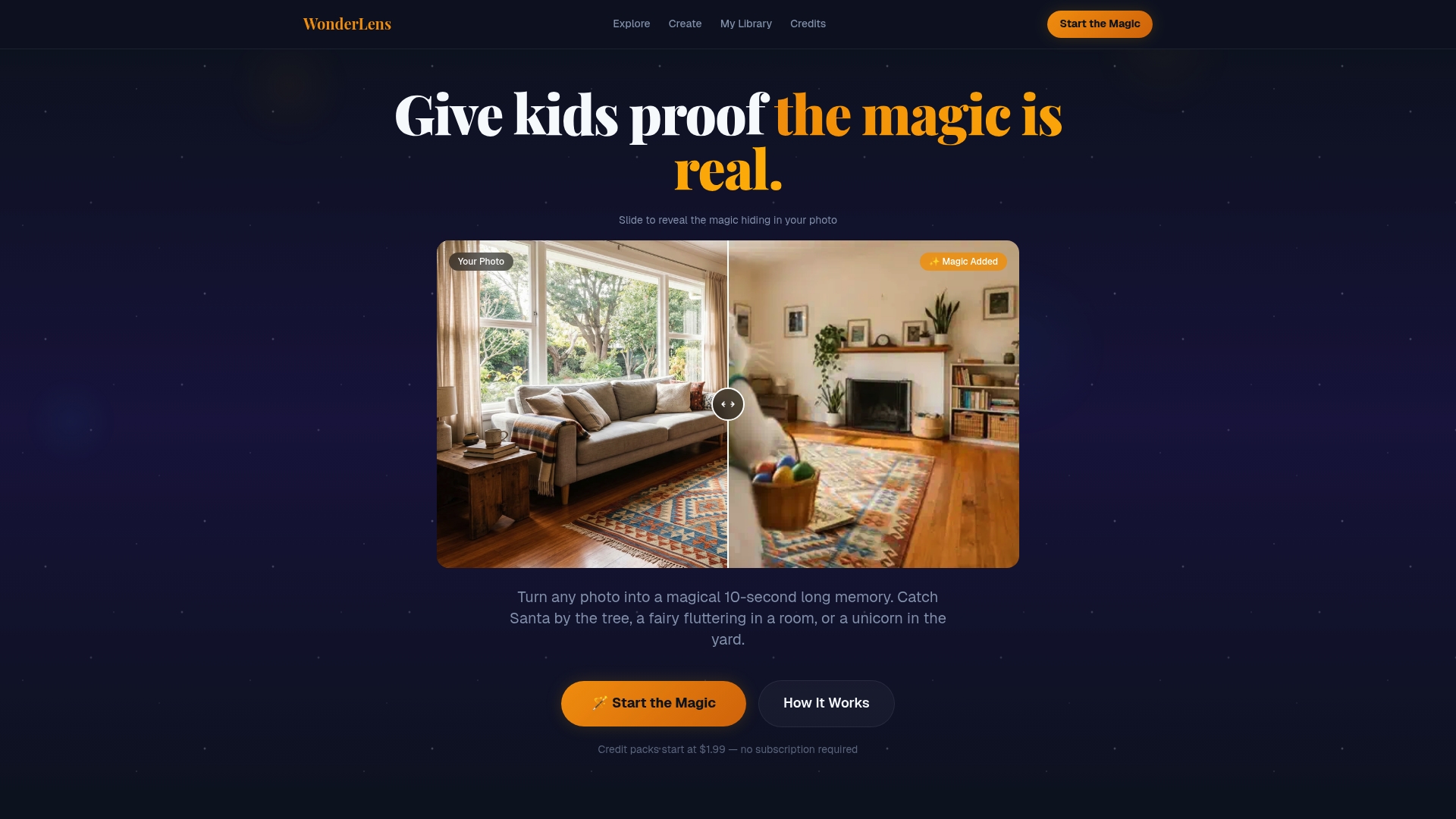
Wonderlens makes it simple to create a cinematic virtual holiday surprise that your child will never forget. Upload a photo of your living room, choose a character like Santa, a fairy, or a dragon, and Wonderlens generates a realistic 10-second animated video where that character appears to exist in your actual space. The AI matches your room's lighting and shadows so the result looks genuinely magical, not like a filter. Credits start at $1.99, and the whole process takes minutes. Whether you want to catch Santa in your living room or create a personalized holiday keepsake to share with family, Wonderlens gives you a one-of-a-kind digital surprise that no store-bought gift can replicate.
FAQ
What is a virtual holiday surprise?
A virtual holiday surprise is a planned digital experience that delivers a magical holiday reveal to a child or family using tools like AI-generated videos, virtual tours, live video calls, or personalized character messages. It creates wonder and anticipation without requiring physical presence.
How do you keep a virtual surprise from being spoiled?
All participants should join the call early with cameras off and microphones muted, and a single trigger phrase or signal should be agreed upon in advance to synchronize the reveal moment.
What technology do you need for a virtual holiday surprise?
Most formats require only a smartphone or computer with a stable internet connection. More immersive virtual vacation experiences may benefit from a large screen or a VR headset, but AI-generated character videos like those from Wonderlens work on any device.
Are virtual holiday surprises effective for young children?
Yes. Young children respond strongly to visual spectacle and personalization. An AI-generated video of a holiday character appearing in their actual home, with matching lighting and realistic movement, creates a sense of presence that engages children under 10 especially well.
How do you make a virtual holiday surprise feel personal?
Use your child's name, reference details specific to their year, and set the experience inside your actual home environment. Wonderlens does this automatically by placing animated characters into photos of your real living space, making the surprise feel genuinely unique rather than generic.
Recommended
- What Is Virtual Holiday Decor? A Family Guide — WonderLens | WonderLens
- Why animated holiday surprises matter: the parent's guide to magical moments — WonderLens | WonderLens
- Why Choose Holiday Video Gifts for Your Family. WonderLens | WonderLens
- Transform holidays: fantasy characters create magical family memories — WonderLens | WonderLens