What Is AI-Powered Fantasy Media? A 2026 Guide
June 29, 2026
AI-powered fantasy media is defined as storytelling and visual content created or enhanced by artificial intelligence to produce fantasy worlds, characters, and narratives. The industry term for this field is "AI-generated content," or AIGC, and it covers everything from animated dragons appearing in your living room to fully AI-produced animated series. The AI roleplay market is worth $1.2 billion in 2026, projected to reach $8.92 billion by 2033. That growth signals a shift from novelty to a genuine entertainment category that families, gamers, and storytellers are actively shaping.
What is AI-powered fantasy media and how does it work?
AI-powered fantasy media uses machine learning models trained on massive datasets of images, text, and video to generate fantasy content on demand. Feed the system a description of a fire-breathing dragon in a medieval courtyard, and it produces a realistic visual or animated scene within seconds. The technology sits at the intersection of creative writing, visual art, and computer science.
Three core technologies power most AI fantasy experiences today:
- Text-to-image models convert written descriptions into detailed fantasy artwork. These models learn patterns from millions of images and can produce original characters, landscapes, and creatures that match a creator's vision.
- Large language models (LLMs) generate story text, dialogue, and lore. They power interactive roleplay engines where you type an action and the AI responds with a full narrative consequence.
- Video generation models animate static images or create short video clips from text prompts. Platforms like Wonderlens use this technology to place animated fantasy characters, such as unicorns or fairies, directly into your home environment with realistic lighting and shadow.
Unified AI pipelines that integrate text, images, and video let creators focus on creative decisions rather than switching between a dozen separate tools. Google's Gemini Omni is one example of a multimodal AI that handles text, image, and video tasks within a single system. That kind of integration is what makes cinematic fantasy experiences feel coherent rather than patchwork.
Pro Tip: When writing prompts for AI fantasy tools, describe lighting, mood, and character emotion alongside physical details. "A silver-armored knight standing in golden afternoon light, looking determined" produces far richer results than "a knight in armor."

Where is AI fantasy media being used right now?
AI-powered fantasy content has moved well beyond experimental demos. It shows up across games, animation studios, family apps, and independent creator platforms.
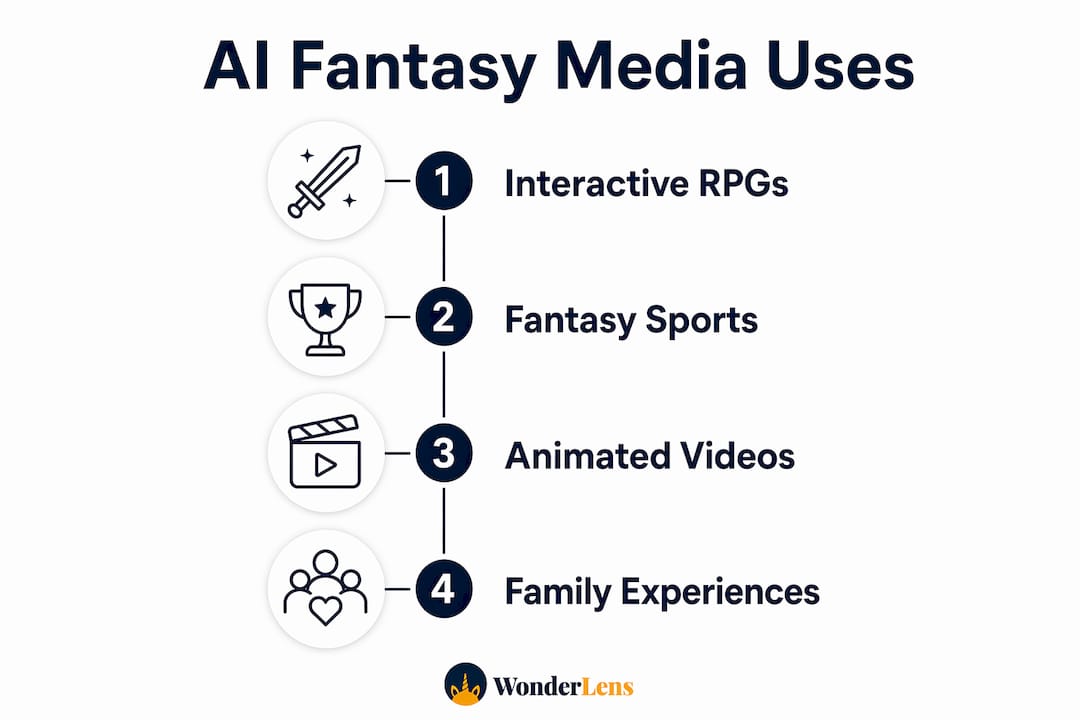
- Interactive fantasy RPGs let you play as a character in a living story. Many platforms start you with 50 free tokens for exploration, with ongoing costs scaling based on the complexity of the AI model powering the narrative engine. Simpler, faster models cost less; deep narrative engines that track dozens of story variables cost more.
- AI-generated animated franchises are entering mainstream entertainment. Utopai Studios and Huace have partnered to produce a fully AI-generated animated series based on Journey to the West, using Utopai's PAI system to maintain character continuity, mythological world-building, and digital assets across seasons and media formats.
- Fantasy avatar creation lets gamers and authors transform personal photos into elves, wizards, or warriors. These tools use facial recognition and style transfer to map your features onto a fantasy character while preserving your identity.
- Family memory experiences place animated fantasy characters directly into home photos and videos. Wonderlens does exactly this, turning a photo of your living room into a 10-second clip where Santa walks past the couch or a dragon peers through the window.
| Format | Primary audience | AI technology used |
|---|---|---|
| Interactive fantasy RPGs | Gamers, storytellers | LLMs, narrative engines |
| AI-animated series | General viewers | Video generation, PAI systems |
| Fantasy avatar creation | Gamers, authors | Image models, face mapping |
| Family memory videos | Parents, children | Video generation, scene compositing |
Beta tests in AI-powered fantasy sports showed a 67% increase in user spending and session times more than doubling from 12 to 31 minutes. That level of engagement reflects a broader pattern: when AI makes fantasy feel personal and responsive, people stay longer and invest more.
What are the creative challenges in AI-assisted storytelling?
AI generates content fast. It does not automatically generate content that feels meaningful. The biggest challenge in AI-assisted storytelling is maintaining consistency across a narrative, whether that means keeping a character's personality stable across 20 scenes or making sure a dragon's scales stay the same shade of green in every frame.
The quality of AI-generated fantasy media depends heavily on a detailed "world bible" that defines magic systems, geography, factions, and character rules before any content is generated. Without that front-loaded structure, AI outputs become incoherent. One scene might describe a kingdom at war; the next might forget the war entirely.
Common pitfalls in AI fantasy creation include:
- Character drift, where a character's appearance or personality shifts between scenes because the AI has no fixed reference point
- Tonal inconsistency, where the AI swings between epic seriousness and accidental comedy without human guidance
- Visual fragmentation, where generated images look stylistically mismatched across a series or story
Maintaining visual consistency requires fixed prompt constraints such as accent colors, banner shapes, and reusing the same character base models across every scene. This is the same principle professional animators use when building a character style guide. AI just needs that guide written into the prompt itself.
AI accentuates human creativity rather than replacing it. The AI generates characters quickly; humans provide narrative depth and thematic meaning. The best AI fantasy content comes from creators who treat the AI as a skilled production assistant, not an autonomous author.
Pro Tip: Build a short "character card" for every major figure in your story: appearance, voice, motivation, and one defining flaw. Paste this card into every prompt that involves that character. It dramatically reduces drift and keeps your story feeling alive.
How can families and individuals create AI fantasy experiences?
Getting started with AI-powered fantasy media does not require technical skills. The tools have become accessible enough that a parent with a smartphone can create a magical video for their child in under five minutes.
- Choose a tool that matches your goal. If you want a personalized family video with fantasy characters in your home, Wonderlens is built for exactly that. If you want to write and play through an interactive fantasy story, look for a text-based roleplay platform with a free token starter pack.
- Prepare your source material. For photo-based fantasy experiences, clear and well-lit photos without hats, sunglasses, or heavy shadows produce the best results. The AI needs to read facial features clearly to preserve identity in the final output.
- Set your creative parameters. Decide on the character, setting, and mood before you start. A unicorn in a sunlit bedroom feels different from a dragon at a Halloween party. The more specific your setup, the more magical the result.
- Generate and refine. Most platforms let you regenerate or adjust outputs. Treat the first result as a draft. Small changes to lighting descriptions or character placement often make a significant difference.
- Share the moment. Wonderlens produces short, shareable videos designed for family viewing. The magic of integrating fantasy into real home photos is that the familiar setting makes the fantasy feel genuinely believable to children.
Cost structures vary widely. Wonderlens offers credits starting at $1.99 per video. Interactive AI RPGs often start free and charge based on the depth of AI model you use. Families exploring AI fantasy media for the first time can get meaningful experiences at very low cost.
Pro Tip: For the most realistic family memory videos, shoot your home photo in the same lighting conditions you want the fantasy character to appear in. If you want Santa by the fireplace at night, photograph the fireplace at night. The AI matches the character's lighting to the scene, and natural consistency makes the result look cinematic.
Key Takeaways
AI-powered fantasy media combines machine learning with human creativity to produce immersive fantasy experiences that are now accessible to families, gamers, and storytellers at every skill level.
| Point | Details |
|---|---|
| Clear definition | AI-powered fantasy media uses machine learning to generate or enhance fantasy stories, characters, and visuals. |
| Market scale | The AI roleplay market is worth $1.2 billion in 2026 and is projected to reach $8.92 billion by 2033. |
| Human input matters | A detailed world bible and fixed prompt constraints prevent character drift and narrative inconsistency. |
| Family accessibility | Tools like Wonderlens let families create cinematic fantasy videos at home starting at $1.99 per video. |
| Engagement impact | AI fantasy experiences significantly increase user engagement, with session times more than doubling in tested platforms. |
Why AI fantasy media is more human than it looks
People worry that AI will flatten storytelling into generic, soulless content. I understand that fear. But after watching this space closely, I think the opposite is happening.
The studios and creators getting the best results from AI fantasy tools are the ones who invest the most human thought upfront. Utopai's PAI system produces a coherent animated franchise because human writers built the mythology first. Wonderlens creates videos that make children gasp because human designers obsessed over shadow casting and lighting realism. The AI executes; the human imagines.
What genuinely excites me is the democratization angle. A decade ago, producing a cinematic fantasy video of Santa walking through your living room required a film crew and a significant budget. Now a parent can do it for under two dollars. That is not a threat to creativity. That is creativity becoming available to everyone.
The ethical questions around AI-generated likenesses and authorship are real and worth watching. The revival of Stan Lee's voice and likeness through AI collaboration shows both the promise and the complexity of this territory. The technology is moving faster than the legal frameworks. Families using AI fantasy tools for personal memories are on solid ground. Commercial applications involving real people's likenesses need careful handling.
The future of this medium belongs to creators who treat AI as a collaborator, not a shortcut.
— Jeremiha
Bring AI fantasy magic into your home with Wonderlens
Wonderlens is a web-based platform built for families who want to experience AI-powered fantasy media without any technical setup.
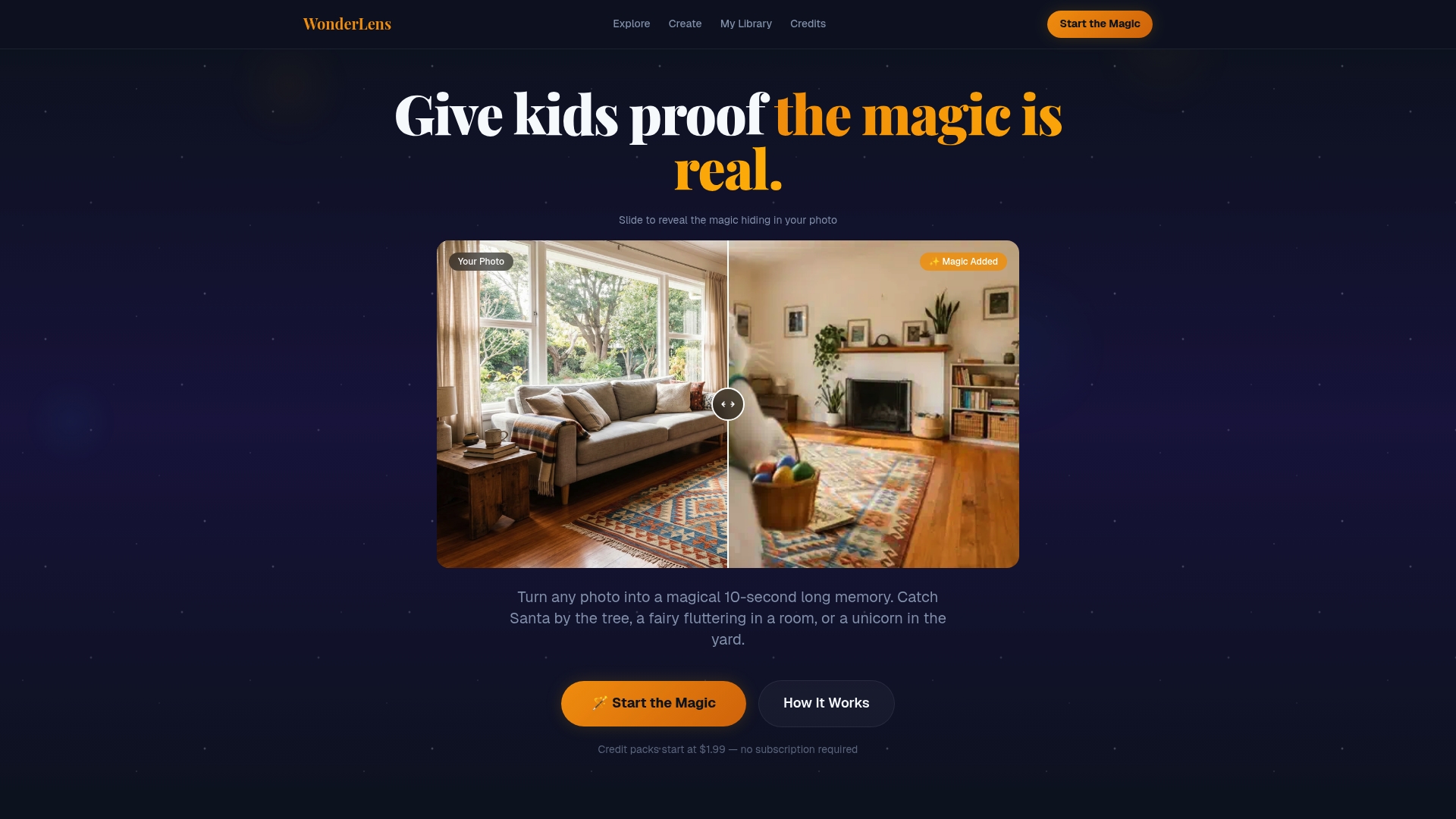
You upload a photo of your home, choose a fantasy character, and Wonderlens generates a cinematic animated video where that character appears in your actual space, complete with matched lighting, realistic shadows, and natural movement. Santa can walk past your Christmas tree. A unicorn can trot through your backyard. A dragon can peer through your living room window. Each video is a shareable, 10-second memory your family will watch again and again. Credits start at $1.99, and the platform is safe and family-friendly by design. Learn more about AI-powered photo animation and what it can create for your family.
FAQ
What is AI-powered fantasy media?
AI-powered fantasy media is content, including stories, artwork, and videos, created or enhanced by artificial intelligence to produce fantasy characters, worlds, and narratives. It ranges from interactive roleplay games to animated family memory videos.
How does AI create realistic fantasy characters?
AI models trained on large image and text datasets generate fantasy characters by learning visual and narrative patterns. Platforms like Wonderlens add realism through AI-driven lighting and shadow matching that ties the character to the real environment in the photo.
Is AI fantasy media safe for children?
Family-focused platforms like Wonderlens are designed to be safe and age-appropriate. Parents should review any interactive AI storytelling platform before allowing children to use it independently, as content moderation varies by provider.
How much does it cost to create AI fantasy media?
Costs vary by platform and format. Wonderlens offers individual videos starting at $1.99. Interactive AI fantasy RPGs often provide 50 free tokens to start, with paid tiers based on AI model complexity.
Do I need technical skills to use AI fantasy tools?
No technical skills are required for most consumer-facing AI fantasy platforms. Wonderlens, for example, requires only a photo upload and a character selection to produce a finished cinematic video.
Recommended
- Types of AI Photo Effects: 2026 Creative Guide. WonderLens | WonderLens
- Top 3 elfstudio.ai Alternatives 2026 — WonderLens | WonderLens
- AI-powered photo animation: create magical family memories — WonderLens | WonderLens
- AI Christmas Videos: Create Magical Holiday Memories Fast — WonderLens | WonderLens