Why Use Animated Surprises for Children: A Parent's Guide
July 20, 2026
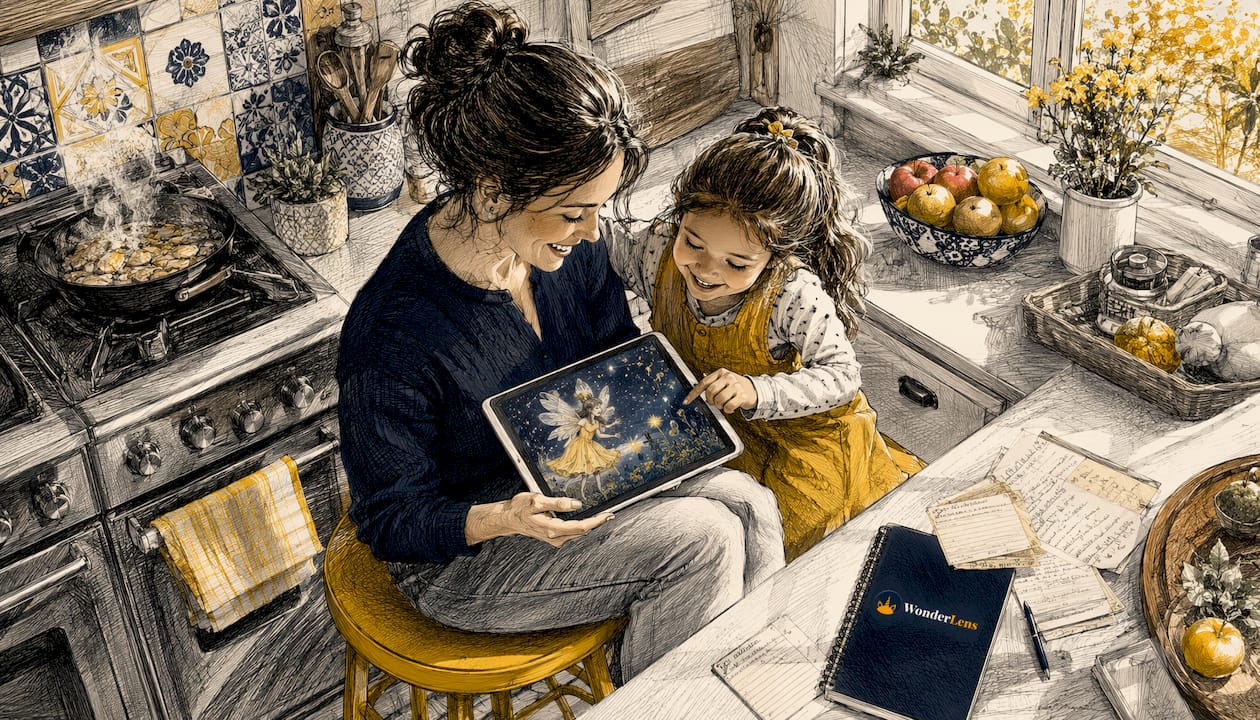
Animated surprises are one of the most powerful tools you have for sparking genuine joy and lasting memories in your child. They work because they trigger a dopamine boost that sharpens attention and helps the brain hold onto new experiences. A 2018 Nature Communications study found that surprise boosts memory retention significantly. That is not a small effect for a 10-second video of a dragon landing in your living room.
Here is why animated surprises for children work so well:
- They trigger dopamine releases that improve focus and memory
- They simplify complex ideas through visual storytelling, making abstract concepts feel real and safe
- They create emotionally safe environments where creativity can stretch beyond everyday rules
- Personalized surprises signal to children that their feelings and preferences genuinely matter
- Moderate, well-designed surprises hold attention without tipping into overstimulation
Why animated surprises benefit children's development
The psychological case for using animated surprises with kids goes deeper than simple entertainment. When a child's brain encounters something unexpected, it fires a prediction error signal, which is the brain's way of saying "pay attention, something new is happening." That signal floods the system with dopamine, and memory retention improves as a result.
Animated surprises also build flexible thinking. Seeing a unicorn trot across the family couch teaches children, in a playful way, that the world holds more possibilities than they assumed. Research confirms that animated surprises act as a cognitive aid, bending real-world rules safely so children can practice creative and emotional flexibility without any real-world risk.
Language and social skills grow quietly in the background too. Characters with expressive faces and clear emotions help children name feelings, build empathy, and understand how relationships work, all while they are simply watching something magical unfold.
Key psychological benefits at a glance:
- Stronger memory encoding through dopamine-driven prediction errors
- Flexible, creative thinking from seeing familiar rules playfully broken
- Empathy development through character-based emotional modeling
- Increased motivation to engage with learning and storytelling
- Language growth through new vocabulary tied to emotionally charged moments
Memory boost: A 2018 Nature Communications study found that surprise improves memory retention by 25%, making animated surprises one of the most effective tools for creating lasting impressions in children.
What makes an animated surprise actually work for kids
Design matters enormously. A poorly timed flash of color can startle rather than delight, and that difference shapes whether a child leans in or pulls away. Motions with moderate Shannon surprise, a measure of prediction error in the brain, earn the highest interest ratings. Too predictable and children disengage; too chaotic and they feel unsafe.
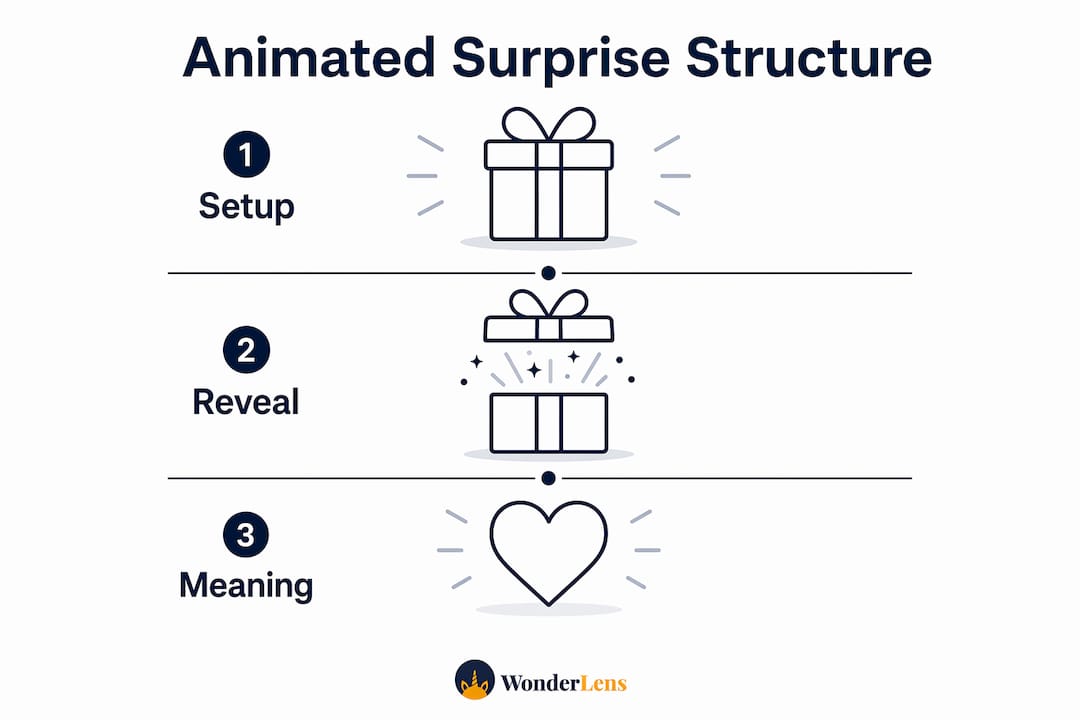
The most effective animated surprises follow a three-stage structure: setup, reveal, and personalized meaning. A fairy appearing in the hallway is fun. A fairy appearing in your hallway, glowing in the same warm light as your actual lamp, and carrying your child's name? That is a memory.
Subtle, natural movements with calm color palettes help children feel secure enough to engage deeply rather than defensively. Consistent animated worlds, where the same character behaves the same way each time, build what designers call "world trust," a quiet confidence that makes children open to being surprised again.
Best practices for child-friendly animation design:
- Use moderate surprise levels in motion, neither too predictable nor too erratic
- Choose calm, warm color palettes that signal safety rather than chaos
- Build in the setup, reveal, and personalized meaning structure
- Keep pacing gentle with real breathing room between moments
- Use arcs and natural weight in movement, not jarring mechanical cuts
How to use animated surprises safely and meaningfully at home
Timing is everything. Deliver an animated surprise after a positive baseline interaction rather than cold, and the effect amplifies existing goodwill instead of trying to manufacture it from scratch. A child who is already happy and comfortable will respond with pure delight. A child who is tired or upset may feel overwhelmed.
Personalization turns a fun video into a meaningful moment. Using your child's name, featuring their favorite character, or placing the animation in a recognizable room at home tells them something important: you noticed what makes them unique, and you cared enough to act on it. That emotional signal is often what children remember long after the video ends.
Tips for parents:
- Introduce animated surprises when your child is calm and already engaged
- Use them as positive reinforcement, not as a distraction during difficult moments
- Match the character and theme to your child's current interests
- Limit frequency so each surprise stays genuinely surprising
- Always watch together the first time so you can share the reaction
Pro Tip: Personalize every detail you can. A dragon that lands in your child's actual bedroom, casting shadows on their real bookshelf, lands ten times harder than a generic animation on a plain background.
How Wonderlens brings animated surprises to life
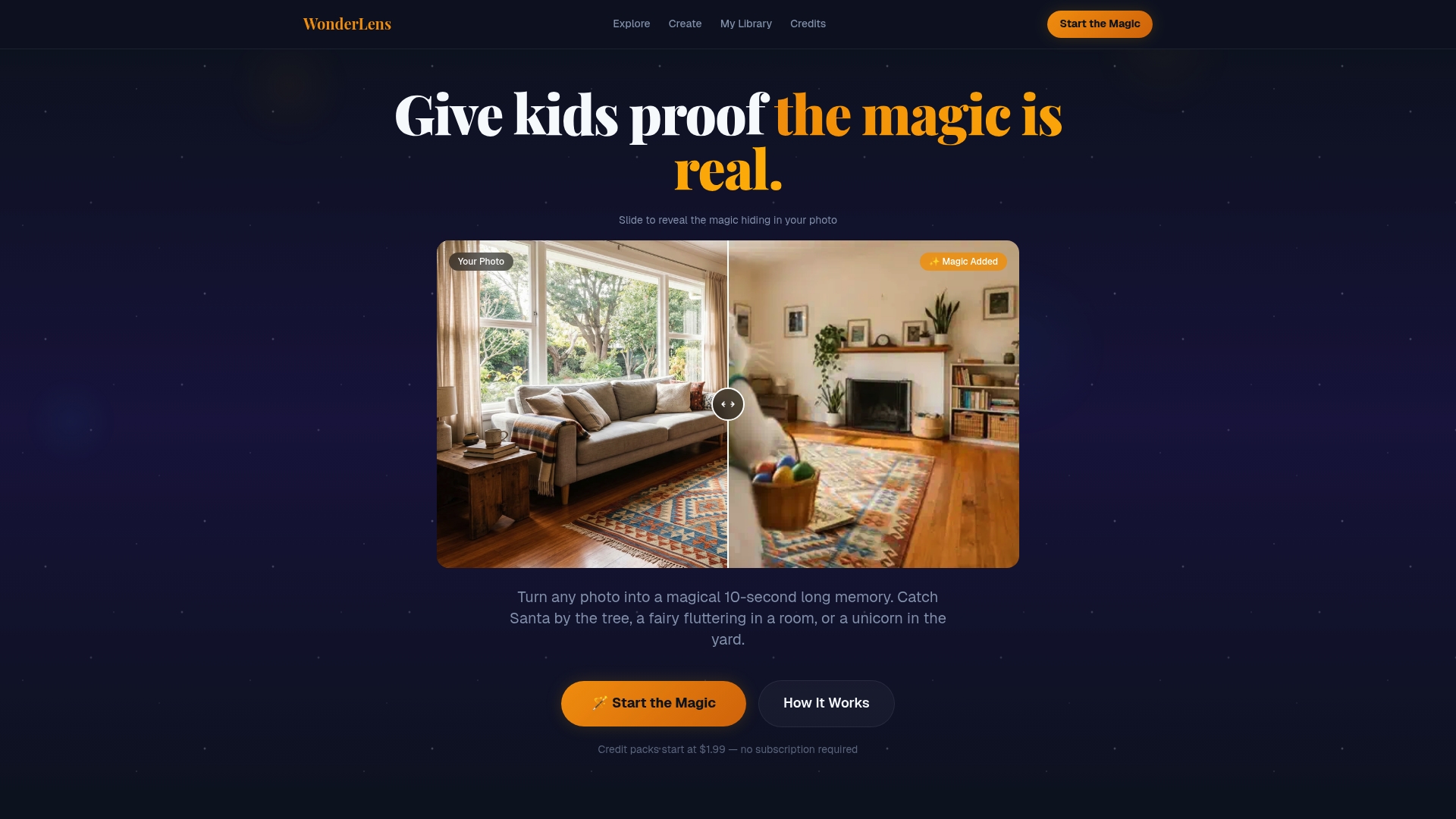
Wonderlens is built specifically to create the kind of animated surprises that actually work. The platform uses AI-driven visual rendering to place fantasy characters, including Santa, unicorns, dragons, and fairies, directly into your home environment with realistic lighting, accurate shadows, and natural movement. The result looks like the character genuinely belongs in your space, not like a sticker dropped on top of a photo.
Every video runs about 10 seconds, which is the sweet spot for young children: long enough to feel magical, short enough to watch again and again. Pricing starts at $1.99 per video, making it accessible for everyday moments, not just major holidays. The platform is designed to be family-friendly and easy to use, with no technical skills required.
Wonderlens features that make animated surprises shine:
- Cinematic-quality AI rendering with realistic shadows and lighting
- Characters placed inside your actual home from a single photo
- Personalized to your space, your occasion, and your child's favorites
- Safe, family-friendly platform with no complex setup
- Shareable video format perfect for sending to grandparents and family
Wonderlens transforms a still photo of your living room into a 10-second magical memory, with a character that catches the same golden glow as your actual lamp.
How animated surprises sharpen creativity and memory
Creativity and memory are not separate outcomes. They reinforce each other, and animated surprises sit right at that intersection. When a child watches a bread loaf act like a baker or a dragon curl up on the family sofa, their brain practices flexible thinking by updating its model of what is possible. That habit of asking "what if?" is the foundation of creative problem-solving.
Memory benefits follow naturally. Emotionally charged moments are stored more deeply than neutral ones, and a well-designed animated surprise delivers exactly that emotional charge. Children who experience a personalized animated moment tend to talk about it for days, which is itself a form of memory consolidation. You can explore more on this in Wonderlens's guide to animated holiday surprises.
Animated surprises for different ages
Age shapes what kind of surprise lands well. Toddlers aged 3–4 thrive on simple, playful twists on familiar patterns. A bunny hopping across the kitchen floor is plenty. The novelty is small, the comfort is high, and the delight is real.
Children aged 5–7 are ready for mild puzzles and whimsical reversals. A fairy leaving a glowing trail through the hallway, or Santa pausing to look directly at the camera, gives them something to talk about and wonder over. By ages 8 and up, layered reveals and character interactions with the actual home environment create the biggest reactions. The more personal the detail, the stronger the response.
When animated surprises can overwhelm
Not every child responds the same way, and that is worth taking seriously. Fast cuts, loud sound effects, and high-contrast flashing visuals can overstimulate young nervous systems, leaving children bouncy and unsettled rather than delighted. If your child looks tense or tries to leave the room, the surprise has crossed a line.
Children who are sensitive to sensory input, or who are already tired or anxious, need gentler pacing and softer visuals. Watch their face during the reveal, not the screen. Wide eyes and a gasp mean it worked. A flinch or a cry means dial it back. The goal is always delight, never shock.
Animated surprises vs. other types of surprises
A wrapped gift creates excitement, but it collapses the three-stage structure into a single moment. An animated surprise, by contrast, builds anticipation during setup, delivers the reveal, and then lands personal meaning, all in one short experience. That full sequence is what drives the strongest emotional response.
Static images and forwarded videos skip the setup entirely. They arrive, they are seen, and they are forgotten. An interactive animated greeting that opens with your child's name, unfolds a character into their real home, and ends with a personalized moment gives the brain the complete pattern it is wired to respond to. The difference in emotional impact is not subtle.
When and how often to use animated surprises
Frequency matters as much as quality. Use animated surprises too often and they lose their power. Once a week is likely too frequent for most children; once a month during ordinary times, with richer experiences saved for holidays and milestones, keeps each moment genuinely surprising. You can find more timing guidance in Wonderlens's creative family guide for holiday animation.
Reserve the most elaborate, personalized surprises for moments that already carry emotional weight: a birthday morning, the night before a holiday, or the end of a hard week. Those are the moments when a dragon appearing in the living room becomes a memory your child carries for years.
Animated surprises work best when they are designed with care, timed with intention, and built around what your child actually loves. Wonderlens makes all of that possible for $1.99, starting with a single photo of your home.
Create your first magical moment at Wonderlens today.
Key Takeaways
Animated surprises work because they combine dopamine-driven memory encoding with personalized emotional meaning, making them far more effective than generic gifts or static images for children.
| Point | Details |
|---|---|
| Surprise boosts memory | A 2018 Nature Communications study found surprise improves memory retention by 25%. |
| Design drives the effect | Moderate surprise levels, calm palettes, and natural movement keep children engaged without overstimulation. |
| Personalization is the key | Surprises that use a child's name and real home environment create the strongest emotional response. |
| Timing amplifies impact | Deliver surprises after a positive baseline interaction to build on existing goodwill. |
| Age shapes the right approach | Toddlers need simple twists; older children respond to layered reveals and personal details. |
Recommended
- Why animated holiday surprises matter: the parent's guide to magical moments — WonderLens | WonderLens
- Holiday Animation for Parents: a Creative Family Guide — WonderLens | WonderLens
- Why Digital Surprise Videos for Children Work. WonderLens | WonderLens
- Why Parents Embrace Animated Keepsakes for Kids. WonderLens | WonderLens