Why Digital Surprise Videos for Children Work
July 6, 2026
Digital surprise videos for children are short, personalized video experiences designed to deliver an unexpected, emotionally charged moment that a child's brain processes as real. They combine familiar home settings, beloved fantasy characters, and the neurological power of surprise to create memories that last far longer than most physical gifts. Parents increasingly turn to this format for birthdays, Christmas, Easter, and other special occasions because the impact is immediate and deeply personal. Understanding why these videos work so well starts with how a child's brain actually responds to the unexpected.
Why digital surprise videos for children boost memory and learning
Surprise interrupts a child's autopilot cognition. When something unexpected appears, the brain reactivates attention and shifts into a heightened state of focus. That shift is not just emotional. It is neurological.
The mechanism behind this is called behavioral tagging. When an unexpected event occurs, the brain stabilizes fleeting moments into longer-term memory by tagging them with emotional significance. For children, this means a video featuring Santa walking through their actual living room does not just delight them in the moment. It gets stored as a vivid, lasting memory.
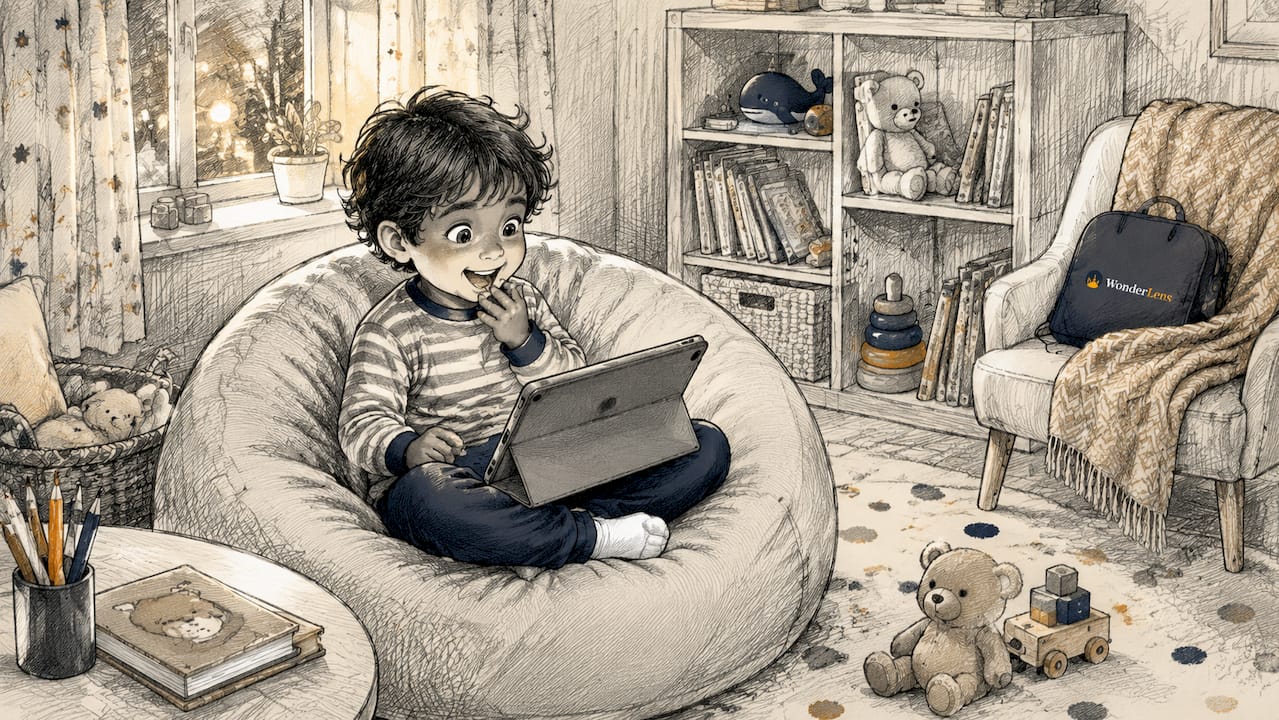
Personalization amplifies this effect significantly. When a child sees their own name, their own couch, or their own Christmas tree in the video, the brain treats the experience as personally relevant. Relevant experiences receive deeper cognitive processing. Deeper processing means stronger recall.
Here is what makes the surprise format especially effective for young children:
- Familiar characters (Santa, the Easter Bunny, unicorns) provide emotional anchors that help children organize the experience
- Home settings make the fantasy feel real rather than distant or abstract
- Short duration keeps cognitive load low while maximizing emotional punch
- Replay value means the memory gets reinforced every time the child watches again
Unexpected experiences can stabilize knowledge into longer-term memory through behavioral tagging. When surprise is paired with familiar characters and recognizable home environments, the emotional imprint becomes especially durable for young children.
The educational surprise videos field draws on this same principle. Teachers use unexpected demonstrations to boost retention. Parents can apply the same logic at home with personalized video content that feels magical and purposeful at the same time.
Why narrative coherence matters for children under 5
Not all digital videos for kids deliver the same benefit. The quality and logic of the content matter enormously, especially for children under 5.
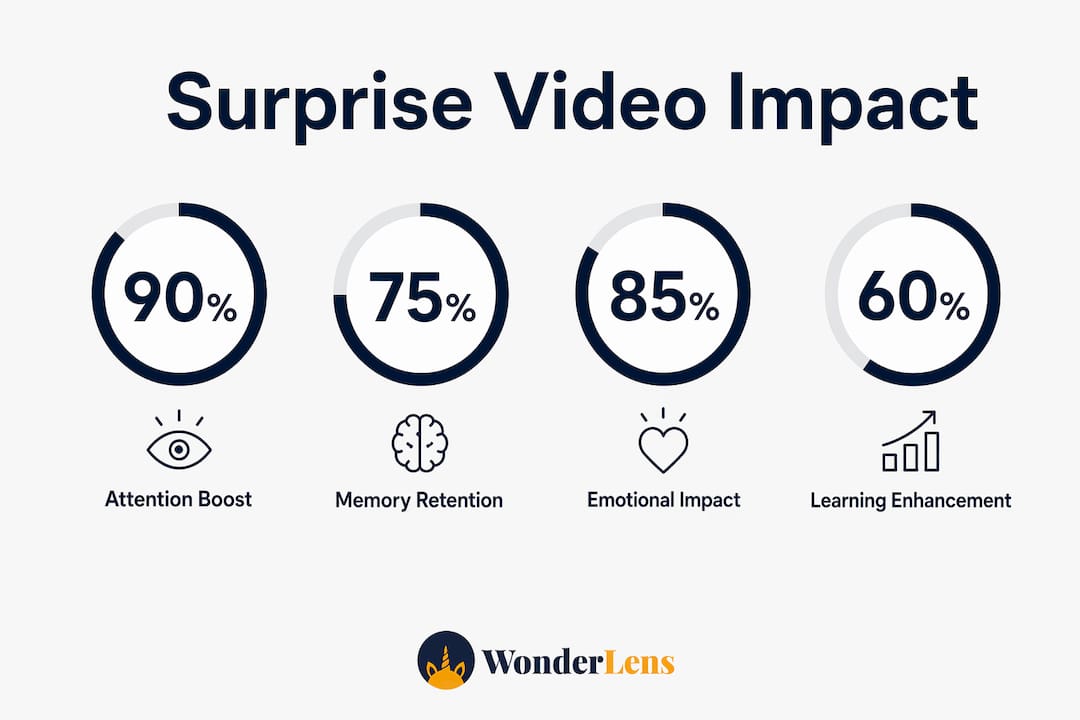
Children under 5 do not reliably distinguish fantasy from reality. They process video content as a real-world experience. That is a remarkable opportunity when the content is coherent and warm. It becomes a risk when the content is chaotic or absurd.
AI-generated videos often feature visual inconsistencies and nonsensical sequences that confuse young viewers. A tiger hatching from an egg or a cow dancing in a kitchen may seem harmless, but for a child who cannot yet separate fiction from fact, these images create genuine cognitive confusion. That confusion can disrupt the very sense of wonder you are trying to create.
Narrative coherence is the solution. A video where Santa walks through the front door, pauses to look at the Christmas tree, and waves directly at your child tells a clear, believable story. Every element supports the next. The child's brain can follow the logic and feel the magic without being overwhelmed.
Pro Tip: Before sharing any AI-generated surprise video with a child under 5, watch it yourself first. Check that the character moves naturally, the lighting matches the room, and the sequence makes sense from start to finish. Realism and story logic protect the magic.
Parents should also consider the emotional tone of the video. A character that looks slightly off, moves in a jerky or unnatural way, or appears in a setting that does not match the child's home can break the spell instantly. Quality rendering, including realistic shadow casting and natural movement, is not a luxury. It is what makes the experience feel real to a young child.
How do digital surprise videos compare to physical gifts?
Physical gifts have real value. They are tangible, playable, and often treasured for years. But they compete with every other toy in the room. A personalized video gift occupies a different emotional category entirely.
| Feature | Physical gift | Digital surprise video |
|---|---|---|
| Emotional immediacy | Moderate | Very high |
| Replay value | Low to moderate | High |
| Long-distance delivery | Difficult | Instant |
| Personalization depth | Limited | Specific to child and home |
| Memory durability | Tied to object | Tied to emotional experience |
| Cost to create | Varies widely | Starts at $1.99 with Wonderlens |
Custom video gifts carry meaning over time in a way physical packages rarely do. A child may forget a toy within weeks. A video of the Easter Bunny hopping through their actual living room, nose twitching, spreading spring magic across their familiar space, gets replayed and retold for months.
Video surprises work best for emotionally significant occasions: Christmas morning, Easter, birthdays, and milestone celebrations. They also shine in long-distance situations. A grandparent who cannot be present for a birthday can still be part of the magic through a personalized holiday video that features their voice or their home.
The most effective approach combines both formats. A physical gift under the tree plus a video of Santa delivering it creates a layered experience. The video provides the emotional peak. The gift provides the tangible follow-through. Custom surprise videos create stronger, more durable emotional memories than physical gifts alone, especially when distance is a factor.
Practical tips for creating age-appropriate surprise videos
Planning matters as much as the video itself. A poorly timed reveal or a technical glitch can deflate the moment before it begins. These steps help parents get it right.
- Start at least three weeks early. Effective surprise videos require logistical lead time for coordination, secrecy management, and any revisions. Three weeks gives you room to fix problems without rushing.
- Choose a platform that prioritizes realism. Look for AI-driven rendering that handles lighting, shadows, and movement accurately. A character that catches the same golden glow as your living room lamp feels real. One that floats unnaturally does not.
- Use your actual home as the setting. Upload a photo of your living room, bedroom, or backyard. Familiar surroundings make the fantasy feel personal and believable to your child.
- Match the character to the occasion. Santa works for Christmas. The Easter Bunny works for spring. Unicorns and dragons suit birthdays or any day you want to create a magical moment without a specific holiday hook.
- Keep the video short. Ten seconds of pure magic outperforms two minutes of meandering content. Short videos hold attention, avoid cognitive overload, and get replayed more often.
- Plan the reveal carefully. Gather the family, set the mood, and let your child watch on a screen large enough to see the detail. The reveal moment is part of the gift.
Pro Tip: Involve a sibling or other family member in the secrecy. Keeping the surprise together builds anticipation for everyone and makes the reveal feel like a shared family event rather than just a screen moment.
Parents should also curate video content to match their child's developmental stage. A toddler needs simpler, slower visuals. A six-year-old can handle more detail and a slightly longer narrative. Wonderlens videos run at ten seconds, which sits comfortably within the attention window for children aged 2 through 8. For more ideas on crafting videos kids love, the Wonderlens blog offers practical guidance tailored to families.
Key Takeaways
Digital surprise videos work because they combine the brain's natural response to the unexpected with personalization, narrative coherence, and emotional resonance that physical gifts cannot replicate.
| Point | Details |
|---|---|
| Surprise triggers memory | Behavioral tagging converts unexpected moments into durable long-term memories for children. |
| Narrative coherence protects young minds | Children under 5 treat video content as real, so clear and logical storylines prevent confusion. |
| Video gifts outperform objects emotionally | Personalized videos offer higher replay value and stronger emotional impact than most physical presents. |
| Planning prevents failure | Starting three weeks early and managing secrecy protects the surprise and maximizes its impact. |
| Realism is non-negotiable | Accurate lighting, shadows, and natural movement make the fantasy believable and emotionally effective. |
What I've learned from watching kids react to surprise videos
I've watched a lot of children open gifts. The reaction to a well-made surprise video is genuinely different from anything a wrapped box produces. There is a moment of confusion, then recognition, then pure delight. That sequence is the surprise effect in real time.
What strikes me most is how long children talk about these videos afterward. A toy gets forgotten. A video of a dragon landing in the backyard gets described to every grandparent, teacher, and neighbor for weeks. The memory sticks because the experience was unexpected, personal, and felt completely real.
The mistake I see parents make most often is choosing speed over quality. They find a free tool, generate something quickly, and share it without watching it first. The character looks wrong. The lighting is off. The child notices immediately, even if they cannot articulate why. The magic evaporates.
My honest advice: treat the video with the same care you would give any meaningful gift. Choose a platform that takes realism seriously. Use your actual home. Keep the story simple and clear. And give yourself enough time to get it right. The payoff, that moment of wide-eyed wonder on your child's face, is absolutely worth the effort.
— Jeremiha
Wonderlens: where magical moments come to life
Wonderlens is built specifically for parents who want to create that wide-eyed moment without needing technical skills or expensive equipment. You upload a photo of your home, choose a character like Santa, a unicorn, or a fairy, and Wonderlens generates a cinematic, 10-second video where that character appears inside your actual space, complete with realistic lighting and natural movement.

Videos start at $1.99 per credit, making it one of the most accessible ways to create a magical holiday surprise your child will replay for years. The platform is family-friendly, web-based, and designed for parents who want quality without complexity. Visit Wonderlens to create your first magical memory today.
FAQ
Why do surprise videos affect children so strongly?
Surprise triggers behavioral tagging in the brain, which converts unexpected moments into durable long-term memories. For children, this effect is amplified when the video features familiar characters and their own home environment.
Are AI-generated surprise videos safe for children under 5?
They can be, but only when the content is narratively coherent and visually realistic. Children under 5 treat video content as real, so absurd or inconsistent visuals can cause confusion rather than delight.
How far in advance should I plan a surprise video?
Start at least three weeks before the occasion. That timeline allows for coordination, secrecy management, and any adjustments needed before the reveal.
Do digital surprise videos work better than physical gifts?
For emotional impact and memory durability, personalized video gifts consistently outperform physical presents, especially across long distances where a package cannot replicate the feeling of a shared moment.
What makes a surprise video developmentally appropriate?
A developmentally appropriate video features a clear, logical story, realistic character movement, and a familiar setting. It avoids rapid scene changes, nonsensical visuals, or content that blurs fantasy and reality in confusing ways.
Recommended
- How to create magical videos kids will truly love — WonderLens | WonderLens
- How to Surprise Kids at Christmas: Fun Ideas That Work. WonderLens | WonderLens
- Why animated Easter videos boost family engagement — WonderLens | WonderLens
- Why animated holiday surprises matter: the parent's guide to magical moments — WonderLens | WonderLens