Step by Step Holiday Surprises for Families: 2026 Guide
July 7, 2026

Step by step holiday surprises are planned, progressive experiences that build anticipation and joy by delivering well-timed reveals, clues, and activities leading up to a magical moment. Unlike handing over a wrapped gift, this approach treats the entire buildup as part of the celebration. Children remember the excitement of each clue, each hint, and each small discovery just as vividly as the surprise itself. Families who use a structured reveal process report deeper emotional connection and more lasting festive memories. This guide walks you through every stage, from choosing the right surprise to pulling off a reveal your kids will talk about for years.
How to choose the right step by step holiday surprise for your family
The best holiday surprise matches your child's age, personality, and current obsessions. A five-year-old who loves dragons will respond differently than a ten-year-old who is into escape rooms. Start by listing what genuinely excites each child right now, not what excited them last year.
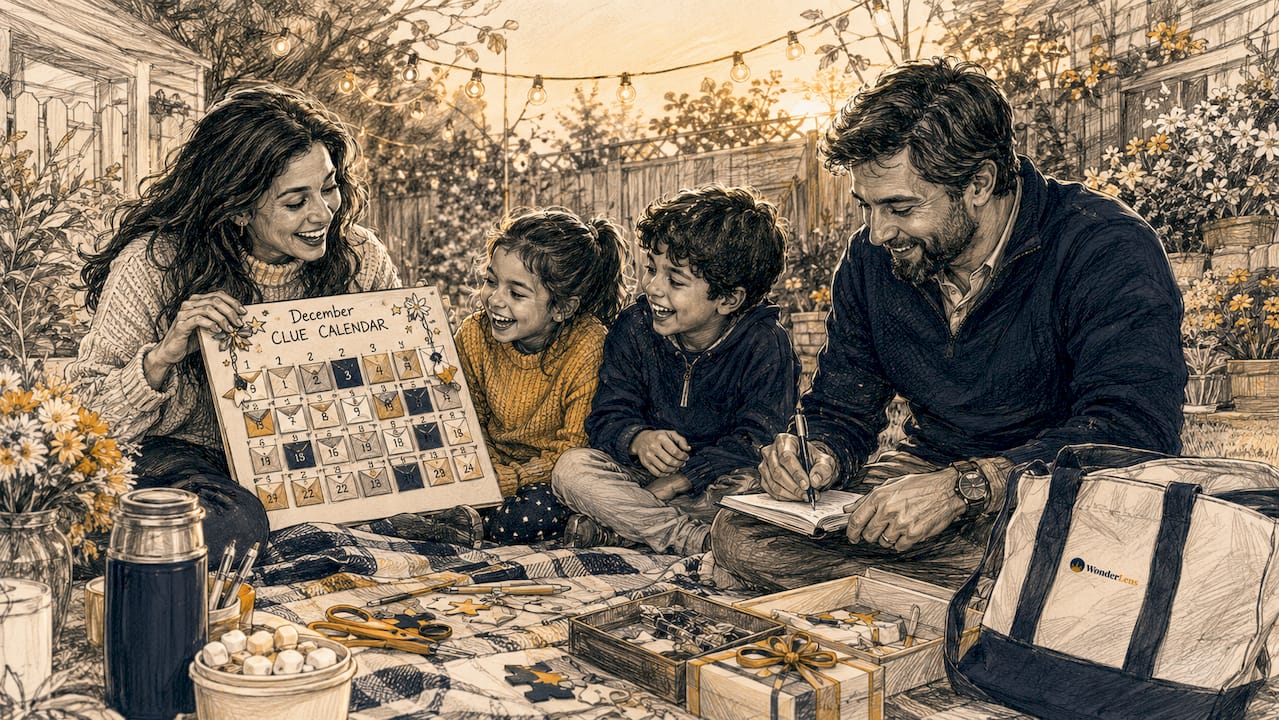
Budget shapes your options more than most parents expect. Surprise trip costs can reach about $4,000 per person, so tracking spending from the start prevents financial stress from creeping into what should be a joyful experience. You do not need to spend that much. A backyard treasure hunt or a themed movie night with custom clues can deliver equal magic at a fraction of the cost.
Consider these surprise formats based on family dynamics:
- Day trips and outings: Ideal for families with younger children who need shorter attention spans and familiar environments. Check out Belfast family activities for inspiration on building a full day of wonder around a single destination.
- Scavenger hunts: Work brilliantly for school-age kids who love problem-solving. Each clue leads to the next, and the final clue reveals the big surprise.
- Themed gift reveals: Perfect for any age. Wrap clues inside boxes, each one pointing to the next, until the child reaches the actual gift.
- Experience surprises: Think cooking classes, art workshops, or a visit to a holiday character event. These create memories rather than possessions.
- Staged holiday countdowns: A multi-day clue calendar that builds toward Christmas morning or another holiday peak moment.
Match the format to your family's rhythm. If your household runs on tight schedules, a single-day reveal is more manageable than a two-week clue calendar. If your kids thrive on suspense, a longer buildup pays off beautifully.
How to plan and execute holiday surprises step by step
A structured timeline separates a smooth surprise from a chaotic one. Planning guidance recommends starting 1–4 weeks in advance for day trips and outings. Longer, more complex surprises, like a holiday getaway or a multi-day reveal sequence, need six to eight weeks of lead time.
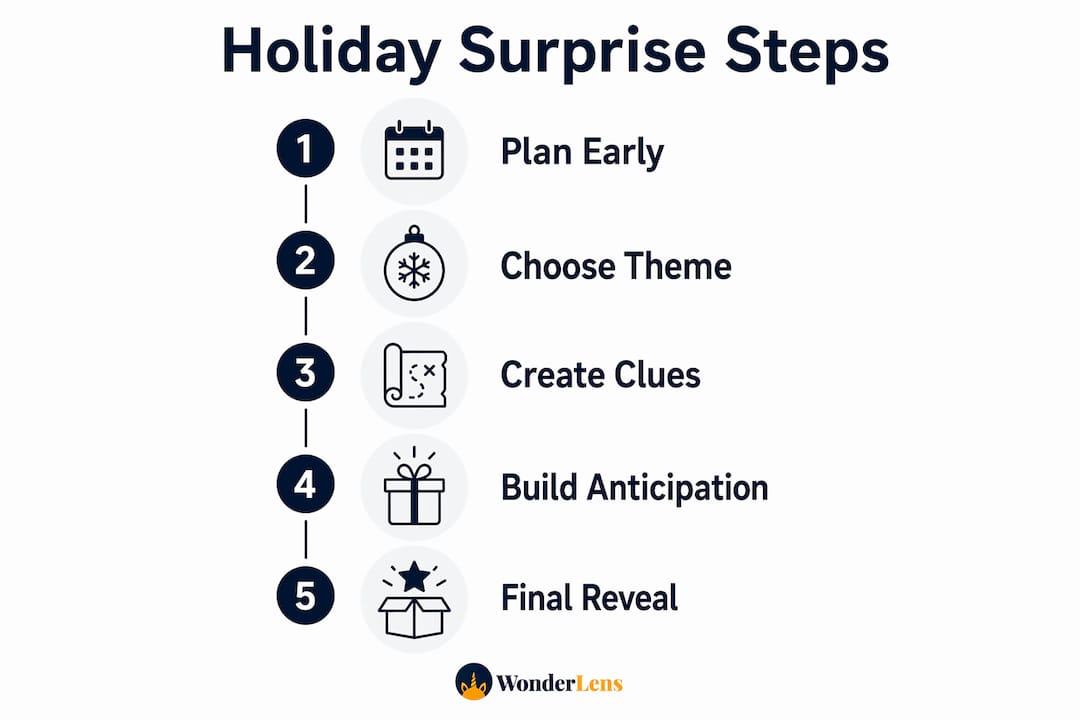
Follow this planning sequence:
- Set the surprise concept. Decide what the experience will be before booking anything. Write it down in one sentence: "We are taking the kids to see Santa's arrival at the city center on December 20th."
- Book and confirm logistics. Reserve tickets, accommodations, or activity slots early. Cancellation policies matter, so read them carefully.
- Create your clue sequence. Map out how many clues you will use and what each one reveals. A one-week clue calendar works well for short domestic surprises, while two weeks suits bigger, international experiences.
- Prepare each clue in advance. Write, print, or craft every clue before the reveal period starts. Last-minute clue creation leads to mistakes and accidental leaks.
- Manage your digital footprint. Disable push notifications on shared devices for travel apps, banking apps, and email. Use a private browser or a separate email account for all bookings. Digital footprint management is the most overlooked step in surprise planning, and it is the most common cause of accidental spoilage.
- Build a backup plan. Identify one alternative activity in case of bad weather, illness, or a scheduling conflict. Having a Plan B keeps the surprise alive even when the original plan shifts.
- Rehearse the reveal moment. Decide exactly where, when, and how you will deliver the final clue or announcement. A calm, prepared reveal lands better than an improvised one.
Pro Tip: Treat your planning like a culinary mise en place. Prepare every element before the first clue drops. Once the reveal sequence starts, you should be executing, not still preparing.
What are the most creative ways to reveal holiday surprises to children?
The reveal is the emotional peak of the entire experience. How you deliver it shapes how your child remembers the whole surprise. The buildup and sensory engagement during a clue sequence often creates more lasting memories than the destination or gift itself. That insight should change how much energy you invest in the reveal process.
Here are reveal methods that consistently land well with children:
- Mystery envelopes: Place each clue in a sealed envelope with a number on the front. Children open one per day, building suspense over a week.
- Treasure maps: Hand-draw a map of your home or neighborhood with X marking the spot where the next clue hides. Young children find this format irresistible.
- Puzzle reveals: Print a photo of the surprise destination or gift and cut it into puzzle pieces. Each clue earned adds one piece to the puzzle until the full picture appears.
- Sensory hint bags: Fill small bags with items that hint at the surprise. Sand and a tiny seashell for a beach trip. A sprig of pine and a jingle bell for a Christmas event. Children engage all their senses, which deepens the memory.
- Red herrings: Mix in one or two misleading clues to keep children guessing. Alternating real and misleading hints maintains mystery and prevents premature guessing. Use this technique sparingly with younger children, who may feel frustrated rather than delighted.
- Video message reveals: Record a short video from a "character" delivering the final clue. A message from Santa explaining that he spotted your child's living room works especially well when paired with a personalized animated video.
Tailor the reveal style to your child's temperament. Some children love a big, public announcement. Others prefer a quiet, private reveal at home, away from an audience. Knowing your child's comfort level prevents the reveal from becoming stressful rather than magical.
Pro Tip: Time the final reveal for a moment when your child is calm and rested, not right before bed or during a busy morning. A well-rested child experiences joy more fully.
What are the most common challenges in holiday surprise planning?
Accidental spoilage is the top risk in any surprise plan. Children are perceptive, and they pick up on whispered conversations, unusual browser tabs, and changes in parental behavior. The solution is compartmentalization. Keep all planning conversations off shared devices, and use private browsing and separate accounts for every booking.
Managing expectations is the second major challenge. Children who receive elaborate surprises one year may expect the same or more the next. Set a sustainable tradition from the start. A thoughtful, well-executed small surprise beats an overpromised big one every time.
"A backup plan is not a sign of poor planning. It is the mark of a parent who knows that the goal is joy, not perfection. When the outdoor event gets rained out, the family that pivots to a cozy indoor alternative with hot chocolate and a movie still delivers a magical day. Backup plans for weather or logistics are what separate a memorable surprise from a disappointing one."
Reveal fatigue is real, especially in multi-day clue sequences. If clues feel repetitive or the buildup drags, children disengage. Keep each clue distinct in format and difficulty. Vary between written riddles, physical objects, and visual puzzles to maintain energy across the full reveal period.
Finally, watch for signs that a child is overwhelmed rather than excited. Some children, particularly introverted ones, process big surprises slowly. Give them space to react at their own pace. The goal is delight, not performance.
Key Takeaways
Step by step holiday surprises work best when the planning is as thoughtful as the reveal itself, with a clear timeline, managed secrecy, and a reveal style matched to your child's personality.
| Point | Details |
|---|---|
| Start planning early | Begin 1–4 weeks ahead for day trips; allow 6–8 weeks for complex, multi-day surprises. |
| Match the surprise to your child | Choose formats based on age, interests, and temperament for the strongest emotional impact. |
| Protect your digital footprint | Use private browsing and separate email accounts to prevent accidental spoilage before the reveal. |
| Invest in the buildup | Sensory clues and staged reveals create memories that outlast the surprise destination or gift itself. |
| Always have a backup plan | A Plan B for weather or logistics keeps the surprise joyful even when the original plan changes. |
Why the buildup matters more than the gift
I have planned a lot of family surprises over the years, and the ones that flopped shared one thing in common. The reveal was the only moment that mattered to the planner. The ones that worked treated every clue, every hint, and every small moment of suspense as part of the gift itself.
The most memorable surprise I ever witnessed was a parent who spent two weeks dropping tiny clues, a feather here, a map fragment there, leading up to a Christmas morning reveal of a family trip. The child barely reacted to the destination announcement. What she talked about for months was finding the feather on day three and deciding it must have come from a phoenix. That is the magic of a well-built anticipation sequence. The child's imagination fills in the gaps, and that imagination is more powerful than any gift.
My honest advice: start smaller than you think you need to. A single-week clue calendar with five thoughtful hints will outperform a rushed two-week sequence every time. Build your confidence with one well-executed surprise, then scale up the following year. Families who create unforgettable holiday magic consistently report that simplicity and sincerity matter far more than spectacle.
— Jeremiha
Wonderlens adds a magical layer to your holiday reveals
Wonderlens gives families a way to make the final reveal moment genuinely cinematic. The platform creates short, 10-second animated videos that place holiday characters like Santa, fairies, and dragons directly inside your home environment, with realistic lighting, shadows, and movement that basic filters cannot replicate.

Parents use Wonderlens videos as the final clue in a reveal sequence, the moment when the mystery becomes real. Imagine your child opening the last envelope to find a video of Santa standing in your actual living room, pointing to the gift under your tree. Credits start at $1.99, making it one of the most affordable ways to add genuine wonder to your holiday surprise ideas. Visit Wonderlens to create your personalized holiday character video before the season peaks.
FAQ
How far in advance should I plan a holiday surprise?
Planning guidance recommends starting 1–4 weeks ahead for day trips and outings. More complex surprises, like multi-day reveals or travel experiences, benefit from six to eight weeks of preparation.
What is the best reveal method for young children?
Treasure maps and mystery envelopes work best for children under seven. These formats are visual, tactile, and easy to follow without requiring advanced reading skills.
How do I keep a holiday surprise secret from curious kids?
Use private browsing and a dedicated email account for all bookings. Disable push notifications on shared devices for travel and banking apps to prevent accidental discovery.
How long should a clue calendar last?
A one-week clue calendar suits short domestic surprises well. Two weeks works better for bigger experiences like international trips or elaborate themed reveals.
What if my child gets overwhelmed by the surprise?
Give them time and space to process. Some children, especially introverted ones, need a quiet moment before their excitement surfaces. A calm, private reveal setting helps these children respond more naturally.
Recommended
- Creative Tips for Christmas Surprises That Families Love. WonderLens | WonderLens
- What Is a Virtual Holiday Surprise for Families?. WonderLens | WonderLens
- How to Surprise Kids at Christmas: Fun Ideas That Work. WonderLens | WonderLens
- Why animated holiday surprises matter: the parent's guide to magical moments — WonderLens | WonderLens