The Role of Lighting in Video Realism: A Filmmaker's Guide
June 19, 2026
Lighting is the single most powerful tool for creating believable video. The role of lighting in video realism goes far beyond brightness. It shapes depth, guides emotion, and tells your viewer's brain whether a scene is real or fake. Cinematographers call this photorealism, and it depends on three pillars: shadow coherence, color temperature, and light distribution. Get these right, and your footage feels alive. Get them wrong, and even technically perfect shots feel off. This guide breaks down the science and practice behind lighting that actually works.
How does lighting create depth and spatial realism?
Shadows are the primary gatekeeper for realism in any video scene. When coherent cast shadows are present, viewers rate scenes as significantly more photorealistic, regardless of other visual changes. That finding is not subtle. It means you can have flawless textures and perfect color grading, but if your shadows are missing or wrong, the scene falls apart.
Two types of shadows matter most in cinematography. Contact shadows appear where an object touches a surface. Cast shadows extend from the object based on the light source angle. Both must be present and consistent. Matching shadow softness to the size and distance of your light source is the single most reliable technique for convincing lighting. A large, distant light source like an overcast sky produces soft, diffused shadows. A small, close source like a bare bulb produces hard, sharp edges.
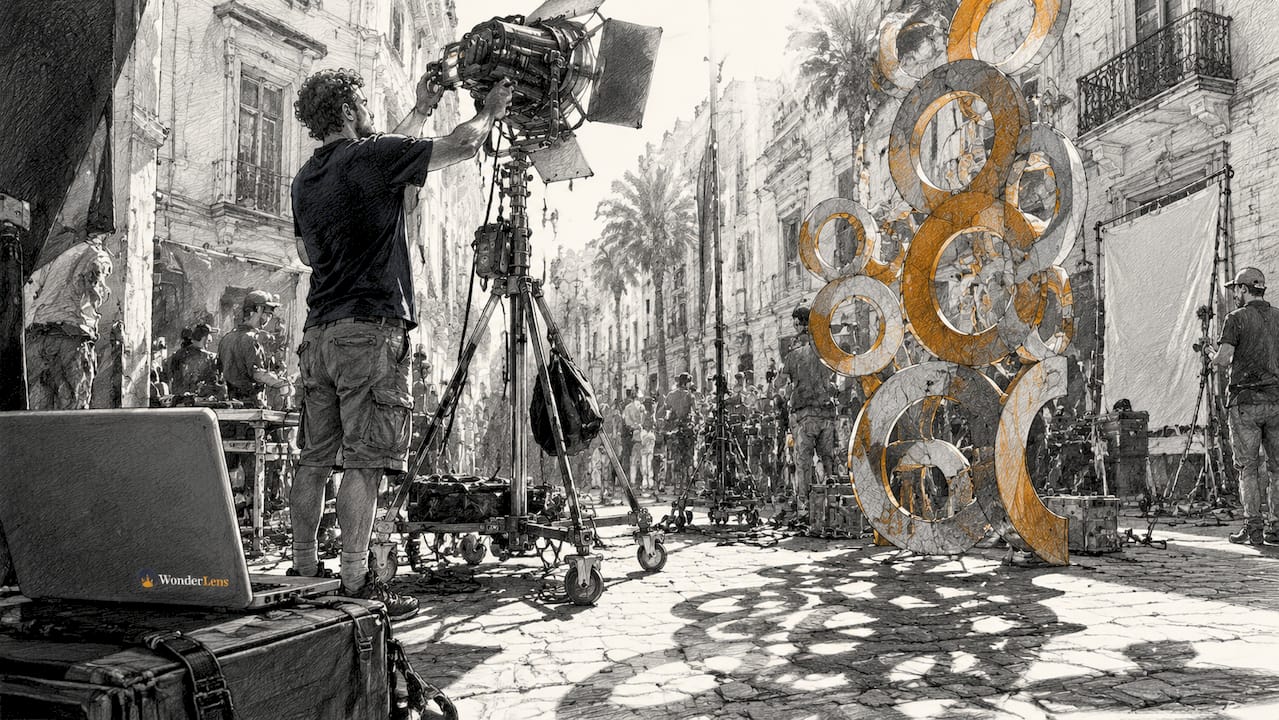
Global Illumination takes this further. It simulates how light bounces between surfaces, creating luminance gradients that define shape and volume. Without light bounce and interreflection, objects look pasted into a scene rather than embedded in it. You can learn more about applying these principles in practice through lighting in home animations, which covers how narrative context shapes lighting decisions.
Pro Tip: Place a small, soft fill light opposite your key light to simulate natural light bounce. This single step removes the "floating" look from subjects in composite shots.
What lighting parameters affect realism and mood?
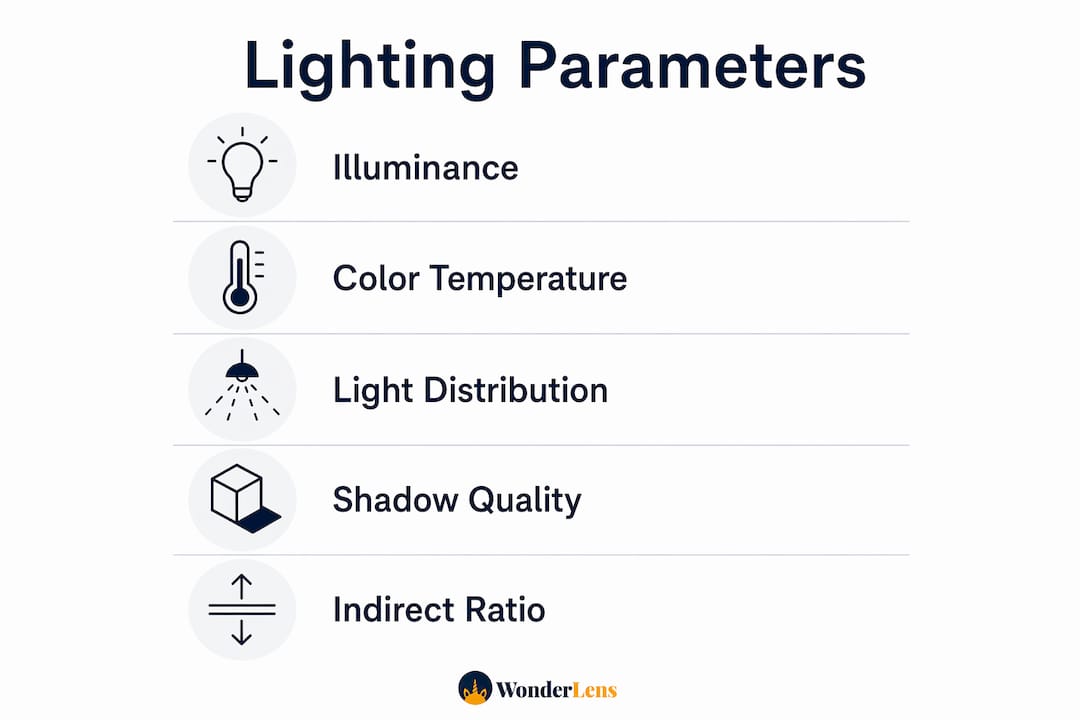
Lighting quality is not just about how bright a scene is. The measurable parameters of illuminance, color temperature, and light distribution each shape how a viewer feels and how real a scene looks.
Illuminance, measured in lux, sets the emotional register of a scene. Research on narrative environments shows that relaxation zones benefit from illuminance below 200 lx paired with a warm color temperature of 2700–3000 K CCT. Climax scenes require illuminance above 500 lx and a cooler 4000–5000 K CCT. That data gives filmmakers a concrete framework for matching light intensity to story beats.
Color Correlated Temperature (CCT) is the measure of a light source's warmth or coolness in Kelvin. Warm tones below 3000 K read as intimate and safe. Cool tones above 4500 K read as clinical, tense, or energized. Mismatching CCT to scene context is one of the most common ways lighting breaks immersion.
Light distribution matters as much as intensity. Vertical illuminance on walls and ceilings predicts perceived lighting quality better than horizontal illuminance on floors or work surfaces. Viewers respond to how a room feels lit, not just how bright the floor is. A 35%–65% indirect to direct light ratio peaks user preference for spatial brightness and comfort. That balance creates environments that feel naturally lit rather than artificially staged.
| Lighting Parameter | Relaxation Setting | Climax/Focus Setting |
|---|---|---|
| Illuminance | Below 200 lx | Above 500 lx |
| Color Temperature (CCT) | 2700–3000 K (warm) | 4000–5000 K (cool) |
| Indirect/Direct Ratio | 35%–65% indirect | More direct, focused |
| Vertical Illuminance | Soft, diffused walls | Bright, directional walls |
Pro Tip: When shooting in a fixed location, use a color temperature meter app to measure your ambient light before adding artificial sources. Matching your key light's CCT to the ambient saves hours of color correction.
Common lighting mistakes that reduce video realism
Most lighting errors in video production share one root cause: treating light as decoration rather than physics. Realism requires that every light source in your frame behaves the way real light behaves.
The most damaging mistakes include:
- Ignoring shadow coherence. A character lit from the left should cast shadows to the right. When shadows point in multiple directions from a single apparent source, the human visual system flags the scene as fake immediately.
- Mismatched color grading and ambient light spill. Even technically correct VFX shots feel unnatural when color grading does not account for ambient light spill from surrounding surfaces. A warm room should tint everything in it slightly warm, including your subject.
- Neglecting atmospheric diffusion. Haze, fog, and ambient fill are not just stylistic choices. They simulate the way light scatters through air. Removing them makes scenes look sterile and flat.
- Inconsistent light softness. A soft key light paired with a hard-edged shadow from a practical lamp in the background breaks the visual logic of the scene. Every light source must behave consistently with its apparent size and distance.
- Forgetting light wrap in compositing. When placing digital elements into live footage, light must wrap around edges and bounce from nearby surfaces. Without this, digital objects look like they were cut and pasted rather than physically present.
VFX professionals consistently identify cohesive lighting and color grading as the difference between shots that convince and shots that distract. The fix for most of these errors is the same: study the physics of your light sources before you shoot, not after.
Practical lighting techniques to improve video quality
Applying what you know about lighting science requires concrete technique. These steps move you from theory to results on set or in post-production.
- Match your key light to the scene's apparent source. If a window is visible in frame, your key light should come from that direction and match the color temperature of daylight (5500–6500 K). Viewers unconsciously track light source logic.
- Use dynamic lighting across your narrative arc. Adjusting lighting dynamically across a scene's emotional beats increases audience empathy and immersion. Start a scene warm and dim, then shift cooler and brighter as tension builds.
- Invest in quality light control tools. Manufacturers like Nanlite and their Forza series give filmmakers precise control over intensity and color temperature in a portable form factor. Diffusion panels, flags, and bounce cards cost little but dramatically improve light quality.
- Balance indirect and direct light intentionally. Place bounce cards or foam core opposite your key light to redirect fill light onto walls and ceilings. This creates the 35%–65% indirect ratio that research links to preferred visual comfort.
- Simulate real-world light behaviors in post. When working with AI-generated or composited visuals, add soft shadows, reflections, and subtle fog layers to match the physical behavior of light in your scene. These details are what separate cinematic results from flat overlays.
- Test with vertical illuminance in mind. Before finalizing a lighting setup, photograph the walls and ceiling of your set. If they look dark and unlit, your scene will feel like a stage rather than a real space.
For a deeper look at how these techniques apply to visual effects work, the Wonderlens guide to realistic visual effects for filmmakers covers compositing decisions that depend directly on lighting quality. Post-production tools like those covered in advanced post-processing techniques also complement strong on-set lighting by preserving the tonal relationships you build in camera.
Key Takeaways
Lighting controls video realism through shadow coherence, color temperature, light distribution, and dynamic adjustment across narrative beats.
| Point | Details |
|---|---|
| Shadows define realism | Coherent cast shadows are the strongest single cue for photorealism in any scene. |
| Illuminance sets emotional tone | Use below 200 lx for calm scenes and above 500 lx for high-tension moments. |
| Indirect/direct ratio matters | A 35%–65% indirect to direct light balance peaks viewer comfort and spatial realism. |
| Color temperature shapes mood | Match CCT to scene context: warm for intimacy, cool for tension or focus. |
| Light wrap prevents floating | Digital elements need light bounce and edge wrap to feel physically present in a scene. |
Why most filmmakers still get lighting wrong
Lighting is the one craft element where the gap between knowing and doing is widest. I have watched creators spend thousands on cameras and lenses, then light their scenes with a single LED panel pointed straight at the subject. The result always looks like a YouTube tutorial, not a film.
The misconception I see most often is that good lighting means bright lighting. Lighting quality goes far beyond brightness. It is about spatial distribution, shadow logic, and color consistency across every surface in frame. A dimly lit scene with perfect shadow coherence reads as more real than a brightly lit scene with inconsistent sources.
The second mistake is treating lighting as a technical checkbox rather than a storytelling tool. Every lighting decision communicates something to the viewer. The warm golden glow of a family living room at Christmas tells a story before a single character speaks. The cold, flat light of a hospital corridor creates dread without any dialogue. Using lighting to enhance storytelling is not a stylistic luxury. It is the core of the craft.
My honest advice: spend one project doing nothing but studying your light sources before you touch a camera. Photograph your set from multiple angles. Look at where shadows fall. Check your walls and ceiling. Most lighting problems are visible before you roll, if you know what to look for. The creators who master this see their work change fast.
— Jeremiha
Wonderlens and the magic of realistic lighting in video
Lighting realism is not just for big-budget productions. Wonderlens brings the same principles of shadow casting, color matching, and light distribution to family video creation, placing animated characters like Santa, unicorns, and fairies directly into your living room with lighting that actually matches your space.

Every video Wonderlens generates accounts for the ambient light in your home photo, so the golden glow from your Christmas tree catches your animated character the same way it catches your couch. The result feels real because the lighting behaves like real light. Credits start at $1.99, and you can create your first magical video in minutes. No editing experience required.
FAQ
What is the role of lighting in video realism?
Lighting controls depth perception, shadow coherence, and color consistency, which are the three primary cues viewers use to judge whether a scene looks real. Without correct lighting, even technically perfect footage feels artificial.
How does color temperature affect video realism?
Color temperature sets the emotional register of a scene and must match the apparent light source. Warm tones (2700–3000 K) read as intimate, while cool tones (4000–5000 K) signal tension or focus.
Why do some VFX shots still look fake?
Human perception detects even small lighting inconsistencies. Missing ambient light spill, mismatched color grading, and absent shadow coherence all trigger the sense that something is off, even when the technical execution is correct.
What is the best indirect to direct lighting ratio for realism?
Research points to a 35%–65% indirect to direct light ratio as the peak for spatial brightness and viewer comfort, creating environments that feel naturally lit rather than staged.
How does shadow softness affect perceived realism?
Shadow softness must match the size and distance of the light source. Large, distant sources produce soft shadows. Small, close sources produce hard edges. Mismatching these breaks the physical logic of the scene instantly.
Recommended
- Realistic Visual Effects Explained for Filmmakers — WonderLens | WonderLens
- What Is Visual Realism in AI Videos for Filmmakers. WonderLens | WonderLens
- Lighting in Home Animations: A Creator's Guide. WonderLens | WonderLens
- What realism in digital media means for holiday magic — WonderLens | WonderLens