Types of Holiday Surprises: 25 Creative Reveal Ideas
August 13, 2026

The main types of holiday surprises are surprise vacation reveals, tactile gift reveals, experience gifts, interactive games and scavenger hunts, and digital personalized media. For a quick, high-impact start with minimal prep, a themed gift basket paired with a handwritten itinerary card works beautifully for almost any recipient.
Quick picks by recipient:
- Kids: A short personalized animated video (Santa or a fairy appearing in your living room) followed by a wrapped clue box
- Couples: A mock boarding pass tucked inside a keepsake box, revealing a weekend getaway
- Groups or extended family: A scavenger hunt with destination-themed clues leading to the final reveal
Pro Tip: If you have less than 48 hours to plan, a digital reveal — a personalized animated video or a QR code card — takes under 30 minutes to put together and lands just as hard as a physical gift.
Key Takeaways
The most memorable holiday surprises combine a thoughtful reveal format with personalization matched to the recipient's personality and comfort level.
| Point | Details |
|---|---|
| Five core surprise types | Vacation reveals, tactile gift reveals, experience gifts, scavenger hunts, and digital media each suit different recipients and budgets. |
| Plan logistics before the reveal | Check passports, book refundable options, and brief one trusted contact before you assemble any reveal materials. |
| Personalization drives impact | Inside jokes, favorite characters, and recipient-specific details make any surprise more memorable than a generic gift. |
| Digital reveals are fastest | A personalized animated video or QR code card can be created in under 30 minutes and costs as little as $1.99 with Wonderlens. |
| Wonderlens for families | Wonderlens places holiday characters into your home photos, creating a cinematic 10-second video that works as a standalone surprise or a reveal opener. |
Table of Contents
- What are the main types of holiday surprises?
- How to present a surprise vacation without spoiling it
- Tactile reveal ideas that feel personal and magical
- Experience gifts that feel like a holiday in themselves
- How to run a scavenger hunt reveal your family will never forget
- Digital surprises: animated videos, QR codes, and personalized media
- Your planning checklist: timeline, budget, and "don't blow it" rules
- Why personalized media creates stronger memories
- The ingredient most holiday surprises are missing
- Wonderlens makes your digital reveal cinematic and personal
- Sources
What are the main types of holiday surprises?
Every great festive surprise falls into one of five categories. Knowing which type fits your recipient saves you from over-planning and keeps the magic intact.
- Surprise vacation reveals. Best for adventurous couples, close friends, or families who love travel. Planning time runs medium to high; budget varies widely depending on destination.
- Tactile gift reveals. Nested boxes, themed baskets, scratch-off cards, and hidden boarding passes. Perfect for kids and anyone who loves unwrapping. Low to medium cost; easy to assemble at home.
- Experience gifts. Concert tickets, cooking classes, spa weekends, or a curated day of local adventures. Great for couples and teens. Budget scales from low (a local class) to high (a multi-day retreat).
- Interactive games and scavenger hunts. Riddles, treasure hunts, and puzzle-style reveals that stretch anticipation across a whole morning. Ideal for kids and multi-generational groups. Low cost, medium prep time.
- Digital and personalized media. Animated videos, countdown emails, e-cards, and QR code reveals. The fastest type to create and the easiest to share. Costs start very low (credits from $1.99 on platforms like Wonderlens) and scale to free for basic e-cards.
Each type can stand alone or layer with another. A vacation reveal hits harder when it opens with a short animated video teaser. An experience gift feels more personal when it arrives inside a themed basket.
How to present a surprise vacation without spoiling it
The best reveal format for a surprise trip is a printed itinerary card or a mock boarding pass, because it gives the recipient something physical to hold while the excitement sinks in. For a low-stress reveal, hand it over the morning of departure or the evening before, not long in advance.
Step-by-step reveal sequence
- Book everything refundable first. Flights, accommodation, and any activities should have a cancellation window. This protects you if the reveal needs to shift.
- Check passports and visas early. Do this before you buy a single ticket. A lapsed passport can derail the whole plan.
- Coordinate with one trusted contact. Tell one person who knows the recipient well — a spouse, sibling, or close friend — so they can help manage scheduling and keep the secret.
- Arrange time off without tipping your hand. If the recipient's employer needs to approve leave, work with that trusted contact or handle it yourself if you have access.
- Pack for them or give a vague packing prompt. "Pack for warm weather for five days" tells them what they need without revealing the destination.
- Choose your reveal moment. The night before works well for domestic trips. For international travel, a week's notice with the destination still secret gives them time to prepare.
- Hand over the reveal card or boarding pass. Keep it simple: destination, dates, who's going, and what's covered.
What to include on a reveal card: destination (or a clue if you're keeping it secret), travel dates, accommodation name, who is joining, and a one-line note on what's included (flights, meals, activities).
Memory in the Making outlines eight creative reveal formats — cards, itinerary flyers, QR codes, gift baskets, video slideshows, themed wrapped items, tricky packaging, and vignette displays — each with concrete execution steps you can copy directly.

Pro Tip: The mystery trip method — telling the recipient that travel is coming but keeping the destination secret — reduces scheduling stress and gives them time to pack properly. Total surprise is more dramatic, but mystery trips are easier to pull off without a hitch, especially for anxious planners.
Tactile reveal ideas that feel personal and magical
The most reliable physical reveal formats are nested boxes, themed gift baskets, and scratch-off cards. Each one creates a moment of discovery that builds anticipation before the big news lands.
- Nested boxes. Wrap a small card inside progressively larger boxes. The recipient unwraps four or five layers before finding the reveal. Add tissue paper and a small treat in each layer to keep the energy up.
- Themed gift basket. Fill a basket with items that hint at the destination or experience: a beach read and sunscreen for a coastal trip, a travel-size French press and a Paris guidebook for a European getaway. The basket itself is a gift; the reveal card sits at the bottom.
- Hidden boarding pass in clothing. Fold a printed boarding pass or itinerary card inside a new piece of travel clothing — a cozy sweater for a ski trip, a linen shirt for a beach vacation. They find the reveal while admiring the gift.
- Scratch-off reveal card. Print or order a custom scratch-off card that hides the destination, date, or activity under a silver panel. These cost a few dollars to order online and feel genuinely exciting to scratch.
- Balloon pop. Stuff a balloon with confetti and a small rolled-up reveal note. Hand them a pin. The pop is the moment.
Seasonal add-ons make any basket feel festive without adding much cost. Small limited-edition treats — holiday chocolates or specialty seasonal items — pair well with a larger reveal and give the basket an immediate, celebratory feel.
Pro Tip: Seal the reveal card in an envelope marked "Open last." It keeps curious hands from jumping ahead and makes the final moment feel earned.
Experience gifts that feel like a holiday in themselves
A well-chosen experience gift can carry the same emotional weight as a full vacation, especially when it's tailored to something the recipient has mentioned wanting to try. Think a cooking class with a cuisine they love, a concert by an artist they've followed for years, or a spa day that turns a regular weekend into something they'll talk about for months.
- Budget guidance:
- Low ($25–$75): A local pottery class, a wine or cocktail tasting, a day at a botanical garden with a picnic
- Medium ($75–$300): Concert or theater tickets, a cooking class, a spa half-day, a guided hiking or kayaking tour
- High ($300+): A weekend retreat, a multi-day culinary experience, a private sailing charter
For families, scaling an experience means booking enough spots for everyone and choosing something with a wide age range. A cooking class that lets kids participate alongside adults works far better than a wine-pairing dinner that excludes them entirely.
Timing notes: Buy tickets as soon as you know the date, especially for popular shows or limited-enrollment classes. If the date is uncertain, look for experiences that offer flexible scheduling or a gift voucher option — refundable or flexible bookings protect you if plans shift. Present the experience inside a themed envelope or small box with a handwritten note describing exactly what's coming. The anticipation of knowing what to look forward to is part of the gift.
For local day-trip experiences, daycation ideas can spark inspiration for surprise outings that feel like a getaway without the logistics of overnight travel.
How to run a scavenger hunt reveal your family will never forget
The simplest interactive reveal format is a three-to-five clue scavenger hunt that ends with the big surprise. It stretches the excitement across 20–30 minutes and works for kids and adults alike.
Step-by-step scavenger hunt template
- Write the starting clue. Keep it easy. Place it somewhere obvious — on the breakfast table or taped to the front door. Example: "Your adventure begins where the day starts. Look where you make your morning toast."
- Add two or three middle clues. Each one should lead to a specific spot in the house. Adjust difficulty by age: rhyming clues for younger kids, wordplay or riddles for teens and adults.
- Place the final reveal at a meaningful spot. The couch where you watch movies together, the backyard where you have summer dinners, or a spot tied to the destination (a globe, a suitcase, a framed photo of the place).
- Put the reveal inside something tactile. A sealed envelope, a small box, or a balloon they pop to find the card.
Clue examples by destination type:
- Beach trip: "Find the thing that keeps you warm when the sun goes down" (leads to a beach towel or sunscreen in the linen closet)
- City break: "Look where we keep the maps" (leads to a bookshelf or junk drawer with a city guidebook hidden inside)
- Theme park: "Find where we keep the snacks for movie night" (leads to the pantry, where a park brochure is tucked behind the popcorn)
WikiHow's roundup of reveal mechanics includes balloon pops, nested packages, QR code hunts, and movie-night reveals — all with copy-ready steps that adapt easily to different ages.
Pro Tip: For kids under six, keep it to two clues maximum. The fun is in the hunt, not the complexity. For teens, add a decoy clue that leads somewhere unexpected before the real path resumes.

Digital surprises: animated videos, QR codes, and personalized media
Digital reveals are the fastest type to create and the easiest to share across a family group. The three formats that land best are short animated videos, interactive QR code cards, and countdown email sequences.
- Short animated videos (10–20 seconds) work as an opening teaser or the final reveal moment. A video of Santa walking through your actual living room, or a fairy leaving a trail of light across your kitchen, creates a reaction that a card simply cannot match. These animated holiday keepsakes are easy to share on a phone or a TV screen.
- QR code reveal cards let you hide a video, a photo slideshow, or a voice message behind a printed card. The recipient scans the code and the surprise plays. Great for mailing to relatives who can't be there in person.
- Countdown email or text sequences build anticipation over several days before the reveal. Send one clue per day leading up to the moment.
Wonderlens fits naturally into the animated video format. You upload a photo of your home, select a character — Santa, a unicorn, a dragon, a fairy — and the platform places that character into your space with realistic lighting and shadow rendering. The result is a cinematic 10-second video that looks like the character is actually there. Credits start at $1.99, and the first video is free. It works as a standalone surprise or as the opening act before a physical gift or vacation reveal.
Use-case examples:
- Kids on Christmas morning: Play the Wonderlens video on the TV before they open gifts. Santa appears to walk through the living room, then the gifts are revealed.
- Couples: Send a QR code card in the mail a week before the trip. Scanning it plays a short personalized video with a message about the destination.
- Extended family groups: Share the video in a family group chat as the first hint, then follow up with the full reveal at a gathering.
A note on privacy and sharing: Wonderlens videos are generated from photos of your home, so review what's visible in the background before sharing publicly. For family sharing, a private group chat or a direct message keeps the video within your circle.
Short digital surprises — 10–20 second animated clips — can serve as an early teaser or the final reveal moment, and they scale well across families because they're easy to share and simple to combine with physical gifts.
Your planning checklist: timeline, budget, and "don't blow it" rules
A short checklist prevents most reveal failures. The surprises that fall apart usually do so because of one missed logistical step, not a lack of creativity.
Ordered task list
- Confirm the recipient's schedule and any hard conflicts (work deadlines, school events, medical appointments)
- Check passports, visas, and any travel documents needed
- Book flights and accommodation with refundable or flexible options
- Coordinate with your trusted contact and brief them fully
- Arrange time off for the recipient if needed (work through the trusted contact)
- Buy experience tickets or activity bookings
- Prepare the reveal materials (card, basket, video, scavenger hunt clues)
- Pack for the recipient or send a vague packing prompt
- Execute the reveal at the planned moment
Sample planning timeline
| Planning horizon | Key actions |
|---|---|
| 3 months out | Book flights and accommodation; check passports; identify trusted contact |
| 1 month out | Book experiences and activities; prepare reveal materials; arrange time off |
| 1 week out | Finalize packing plan; brief trusted contact; create digital reveal assets |
| 1–2 days out | Assemble gift basket or reveal box; confirm all bookings; set reveal moment |
Budget ranges for common surprise types:
- Scavenger hunt or digital reveal: $0–$30
- Themed gift basket with experience add-on: $50–$150
- Domestic weekend trip: $300–$800
- International trip: $1,000+
Who to tell: Your trusted contact, any travel companions, and anyone whose schedule the recipient's absence affects (a co-parent, a pet sitter, a close colleague). Keep the circle small. Every additional person is another chance for an accidental spoiler.
AdventurePackages notes that the best surprise trips feel effortless to the recipient but require real behind-the-scenes coordination. Contingency planning — a backup date, a refundable booking, a plan B activity — is what separates a smooth reveal from a stressful one.
Pro Tip: Build a backup plan before you need one. If the flight gets canceled or the recipient can't make the original date, a refundable booking and a flexible experience voucher mean the surprise survives intact.
For a detailed family-focused timeline, the step-by-step holiday surprises guide on Wonderlens walks through each planning phase with specific prompts.
Why personalized media creates stronger memories
Personalized surprises — ones that reference a shared joke, a favorite character, or a specific place — create a stronger emotional response than generic gifts. Travel writer Ashlea Halpern observes that high-end surprises during a trip — an unexpected show, a specialized culinary experience — can be just as meaningful as the initial vacation announcement, and that personalization through inside jokes and shared interests is what elevates a standard vacation into something genuinely memorable.
That principle applies directly to digital media. A video of Santa standing in your living room, with your furniture catching the same golden glow, lands differently than a generic holiday card. The specificity is the magic.
How to use personalized animation across recipient types:
- Kids: A character they already love (a dragon, a fairy, Santa) appearing in their bedroom or playroom. The animated holiday surprises guide explains why this kind of visual specificity creates lasting emotional impact for young children.
- Couples: A short video message placed inside a QR code card, referencing a shared memory or a destination you're surprising them with.
- Groups: A shared video sent to a family group chat that hints at the surprise before the full reveal happens in person.
Integration steps:
- Create the personalized video or digital asset first
- Use it as the opening moment of the reveal sequence
- Follow immediately with the physical gift, itinerary card, or experience voucher
For more on how virtual holiday surprises work for families, Wonderlens has a dedicated guide covering use cases and execution ideas.
The ingredient most holiday surprises are missing
The surprises people remember years later share one quality: they were built around the recipient, not the giver's idea of what a great surprise looks like. A beach vacation is magical for someone who loves the ocean. It's stressful for someone who burns easily and hates sand. A scavenger hunt is delightful for a curious eight-year-old. It's exhausting for a teenager who just wants to sleep in.
The planning frameworks in this article — checklists, reveal formats, digital tools — are only as good as the judgment behind them. Before you pick a reveal type, ask one question: what does this person find delightful? Not what looks impressive on a social media post, not what you would love to receive.
Wonderlens works as a reveal tool precisely because it meets people where they are. A 10-second video of a beloved character appearing in a child's actual bedroom costs less than a greeting card and creates a reaction that lasts. That's the kind of low-effort, high-impact personalization worth building into any surprise.
Wonderlens makes your digital reveal cinematic and personal
Wonderlens gives you a cinematic personalized animated video in minutes, without any design skills or expensive equipment. Upload a photo of your home, choose a character — Santa, a fairy, a dragon, a unicorn, a superhero — and Wonderlens places that character into your space with realistic lighting, shadow casting, and lifelike movement. The result is a 10-second video that looks like the magic actually happened in your living room.
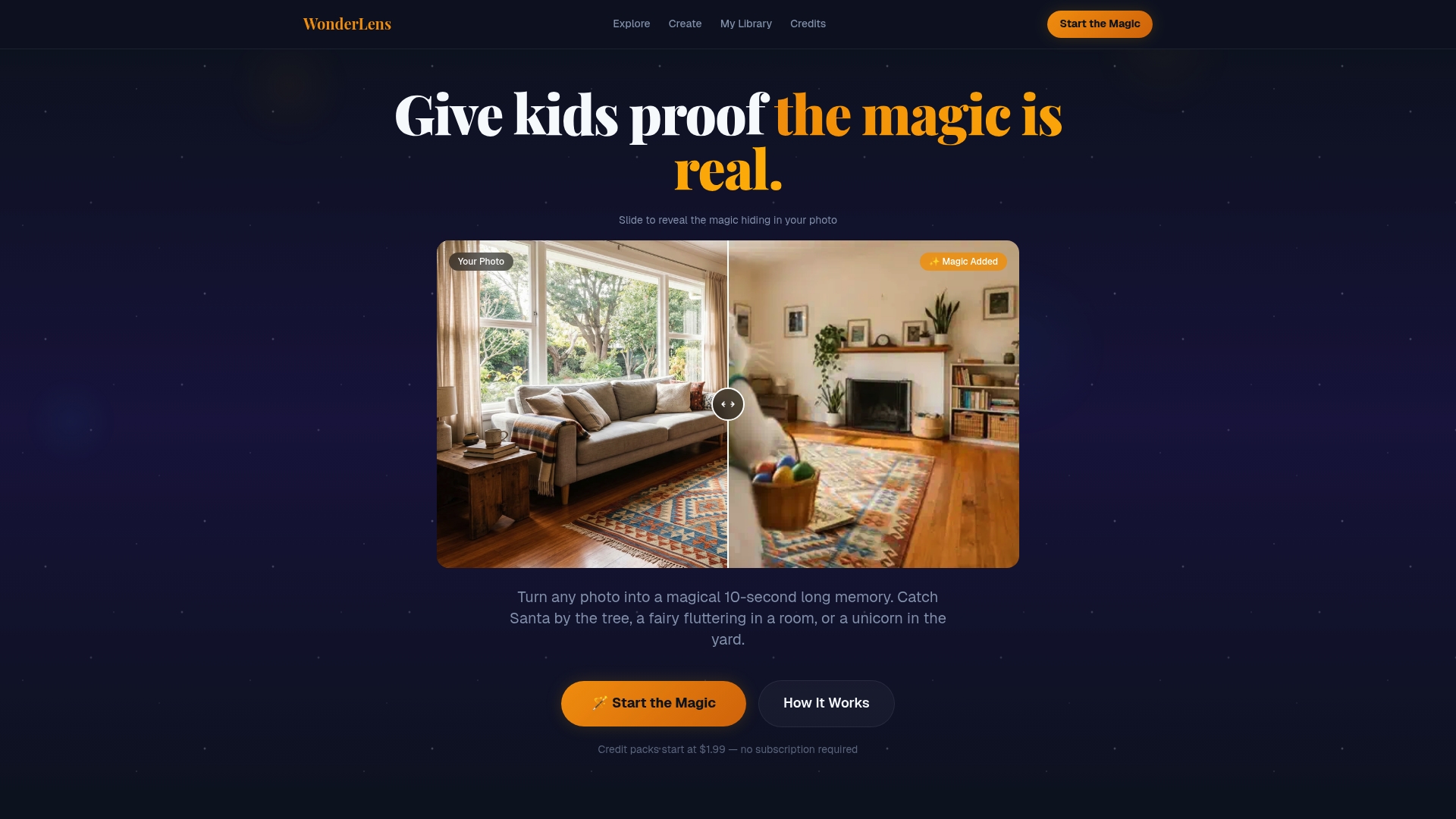
To use it in a reveal: select your character, upload your home photo, and add a short personal message. The video downloads instantly and plays on any phone, tablet, or TV. Pair it with a physical gift or a vacation itinerary card for a reveal sequence that hits on every level. Your first video is free, and additional credits start at $1.99. Start your first magical video at Wonderlens and see what your family's reaction looks like.
Sources
The sources below offer practical planning depth, creative reveal formats, and inspiration for every surprise type covered in this article.
- Surprise Vacation Reveal Ideas | Memory in the Making
- How to Surprise Someone with a Mystery Trip - Tilted Map
- How to Surprise Someone with a Trip (13 creative ideas) - WikiHow
Recommended
- Creative Tips for Christmas Surprises That Families Love. WonderLens | WonderLens
- Step by Step Holiday Surprises for Families: 2026 Guide. WonderLens | WonderLens
- How to Surprise Kids at Christmas: Fun Ideas That Work. WonderLens | WonderLens
- Why animated holiday surprises matter: the parent's guide to magical moments — WonderLens | WonderLens