What Is Home Environment Animation? A Family Guide
June 24, 2026

Home environment animation is the process of digitally simulating dynamic movement and lighting within a living space to create immersive, lifelike virtual experiences. Unlike a static photo, an animated home environment shows how light shifts through a window at noon, how a door swings open into a hallway, or how a magical character moves through your living room on Christmas morning. This technique has grown far beyond professional architecture studios. Families and individuals now use it to create digital keepsakes, enhance holiday celebrations, and share moments that feel genuinely alive. Understanding home environment animation opens up a world of creative possibilities that a flat photograph simply cannot deliver.
What is home environment animation and how does it work?
Home environment animation is defined as a form of 3D visualization that simulates movement within living spaces, replacing static images with dynamic, time-based experiences. That shift from still to moving is the core of what makes it so powerful. A photograph shows you a room. An animation shows you how that room feels to live in.
The technique works by building a digital model of a space, then moving a virtual camera through it. That camera can follow a person's morning routine, track sunlight moving across a kitchen floor, or place a fantasy character beside your fireplace. The result is a short video that communicates spatial relationships, mood, and story in a way no single frame can.
Animation in interior design has become a widely adopted tool for immersive pre-purchase experiences in 2026. That adoption reflects a broader truth: people understand spaces better when they see them in motion. For families, that same principle applies to celebrations. A video of Santa walking through your actual living room, with shadows falling correctly on your couch, creates a memory that lasts.
What are the main types of home environment animation?
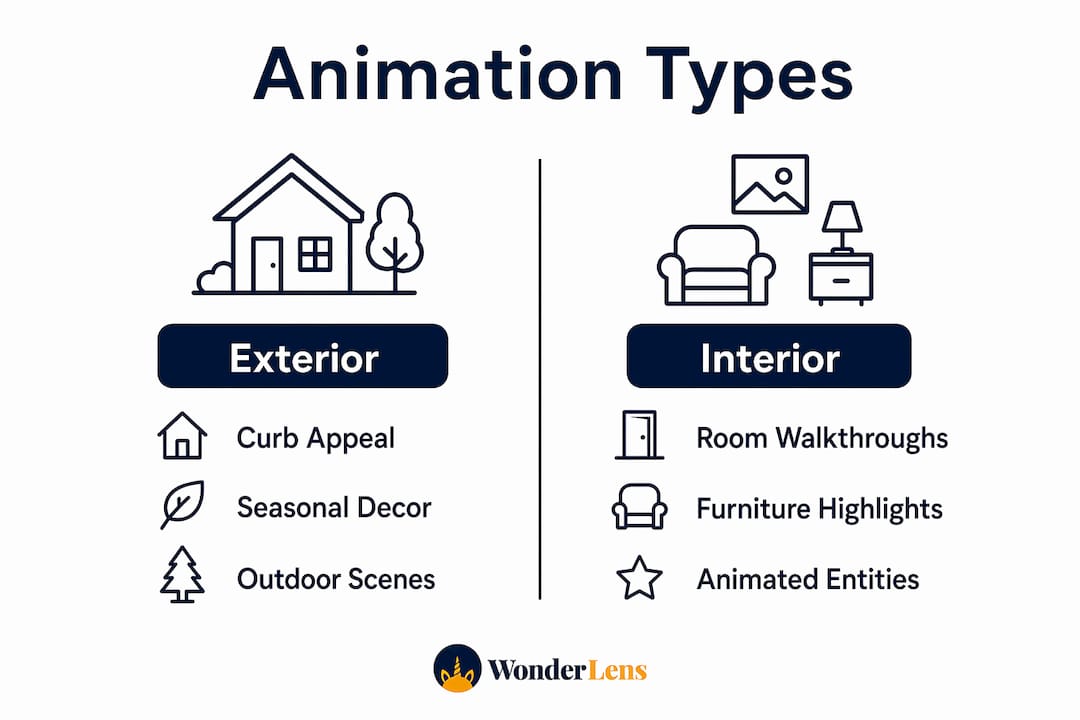
Five primary categories define the field of home environment animation. Each one serves a different purpose and delivers a different viewer experience.
- Exterior animation focuses on the outside of a home. It shows landscaping, lighting at dusk, and how a building sits within its surroundings. This type works well for first impressions and curb appeal storytelling.
- Interior animation moves the camera through rooms, capturing furniture arrangements, lighting moods, and spatial flow. It is the most common type for family and residential use.
- Walkthrough animation follows a continuous path through a home, simulating the experience of physically moving from room to room. It gives viewers a strong sense of scale and sequence.
- Mixed animation combines interior and exterior elements in a single sequence. A camera might start outside a front door, push through the entrance, and continue into a living room. This type creates the most complete sense of a home as a whole environment.
- Animated Interior Entities add moving objects or characters to a scene. Think of a fireplace with flickering flames, a ceiling fan in motion, or a holiday character walking across your floor.
Hybrid animation techniques combine 2D characters with 3D environments, balancing creative expression and cost efficiency. This approach is especially useful for families and creators who want magical, storybook-style characters placed inside realistic home settings. The contrast between a hand-drawn fairy and a photorealistic living room creates a sense of wonder that feels both fantastical and grounded.
| Animation type | Best use case |
|---|---|
| Exterior | Curb appeal, seasonal decoration reveals |
| Interior | Room showcases, holiday character placements |
| Walkthrough | Full home tours, event storytelling |
| Mixed | Complete home narratives, cinematic memories |
| Animated Interior Entities | Characters, moving objects, magical moments |
How does animation improve spatial understanding and design decisions?
Animation reveals what static images hide. A floor plan tells you a room is 12 feet wide. An animation shows you that the fridge door swings open and blocks the walkway to the dining table. That difference matters enormously, whether you are redesigning a kitchen or planning where to place a holiday scene for a video.
Path-of-travel animations identify and correct design bottlenecks before physical construction, improving livability. The same logic applies to digital home experiences. Placing a character in the wrong spot in a room can break the illusion entirely. Animation lets you see the problem before it becomes permanent.
Here is how animation improves spatial understanding in practical terms:
- Sun path simulation shows how natural light enters a room at different times of day. A morning animation might show warm golden light flooding a breakfast nook, while an evening sequence reveals which corners fall into shadow.
- Door and furniture swing paths reveal whether a space functions as intended. Moving cameras expose daily life rhythms and potential design issues that static plans miss entirely.
- Day-in-the-life sequences animate a full routine through a space. Watching a character move from bedroom to kitchen to living room shows whether the layout supports natural flow or creates friction.
- Character placement testing confirms that an animated figure, whether a dragon, a fairy, or Santa, sits convincingly within the real geometry of a room. Shadows must fall correctly. Scale must feel right.
Pro Tip: Before placing any animated character in a home scene, photograph the room at the same time of day you plan to set the animation. Matching real light conditions to your digital lighting makes the result far more believable.
What technical methods shape effective home environment animation?
The quality of a home environment animation depends heavily on two technical pillars: lighting and environment design. Get these right, and the result feels real. Get them wrong, and the magic collapses.
Baked lighting techniques are limited for moving objects. Professionals combine baked light layers with real-time lighting to maintain visual consistency throughout an animation. Baked lighting captures the static warmth of a room beautifully, but the moment a character moves through that space, the lighting must respond dynamically. Combining both approaches solves this problem.
Environment design treats the home as a second character in the story, not just a backdrop. Architecture, lighting, and props all work together to support mood and narrative. A cluttered, warm living room tells a different story than a sparse, cool one. Every visual choice communicates something to the viewer.
Set dressing defines the rules of the world. Thoughtfully arranged props, lighting, and textures make an environment feel like a living space rather than a digital stage. For family animations, this means the details matter. The Christmas tree in the corner, the throw blanket on the couch, the specific color of the walls all anchor the magical character to your home, not a generic one.
Key technical considerations for effective home animation include:
- Lighting consistency: Match the color temperature and direction of light between your real photo and the animated layer.
- Shadow accuracy: Shadows ground characters in a scene. A figure with no shadow floats. A figure with a correctly angled shadow belongs.
- Scale calibration: Characters must match the real proportions of furniture and doorways in the scene.
- Camera movement: Slow, deliberate camera moves feel cinematic. Fast, jerky moves break immersion.
Pro Tip: For holiday character animations, shoot your room photo from a low angle, roughly at a child's eye level. Characters placed in that same perspective feel more present and magical to young viewers.
How can families use home environment animation for celebrations?
Home environment animation is one of the most personal creative tools available to families today. It takes the familiar space where you live and transforms it into the setting for a story your children will remember for years.
The animated family memories that resonate most deeply are the ones rooted in real places. Seeing Santa standing beside your actual fireplace, with the same lamp casting the same warm glow, creates a sense of reality that generic holiday videos cannot match. The magic works because the environment is genuinely yours.
Practical ways families use home environment animation include:
- Holiday character reveals: Place Santa, the Easter Bunny, a unicorn, or a dragon inside your living room for a short shareable video that children can watch again and again.
- Birthday surprises: Animate a favorite fantasy character arriving in your home as a personalized birthday greeting.
- Seasonal walkthroughs: Create a short animated tour of your decorated home for grandparents or family members who live far away.
- Educational storytelling: Use home animation for education by placing animated characters in familiar spaces to make stories feel immediate and real for young children.
The magical home animation types that work best for celebrations share one quality: they respect the real environment. The character catches the same light as the furniture. The shadows fall in the right direction. That realism is what makes a child's eyes go wide. You can also explore animation and web design principles to understand why motion creates emotional connection in digital experiences far more effectively than static images.
Key Takeaways
Home environment animation creates immersive, believable experiences by combining accurate lighting, realistic shadow casting, and dynamic movement within real or digitally recreated living spaces.
| Point | Details |
|---|---|
| Core definition | Home environment animation simulates movement and lighting in living spaces to create dynamic, lifelike video experiences. |
| Five animation types | Exterior, Interior, Walkthrough, Mixed, and Animated Interior Entities each serve distinct storytelling purposes. |
| Lighting is critical | Combining baked and real-time lighting keeps moving characters visually consistent with their environment. |
| Environment as character | Treating the home as a second character, through set dressing and props, makes animations feel grounded and real. |
| Family applications | Families use home animation for holiday reveals, birthday surprises, and shareable seasonal memories. |
Why the home environment deserves more creative attention
Most people think of animation as something that happens to characters. A dragon flies. Santa waves. A fairy spins. But after spending years watching what makes animated home videos actually land emotionally, I am convinced the environment does more work than the character.
The moment a child recognizes their own couch, their own rug, their own Christmas tree in a video, something shifts. The story stops being a cartoon and starts being real. That recognition is the emotional trigger. The character is just the spark. The home is the fuel.
What I have found is that creators who spend time getting the environment right, matching light, respecting scale, choosing the right camera angle, produce videos that children ask to watch repeatedly. Creators who focus only on the character produce videos that impress once and then fade. The home environment is not the backdrop. It is the reason the magic feels true.
For families new to this, my honest advice is simple. Start with one room you know well. Photograph it at the time of day when the light is warmest. Then place your character there. The familiarity of the space will do half the work for you.
— Jeremiha
Bring your home to life with Wonderlens
Wonderlens is built for exactly this kind of magic. The platform lets you upload a photo of your home and place cinematic-quality animated characters, from Santa to unicorns to dragons, directly into your real living space.
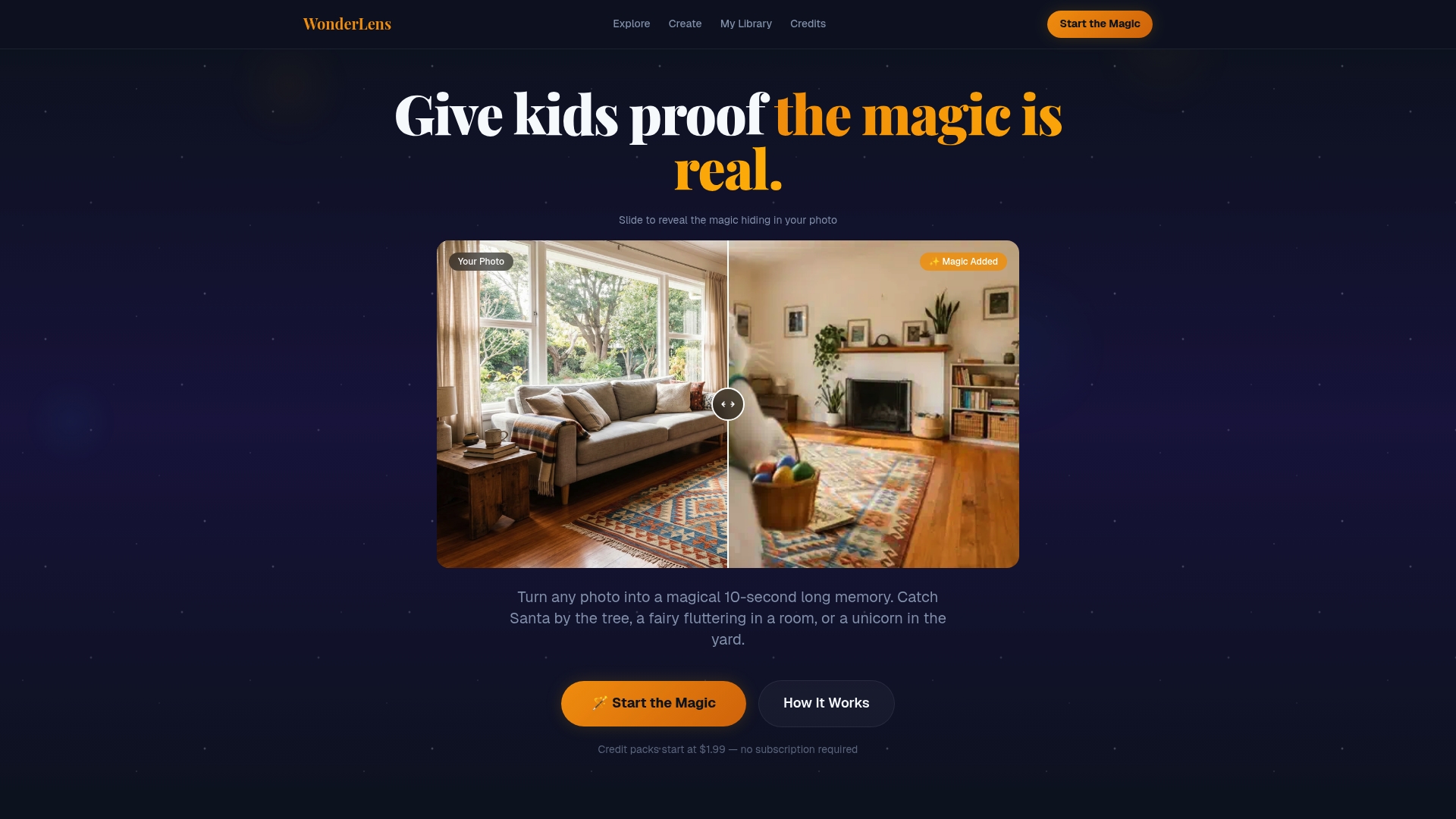
Every video Wonderlens generates respects the lighting and shadows of your actual room, so the character feels like it truly belongs there. No design experience required. Credits start at $1.99, making it easy to create a personalized animated memory for any occasion. Whether you want a holiday surprise or a birthday moment your child will never forget, create your first animation and see what your home looks like when the magic moves in.
FAQ
What is home environment animation in simple terms?
Home environment animation is a digital technique that adds movement, lighting, and characters to a video of a real or virtual living space. It transforms a static room into a dynamic, story-driven experience.
What are the five types of home environment animation?
The five types are Exterior, Interior, Walkthrough, Mixed, and Animated Interior Entities. Each type serves a different purpose, from showcasing curb appeal to placing moving characters inside a room.
How does lighting affect home environment animation quality?
Lighting determines whether an animated character looks like it belongs in a scene or floats above it. Combining baked light layers with real-time dynamic lighting produces the most consistent and believable results.
Can families create home environment animations without technical skills?
Yes. Platforms like Wonderlens handle the technical rendering automatically, allowing families to upload a room photo and receive a finished animated video without any design or animation experience.
Why does home environment animation work so well for holiday celebrations?
Children recognize their own home environment instantly. Placing a holiday character inside a familiar space, with accurate shadows and matching light, makes the animation feel real rather than generic, which is what creates lasting emotional impact.
Recommended
- Holiday Animation for Parents: a Creative Family Guide — WonderLens | WonderLens
- Lighting in Home Animations: A Creator's Guide. WonderLens | WonderLens
- Fairy video animation: A parent's guide to magical memories — WonderLens | WonderLens
- Magical home animation types to enchant your holidays — WonderLens | WonderLens