Why Realism Is Important in Holiday Animations
May 24, 2026
Most parents assume that bright, bouncy, cartoonish animation is the gold standard for holiday content aimed at kids. It's colorful, exaggerated, and unmistakably fun. But that assumption misses something important. Understanding why realism is important in holiday animations changes how you watch, choose, and even create festive content for your family. Realism is not about making Santa look like a photograph. It's about making the magic feel true, so your child leans forward instead of checking out. That emotional pull is worth understanding.
Table of Contents
- Key Takeaways
- Why realism in holiday animations matters more than you think
- How realism deepens the magic families actually feel
- Realism vs. stylization: finding the right balance
- What makes achieving realism in animation so challenging
- How parents can find and appreciate holiday animations with real heart
- My take on why realism changes everything
- Bring the magic of realism home with Wonderlens
- FAQ
Key Takeaways
| Point | Details |
|---|---|
| Realism means more than visuals | Lighting, movement, and material behavior all shape how believable and emotionally resonant holiday animations feel. |
| Balanced realism beats pure photorealism | A mix of stylized characters with realistic environments creates warmth without triggering the uncanny valley effect. |
| Realism deepens emotional memory | Subtle realistic details help children and parents form stronger, longer-lasting holiday memories. |
| AI advances movement realism | Modern AI can replicate natural physics like hair movement and light behavior, making animations feel genuinely alive. |
| Parents can spot quality realism | Consistent lighting, natural movement, and environmental detail are signs of thoughtfully crafted holiday animation. |
Why realism in holiday animations matters more than you think
Let's start with what realism in animation actually means. It's not a setting you toggle on for maximum detail. Realism in animation is measured by accurate lighting behavior, material properties, and physics simulations that together build trust and emotional connection in the viewer. When light bounces off a snowy floor the way it would in your living room, your brain registers it as real, even inside a fantasy scene.
For holiday animations specifically, these elements create something priceless: presence. When Santa's coat catches the glow of firelight, or snowflakes cast tiny soft shadows as they settle, you feel the scene rather than just watching it. That feeling is what makes a holiday film memorable 20 years later.
Here are the core elements that define realism in holiday animation:
- Lighting accuracy. Does light behave the way it would in a real room? Warm, directional light from a fireplace feels different than flat overhead light. The best holiday animations get this right.
- Material behavior. Velvet looks soft. Glass glitters. Snow compresses underfoot. These details signal authenticity to your brain without you even noticing.
- Movement realism. Natural, physics-consistent motion, from the sway of an ornament to the weight of a gift sack, makes characters feel grounded in the world they inhabit.
- Proportion and environmental scale. Characters that fit naturally within a space, rather than floating or looking pasted in, keep the viewer immersed.
- Consistent shadows. When a character casts a shadow that matches the light source, the illusion holds. When it doesn't, the magic breaks.
These are not just technical checkboxes. Each one communicates to a child's brain: this could really happen. And that belief is the foundation of holiday wonder.
How realism deepens the magic families actually feel
Here is where the real gift is. Realism in holiday animations does something deeper than impress viewers technically. It fosters trust. When a child watches Santa move through a space that looks and feels like their own home, something clicks. The story stops being something happening on a screen and starts feeling like something happening to them.
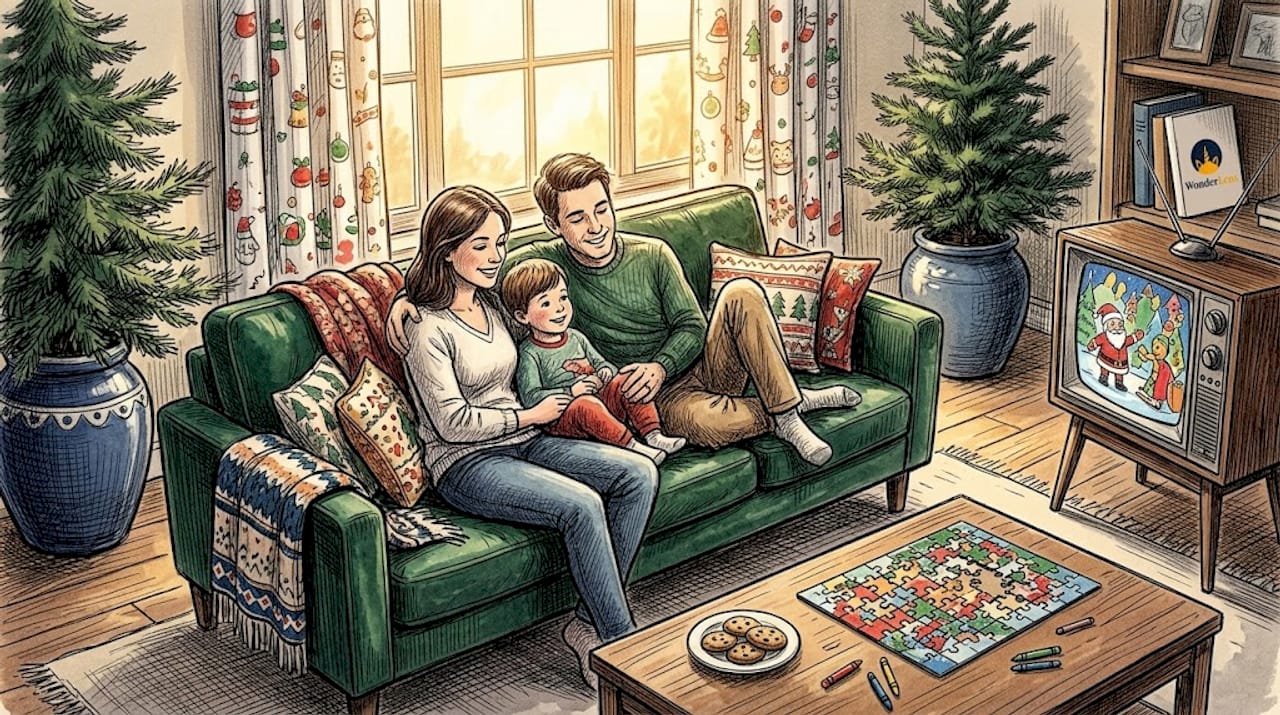
Balanced realism in holiday animation allows viewers to feel the magic while maintaining emotionally resonant storytelling. Stylized characters alongside realistic settings help viewers immerse without overstimulation or distraction. The warm glow of a Christmas tree reflected in a hardwood floor does more emotional work than a hundred sparkle effects.
There is, however, a real danger to watch for. Push realism too far into photographic territory with human characters, especially faces, and you hit the uncanny valley. The uncanny valley effect risks disengaging audiences entirely, with stylized or slightly imperfect animation actually inviting more imaginative participation. Children, in particular, disengage when animated faces feel almost-but-not-quite human. It's unsettling, not magical.
Pro Tip: When evaluating a holiday animation for your family, pay attention to how the characters' faces are rendered. Soft stylization with realistic environmental lighting is the sweet spot that feels warm and believable without crossing into eerie territory.
"The best holiday animations don't try to replace your imagination. They give it just enough to work with." That is the quiet art of realism done right.
Realistic elements also support how families form memories around media. The details that feel true, a fire crackling, snow falling at the right pace, a door creaking open, become anchors for emotional recall. Years later, those sensory memories are what your child carries forward.
Realism vs. stylization: finding the right balance
This is where many holiday animations either earn their magic or lose it. Pure photorealism is not the goal. Pursuing photorealism without narrative purpose can distract viewers and reduce warmth, especially in holiday-themed storytelling. The goal is a thoughtful combination.
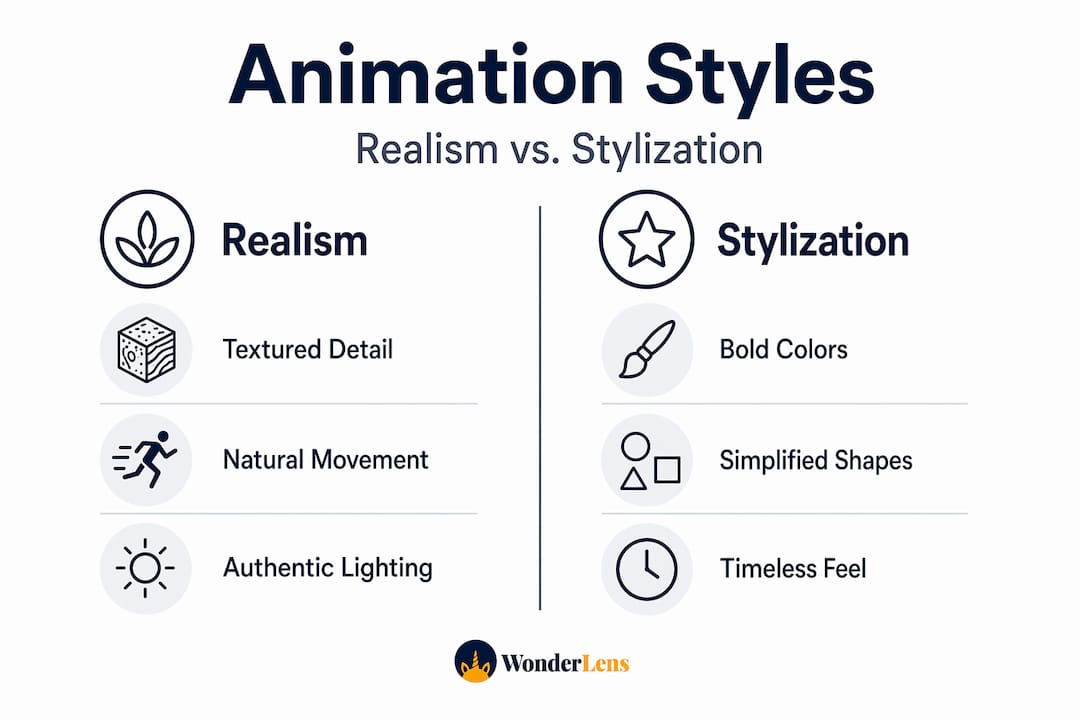
Here's how the three main approaches compare:
| Approach | Visual feel | Emotional effect | Best used for |
|---|---|---|---|
| Pure stylization | Bright, simplified, exaggerated | Playful and energetic, lower immersion | Young children's holiday content |
| Photorealism | Highly detailed, lifelike | Can feel cold or uncanny with character faces | Environments, backgrounds, objects |
| Hybrid approach | Stylized characters, realistic settings | Warm, immersive, emotionally resonant | Family holiday films and personalized videos |
The hybrid approach wins for family holiday content almost every time. Legendary animator Satoshi Kon demonstrated this principle brilliantly. He used hyper-realistic detailed backgrounds to ground surreal animated characters, with environments detailed at roughly 1.5 times reality to balance exaggerated characters and keep the viewer emotionally anchored.
You can see this same logic at work in beloved holiday films. The environments feel textured and grounded. The characters retain a softness that keeps them approachable. Neither element alone would work. Together, they create the feeling that holiday animation does at its best: a world you want to believe in.
Stylization also has a quieter advantage. Hand-drawn or less polished animation often provides a calmer, timeless feel that audiences prefer in holiday contexts, because it invites them to fill in the gaps with their own imagination. Perfect animation can feel like it leaves no room for you. Imperfect, warm animation pulls you in.
What makes achieving realism in animation so challenging
Creating quality realism in holiday animations is harder than it looks, and that's worth appreciating as a parent. Long-form animation requires continuity in characters, costumes, physics, and environments across every frame to maintain suspension of disbelief. A scarf that changes length between scenes, or a shadow that shifts directions without the light source moving, shatters the experience immediately.
Modern AI has made significant strides here. AI animation now incorporates implicit physics priors and spatiotemporal attention to produce natural-looking movement and environments, replicating complex details like hair movement and liquid turbulence by learning from real footage. This is why some AI-generated holiday animations feel surprisingly convincing today.
But technique alone doesn't create magic. Human storytelling judgment determines which realistic details serve the emotion of the scene. AI can simulate snow falling correctly. A skilled creator knows whether that snow should feel gentle and peaceful or urgent and dramatic based on the story's moment. That choice is what separates technically impressive animation from truly memorable holiday content.
Here's how to recognize quality realism in holiday animations as you watch:
- Check shadow consistency. Shadows should match the direction and color temperature of the visible light source throughout the scene.
- Watch for natural motion weight. Heavy objects should feel heavy. Light objects should drift. Animation that ignores physics feels fake immediately.
- Notice material textures. Fabric should look different from plastic, which should look different from wood. Rich material distinction signals thoughtful craft.
- Look at environmental scale. Characters should fit the space convincingly, with proportions that match the room or landscape around them.
- Listen to the visual rhythm. Good realistic animation has a flow. Nothing feels pasted in. Everything seems to belong to the same world.
Pro Tip: Point out one realistic detail to your child while watching a holiday animation, like the way light falls on a character's coat. This simple act trains them to notice craftsmanship and deepens their appreciation for storytelling.
How parents can find and appreciate holiday animations with real heart
Now that you understand what makes animations feel real and why it matters, you can actively seek out content that delivers it. This is one of the quiet ways parents shape their children's relationship with holiday traditions and storytelling.
When you're choosing holiday animations for your family, watch for these qualities:
- Consistent lighting throughout the film. Warm, directional light that behaves the same way in every scene signals a production team that cared about immersion.
- Characters that move with natural weight and intention. Steps, gestures, and expressions that feel considered, not floaty or mechanical.
- Environments that feel lived in. Spaces with texture, depth, and detail that make the world feel real enough to step into.
- Emotional pacing tied to visual realism. The quietest, most realistic moments often carry the deepest emotional weight in holiday films.
- Restraint with special effects. The best holiday animations use sparkle and magic sparingly, letting realistic moments do the heavy emotional lifting.
Realistic animation elements foster emotional engagement and enduring memories in ways that flashy, overstimulating content simply cannot sustain. When you find a holiday animation that your child wants to watch again and again, realistic grounding is almost certainly part of why.
You can also bring realism into your own family's holiday experience. Personalized animated moments, where a beloved holiday character appears in your actual living room with accurate lighting and shadows, give children something that no broadcast holiday film can: the magic happening in their world, not just on a screen.
My take on why realism changes everything
I've spent years watching families interact with holiday content, and the pattern that stands out to me most is this: the moments that stick are never the flashiest ones. They're the quiet ones. The frame where firelight catches the side of a figure's face. The footstep that sounds like it belongs in the room. The shadow that falls exactly where it should.
What I've learned is that realism in holiday animation isn't about technical perfection. It's about permission. When an animation gets the real details right, it gives a child permission to fully believe. And full belief is where childhood magic actually lives. Over-polished, relentlessly perfect animation can crowd out that permission. It becomes a spectacle rather than a story.
Fragile, imperfect realism enhances emotional stakes and audience care in ways that flawless digital rendering often cannot. I think about this whenever I see parents assume their kids want bigger, brighter, louder holiday content. Most children actually want something that feels close. Something that feels like it could be true.
My advice to any family: slow down and notice the details in your favorite holiday animations. The warmth you feel there is not an accident. It was built, frame by frame, by someone who understood that realism is how wonder earns trust.
— Jeremiha
Bring the magic of realism home with Wonderlens
Understanding why realism matters in animated videos is one thing. Experiencing it in your own living room is something else entirely.

Wonderlens creates cinematic Santa videos that place Santa Claus inside your actual home, complete with realistic shadows, matched lighting, and natural movement that makes the moment feel genuinely real. Your child doesn't just see Santa on a screen. They see him in their room, by their tree, in footage that looks like it was captured by your own camera. These short, shareable videos start at just $1.99 and take moments to create. If you want to give your child a holiday memory that feels true, Wonderlens delivers exactly that.
FAQ
What does realism mean in holiday animations?
Realism in holiday animations refers to accurate lighting behavior, natural movement physics, and believable material textures that make a fantasy scene feel emotionally true. It's less about photographic precision and more about creating a sense of genuine presence and wonder.
Why is movement realism important in animation?
Movement realism ensures characters and objects behave the way they would in the physical world, with proper weight, momentum, and physics consistency. When movement feels natural, viewers stay immersed in the story rather than being pulled out of it by something that looks wrong.
Does more realism always mean better holiday animation?
Not always. Pure photorealism, especially with human faces, can trigger the uncanny valley effect and reduce emotional warmth. The most effective holiday animations combine stylized characters with realistically rendered environments for a balance that feels both magical and believable.
How does realism affect a child's experience of holiday films?
Realism gives children the visual evidence their imagination needs to fully believe in the story. Accurate lighting, consistent shadows, and natural movement signal to a child's brain that what they're watching could genuinely be real, which deepens wonder and emotional engagement.
How can I spot quality realism in a holiday animation?
Look for consistent shadow directions, natural motion weight, rich material textures, and environments that feel lived in rather than constructed. These details signal that the production team prioritized immersion and emotional craftsmanship over surface-level spectacle.
Recommended
- What realism in digital media means for holiday magic — WonderLens | WonderLens
- Why animated photos make holiday memories more magical — WonderLens | WonderLens
- How Santa animations enhance Christmas magic for kids — WonderLens | WonderLens
- Magical home animation types to enchant your holidays — WonderLens | WonderLens